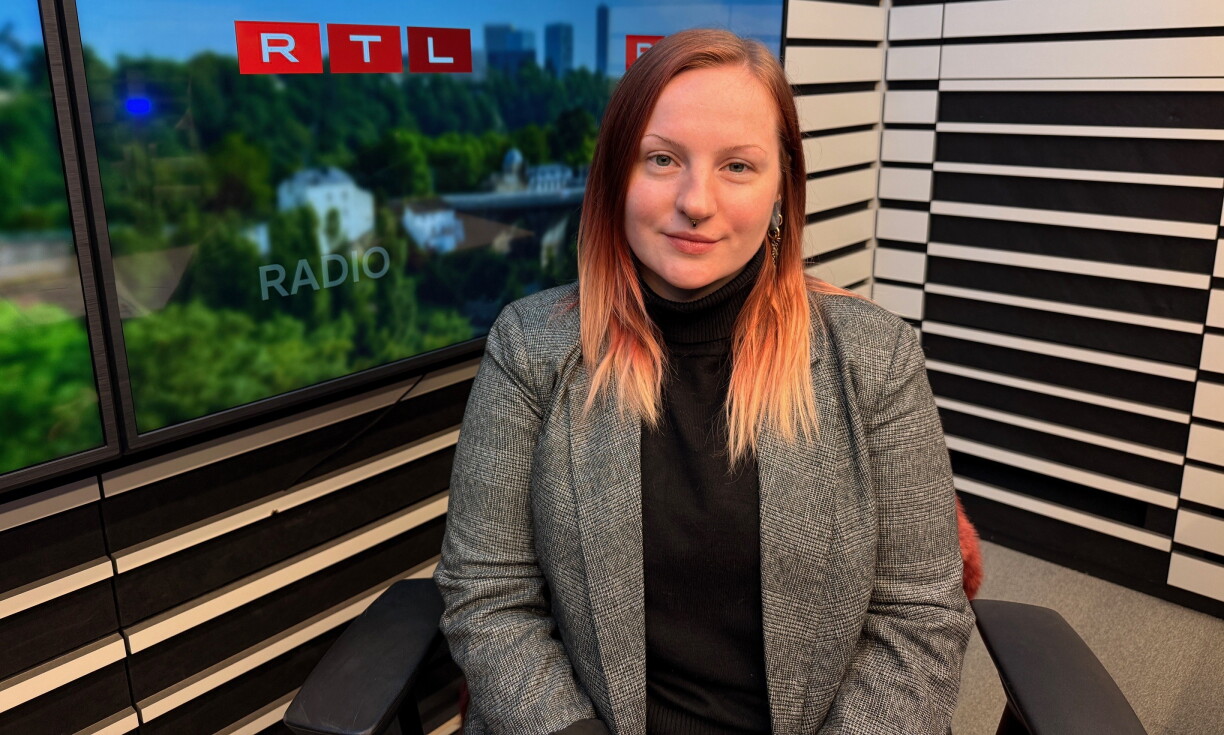
Wednesday marks the launch of Orange Week, a week of raising awareness of violence against women and girls.
In the first year after opening at the end of April 2025, the National Centre for Victims of Violence (CNVV) treated 426 victims. However, in the first two months after the opening hours were extended, the centre received over 200 requests.
Director Ashanti Berrend attributes this to both the longer opening hours and greater visibility through the media, as well as awareness campaigns handled by the Ministry and the Red Cross.
The demand for the centre's support has remained high. "We open around 100 new case files a week", Berrend explains. "Usually this means around 150 victims or less, as multiple people can be affected by the same case." Of the 508 people seeking support at the time of the interview, 400 were women or girls, and 100 were men or boys.
Around 800 people contacted the centre for support between April 2025 and July 2026. 338 of them asked for treatment on the spot and received it, while the others were directed towards other support outlets.
At the first point of contact, the team clarifies the situation with the victim and provides advice on what help is available. The centre accommodates victims of all forms of violence.
"The first discussion focuses on finding out what has happened, where the person is currently in their situation, and what help we can administer straight away."
Those affected can speak to a psychologist on site, receive legal advice, or file a complaint. The latter involves the police coming to the centre to speak with the victim. Depending on the situation, the team can also refer the victim to more specialised services elsewhere. The victim gets to decide how quickly things move forward.
The CNVV currently employs 20 members of staff, which is equivalent to 13 full-time positions. There are always at least two people on duty, usually a social worker and a nurse. Psychologists are also part of the team. The team also runs the Violence 20 60 10 60 helpline.
Berrend says they are currently coping well with the demand. Victims have the possibility of staying at the centre for a few hours if needed, as the rooms are set up in such a way that the team can accommodate more people at the same time. There is a separate room for children.
One of the main challenges identified by Berrend is further support and treatment after first contact. Victims often have to wait weeks or months for further psychological treatment, or for a place in a refuge.
This can be frustrating and demoralising for people who have overcome many obstacles in order to seek help in the first place. The CNVV tries its best to support victims efficiently and punctually.
In 82% of cases, the victims are affected by violence in their familial sphere, Berrend explains, whether the perpetrator is a partner, former partner, or a close family member. For victims hoping to leave their homes, the wait times for a spot in a women's shelter represents a further obstacle.
The CNVV is now open 24/7 and can accommodate requests via telephone, or in person at the centre itself.