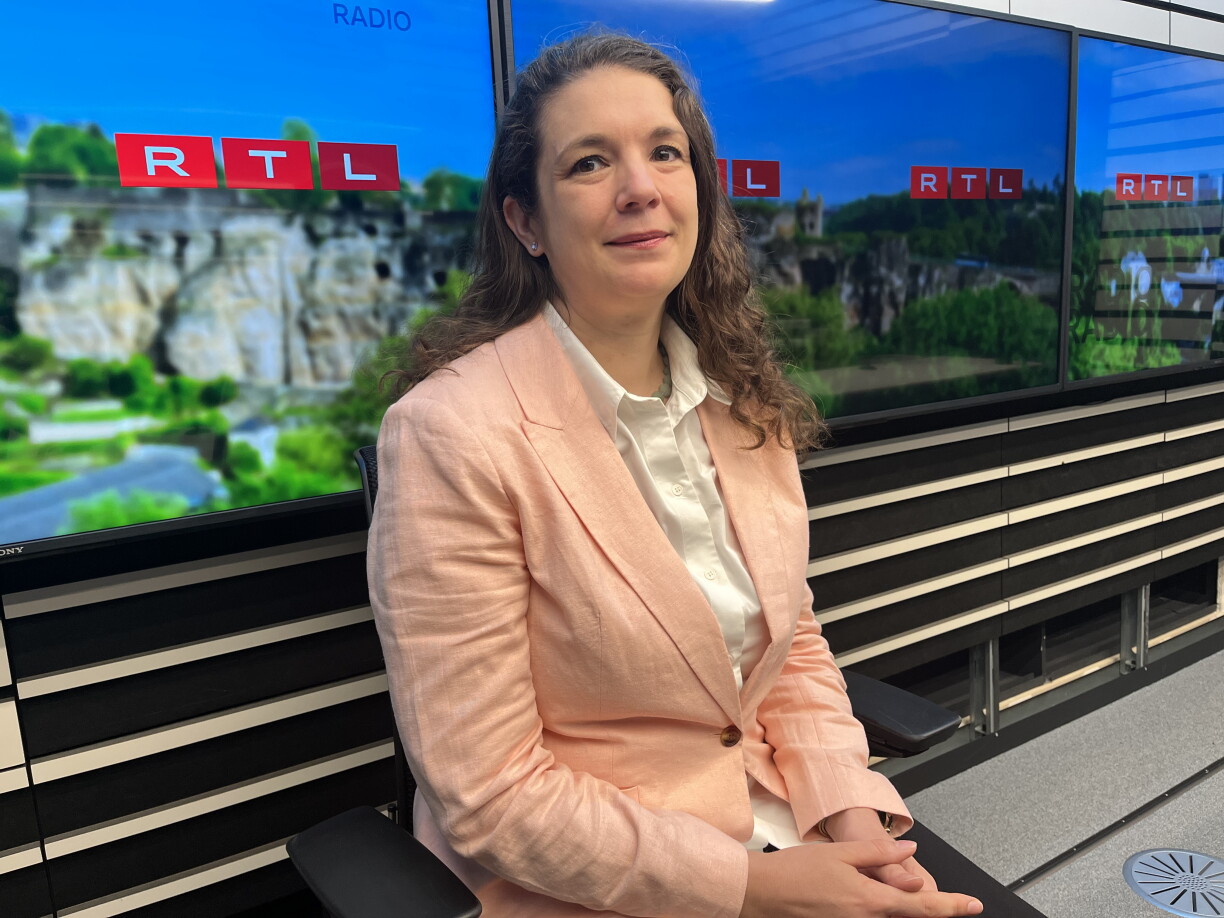
Luxembourg's research sector has grown to the point where the National Research Fund (FNR) cannot support every project deemed worthy of funding.
Speaking to RTL on Monday, FNR Secretary General Isabelle Mossong said the organisation now receives more excellent proposals than its €360 million four-year research budget can cover.
Mossong, who has held the position since January, said the increasing number and quality of applications reflected how far Luxembourg's research landscape had developed over the past 25 years.
Her comments come shortly after the Chamber of Deputies approved a new legal framework for the FNR, reflecting the fund's expanding responsibilities and broadening the range of organisations that may benefit from its programmes.
Established in 1999, the FNR does not conduct research itself. Its main role is to provide financial support for projects carried out by eligible institutions.
Mossong explained that its principal beneficiaries are the University of Luxembourg, which receives the largest share of its funding, and the country's three public research institutes: the Luxembourg Institute of Science and Technology (LIST), the Luxembourg Institute of Health (LIH), and the Luxembourg Institute of Socio-Economic Research (LISER).
The new law expands the pool of potential beneficiaries to include organisations such as economic interest groupings.
Mossong said the aim was to strengthen links between public and private research rather than to have the FNR finance private-sector research directly. The fund already supports programmes designed to encourage cooperation and exchanges between both sectors, she said.
She also stressed that the FNR supports research across a wide range of disciplines. Scientific quality remains the main criterion, but a project's potential impact does not have to be purely economic. Social and cultural value may also be taken into account, according to Mossong.
Mossong, who trained as a historian and whose own doctoral research was supported by the FNR, said humanities projects could still qualify for funding today if they demonstrated excellence, relevance, and strong cooperation.
The FNR currently employs 36 people, but Mossong clarified that its staffing arrangements are separate from the money allocated to research projects.
Mossong explained that staffing is covered through a four-year agreement with the Ministry of Research, and additional employees have already been planned for the next period. She said there was therefore no concern about the organisation being unable to pay or recruit its staff.
The funding challenge instead concerns the number of high-quality research proposals submitted to the FNR.
"We are receiving more and more projects, which is of course a positive development", Mossong said.
She explained that Luxembourg's increasingly professional research sector was producing a growing number of excellent applications. However, she said many projects that receive strong evaluations still have to be rejected because the available research budget cannot cover them all.
Mossong acknowledged that the FNR's budget had risen steadily over the years and said its current allocation provided a solid basis for the next four years. Nevertheless, she added that the fund would have no difficulty identifying worthwhile projects if more money became available.
Applications submitted to the FNR are generally evaluated by experts based outside Luxembourg.
Mossong said this long-standing approach was intended to ensure independent assessments and avoid having Luxembourg-based researchers review projects submitted within the country's relatively small scientific community.
The FNR selects specialists with expertise closely related to each project and systematically checks for possible conflicts of interest, according to Mossong.
During the parliamentary debate on the new FNR law, MP Tom Weidig of the Alternative Democratic Reform Party (ADR) criticised the abolition of the Scientific Council. He argued that the change would weaken independent oversight of the fund's scientific work.
Mossong rejected that criticism, pointing to changes in the composition of the FNR's board of directors.
She said scientists had become much more strongly represented on the board in recent years. Four of its nine members are now scientists, compared with either no scientific representation or only one scientific member in the past, she clarified.
According to Mossong, the ninth member is the president of the FNR staff delegation. Excluding that internal representative, the board is therefore divided equally between four scientists and four non-scientists, she noted.
Mossong also addressed concerns surrounding the liaison committee, which brings together the FNR's main stakeholders.
She said the committee provided a formal platform for research institutions to express their views and receive early information about new developments. Mossong admitted that its opinions are not binding, however, and that final decisions remain with the board of directors.
She rejected the suggestion that institutions receiving FNR funding would be able to determine which applicants should receive future support.
Mossong said climate change and defence were likely to become increasingly prominent areas of research in the coming years.
"It should now be clear to everyone that we must work together on climate change", she said. Research could help identify solutions and provide incentives for addressing the issue over the medium term.
"In the short term, I think that train has already left the station", Mossong added. "But in the medium term, it is clearly in everyone's interest to act."
Defence research has also expanded in recent years. A fourth joint funding call involving the Ministry of Foreign Affairs' Directorate of Defence, the Ministry of the Economy, Luxinnovation, and the FNR is expected to open shortly, she said.
According to Mossong, around €8 million was invested in defence-related projects through the previous three calls.
She said ethical issues associated with such research were primarily examined by the ethics committees of the participating institutions, while external evaluators could also raise concerns. The FNR monitors these questions but does not make the final ethical determination itself, Mossong said.
She added that dual-use research, which can have both civilian and military applications, formed part of the defence field but did not account for all projects supported under it.





