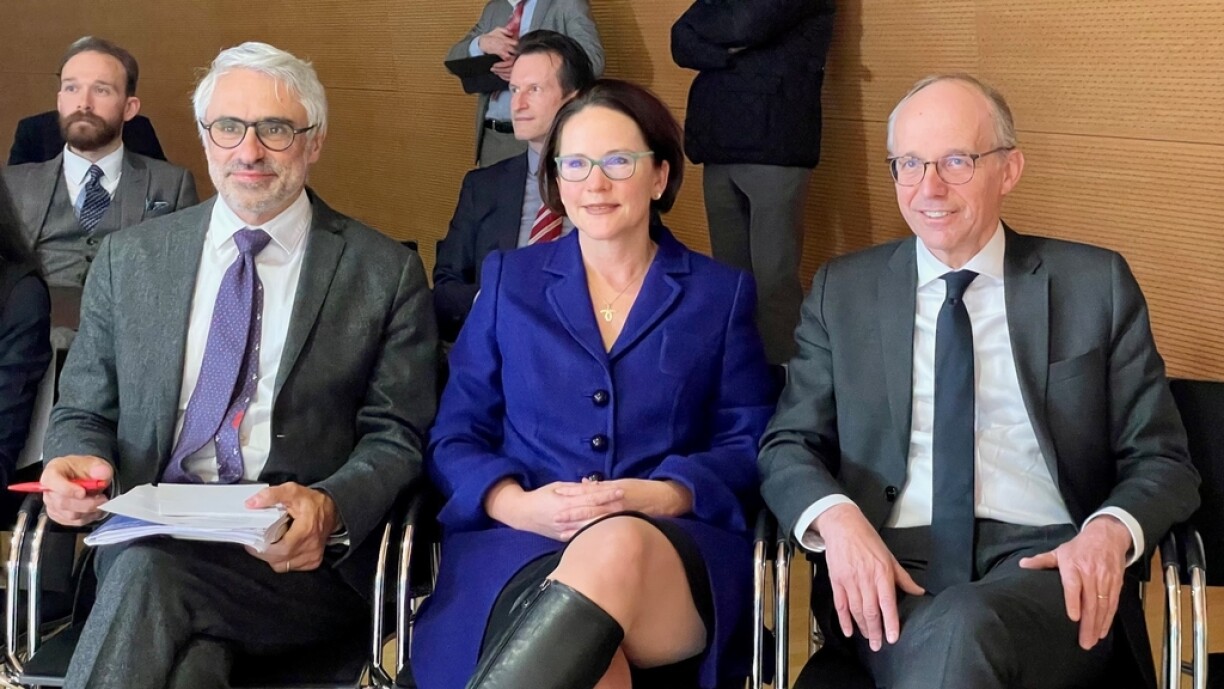
Yuriko Backes held her first speech as Finance Minister on Tuesday morning, at a conference discussing the next steps of an international tax reform towards a transnational minimum tax rates for businesses.
The OECD tax reform in question is based on two pillars. Large enterprises with a revenue of over 20 billion Euro a year should pay a quarter of their yearly profits in the country where they do business, is one. The other is to set a global minimum tax rate of 15 percent. This to avoid that businesses can benefit from systems with 0% tax rates. This would also benefit Luxembourg, as Pascal Saint-Amans, director of the OECD's "Centre for fiscal policy and administration" explains:
"What is really playing here is that these economies can compete on legal safety, on the quality of heir workforce, the positioning of their financial marketplace, rather than doing it on the lowest tax rate. And Luxembourg has many arguments for investment other than tax rates. So if we set the threshold at 15%, we help countries who do tax, like Luxembourg."
This would be a good way to give small economies like Luxembourg more weight and perhaps also improve their image. Luxembourg had not always been a model student. Properly investigating financial scandals was therefore important, says Saint-Amans: "Luxembourg still has a negative image due to this history. But history has changed. Luxembourg has decided to radically change its approach in the past eight years. The end of the banking secret, you may remember. This was an important point which angered many. But Luxembourg as a financial marketplace has not disappeared, it has even expanded."
Pascal Saint-Amans further underlines that the government under PM Xavier Bettel had reacted wisely and introduced appropriate regulations. The impact of the tax reform on businesses remained to be seen.
Jean-Paul Olinger, director of the Union des Entreprises in Luxembourg, agrees, as businesses still have some time to adapt to it. But it's a good thing that some processes are being reconsidered, he says.
"Tax rates were set in their respective countries. Now they are trying to set a level playing field by harmonising taxes across countries. Previously countries used to look to their own sovereignty, now they are more focused in harmonisation. Businesses pay taxes based on their profits, so this should result in fair taxation."
Yuriko Backes stressed during the conference that everything was being done to meet the OECD requirements. A direct interview request from RTL after the press conference was denied, however.





