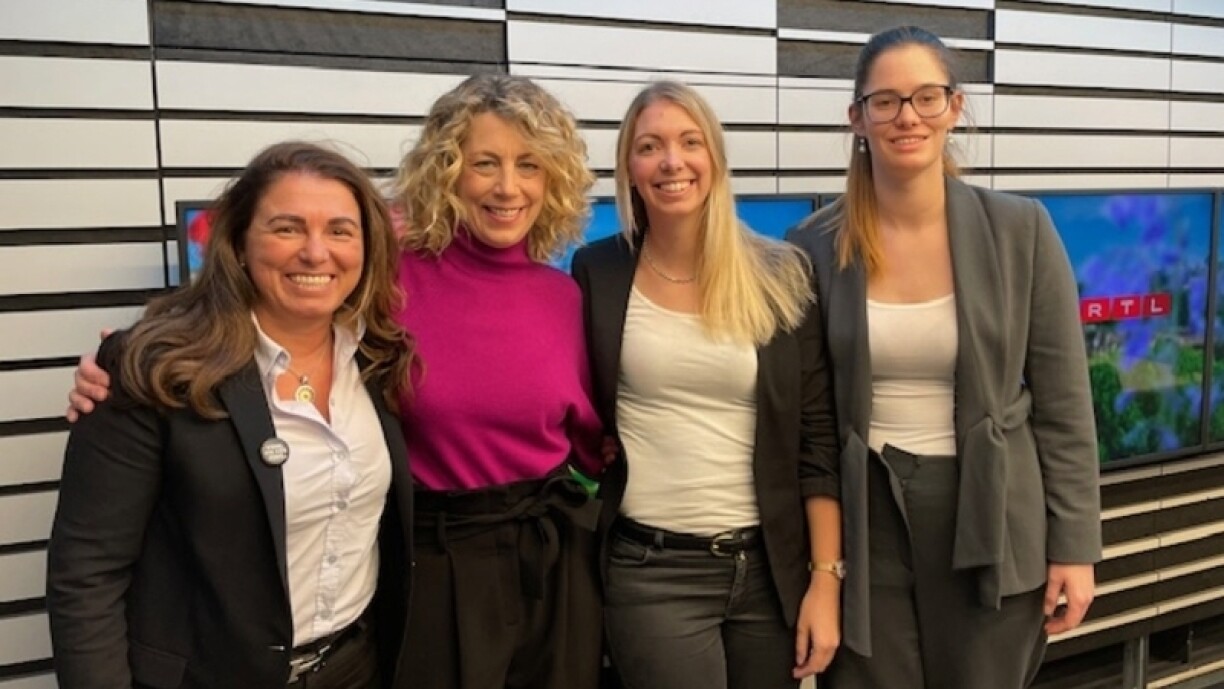
Former Green Party minister Joëlle Welfring's assertion that the fact that being an MP is a 20-hour job is outdated garnered agreement from her fellow politicians. Claire Delcourt, representing the Luxembourg Socialist Workers' Party (LSAP), stressed the importance of grassroots engagement and familiarisation with policy issues, acknowledging that it is not possible to be well-versed in all matters.
Regarding dual mandates, Delcourt expressed her contentment at solely serving in the Chamber of Deputies, without additional obligations. Françoise Kemp, MP for the Christian Social People's Party (CSV), agreed that "it's a lot of work." However, Kemp views her dual mandate as an opportunity and argued that her position on the Dudelange municipal council allows her to bridge local and national politics.
Barbara Agostino, from the Democratic Party (DP), highlighted disparities between the private and public sectors for elected officials. Those who work in the private sector are not exempted from work, as is the case with civil servants, Agostino pointed out. They therefore have to actually go to work during the 20 hours that they are not in the Chamber of Deputies, she criticised. "If you do something, you should be given the time to do it well," according to Agostino.
In addressing the controversial begging ban, the MPs lamented the prolonged debate surrounding the issue. Delcourt criticised the lack of clarity in communication from long-standing politicians, which resulted in numerous ambiguities. Opposition MPs Welfring and Delcourt regretted that a government that set out to prioritise the fight against poverty had pushed through the begging ban "in such a flawed form and on shaky legal grounds."
DP MP Agostino, on the other hand, voiced unequivocal support for the government's decision. Agostino also claimed that various terms and ideas "would have passed" in the past, thus seemingly downplaying recent discriminatory remarks made by her party colleague Simone Beissel regarding the Sinti and Roma communities. Welfring disagreed and stressed the significance of language and its impact on shaping perceptions.
Mathematician Françoise Kemp voiced her support for increased data availability and digitalisation, arguing that access to comprehensive data facilitates informed policymaking. Kemp highlighted the significance of artificial intelligence, acknowledging both its challenges and potential benefits for society.
Similarly, Joëlle Welfring underscored the importance of digitalisation in streamlining administrative procedures, citing it as a key priority. Welfring already spearheaded various initiatives aimed at simplifying and expediting administrative processes, particularly in environmental matters. The former Minister of the Environment cited the simplification of aid applications as an example. The involvement of the public, Welfring emphasised, is crucial in garnering support for such initiatives. All four MPs recognised digitalisation and administrative simplification as valuable tools for enhancing public engagement and efficiency.
For Claire Delcourt, addressing child poverty emerges as a top priority. While poverty was a central focus in coalition discussions, the LSAP MP expressed regret that child poverty was not specifically addressed. Delcourt, herself a mother, underscored the urgency of combating child poverty, noting with concern that one in four children in Luxembourg could potentially be affected. She emphasised that as a wealthy nation, Luxembourg cannot afford to tolerate such a high poverty rate among its children.





