
Last Thursday, reports circulated on social media that "a teacher was fired by the Luxembourg Ministry of Education for stories posted on her personal page in support of Palestine". Although the ministry could not disclose specific details relating to the case, it confirmed to RTL that the teacher in question had indeed been let go due to her activity on social media, which it saw as unacceptable behaviour.
The teacher herself sees her dismissal as the result of a continuous, targeted campaign to frame her pro-Palestine activism as antisemitic: a selection of Instagram stories she had reposted were screenshotted and then submitted to the Ministry, which in turn launched procedures to terminate her contract. "The [screenshots] were taken completely out of context", she explained to RTL. "I'm not against Jews; I have been trying from [October 7th] to raise awareness on the distinction between Zionism and Judaism, because I'm against war crimes being conducted in their name".
While maintaining its employees' right to freedom of expression, the Ministry's press spokesperson stressed its limits: it ends where such expressions breach the law, for instance in cases of incitement to hatred, calls for actions that qualify as criminal offences, and the dissemination of extremist ideologies. At the same time, those employed by the government are bound by specific obligations, meaning they cannot inflict harm to the public interest and must behave with dignity in regards to their function, both professionally and privately.
The social media activities that led to the dismissal rest on a selection of screenshots, mostly stories the teacher had reposted on Instagram. The content covers a broad spectrum of issues, ranging from educational messages to calls for boycott – at times relying on contentious historical figures to substantiate her arguments.
One particular accusation held against the teacher stipulates that she denied the state of Israel's right to existence and incited hatred against the Jewish, respectively Israeli people. She had previously reposted a video depicting an orthodox Jewish atonement ritual known as Kapparot, with an accompanying caption that reads: "All they believe in is killing! Israel has not the right to exist".
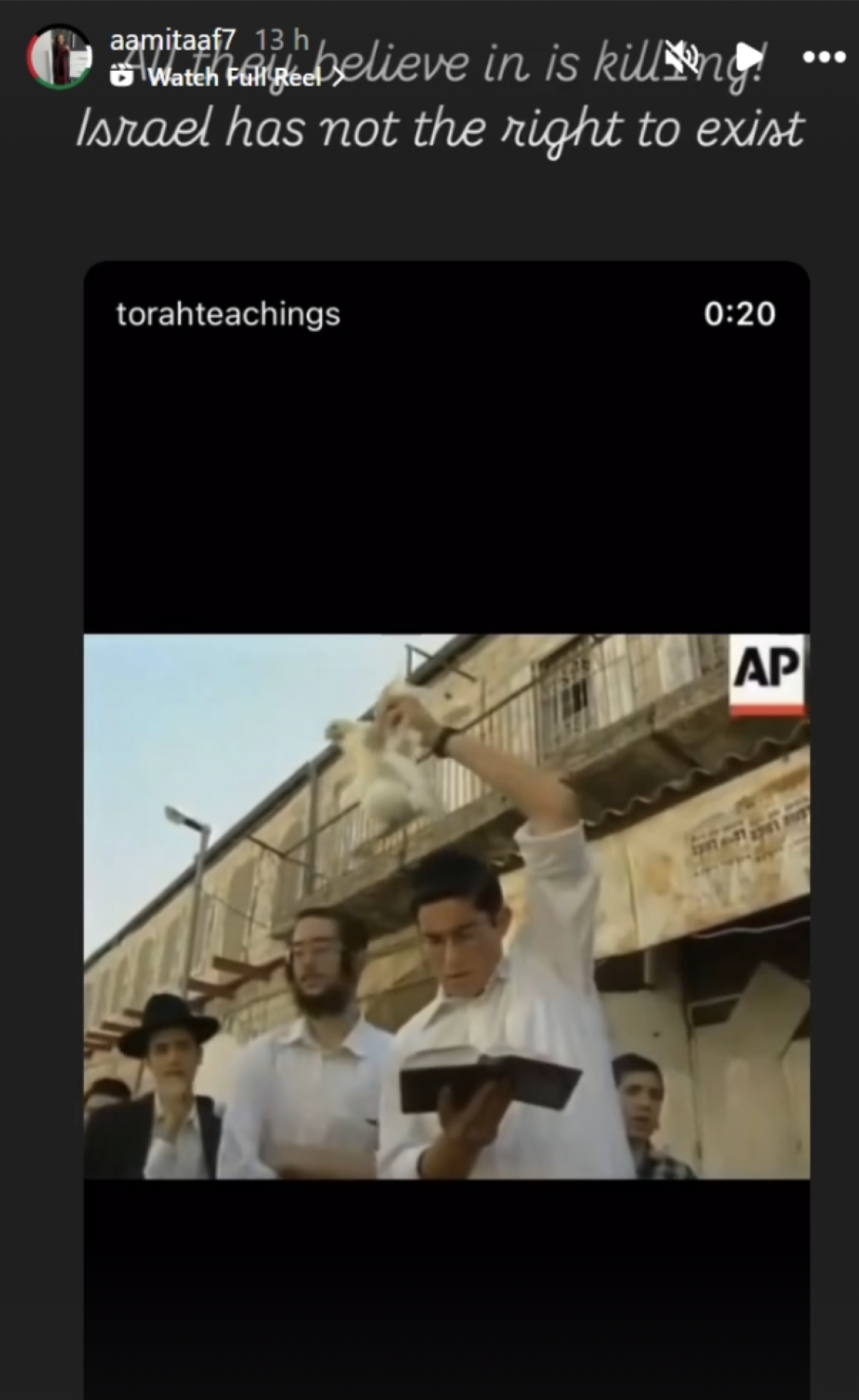
As the teacher conveyed to RTL, her content had consistently been flagged to the authorities before even reaching the Ministry. Upon request, the prosecutor's office has confirmed that some of these cases have been classified without further action whilst other investigations remain ongoing.
Some of the teacher's social media activities have also led to constructive exchanges and tangible results. One such case is that of a call to boycott fruit and vegetable distributor Grosbusch for selling dates sourced from Israel. Speaking to RTL, company CEO Goy Grosbusch explained that he identified the product boycott as an opportunity to be educated on the conflict between Israel and Palestine by someone knowledgeable and, in doing so, hopefully become "part of the solution".
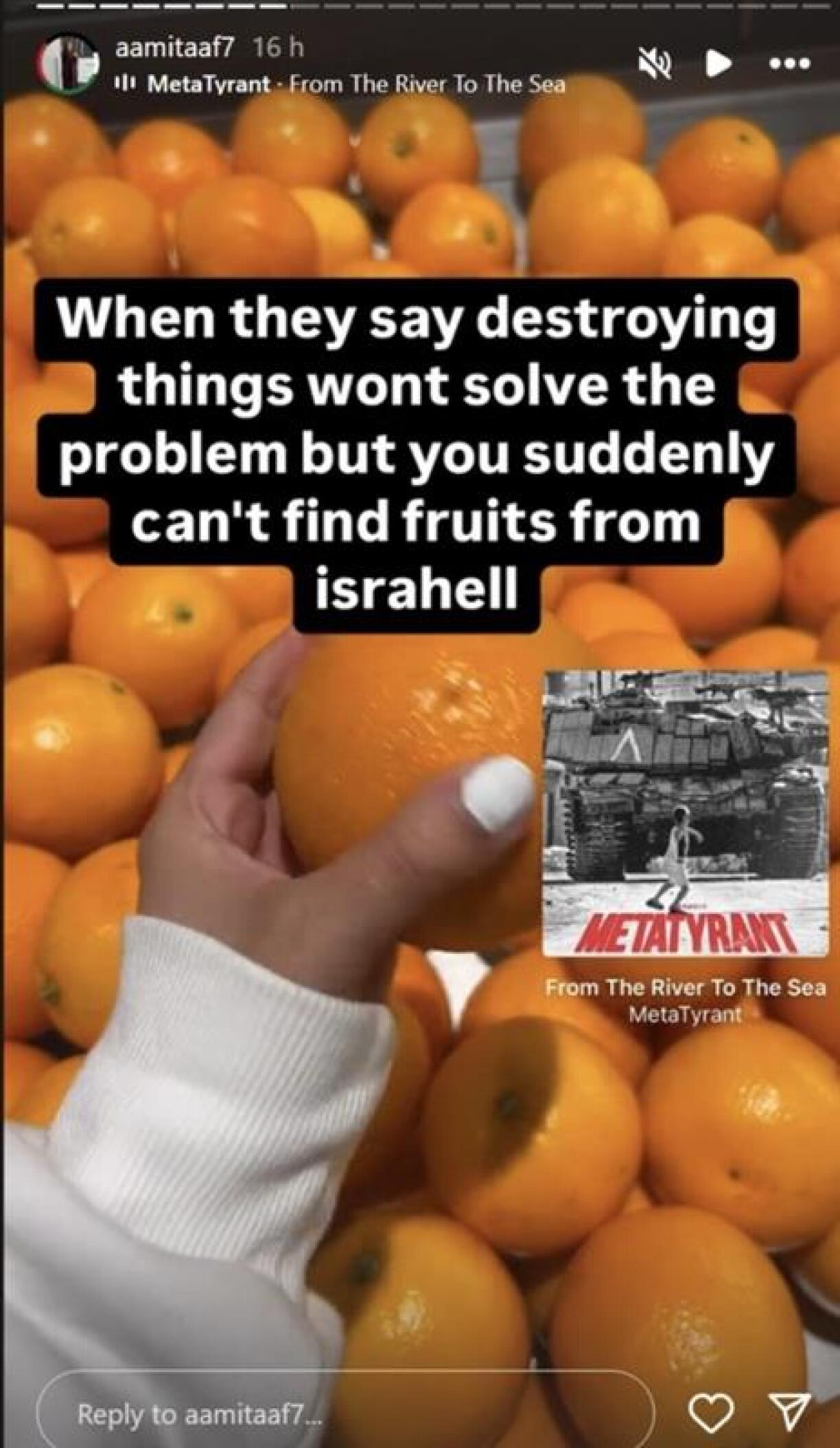
Grosbusch therefore decided to meet with the teacher leading the boycott against his company, which he described as a "constructive" and "eye-opening" encounter.
From a business perspective, opposition to produce of Israeli origin had long become perceptible across Europe, Grosbusch noted, which meant that they were open to looking at alternative suppliers for dates and other food items. "However, we had to ensure that alternatives would have to be of similar or better quality", he added.
With help from the boycott movement, Grosbusch ended up finding a solution, with dates now sourced from Palestine.
Since the boycott of the Grosbusch company was part of the Ministry's reasoning for launching disciplinary procedures leading to the dismissal, company officials issued a letter to the Ministry in defence of the teacher, underlining their position that she had done "nothing criminal".
"Her heart is in the right place", the CEO further underlined in conversation with RTL.
In a follow-up conversation, a representative of the Education Ministry stressed that political expression among teachers and ministry staff is both common and tolerated, particularly with the wars in Ukraine and Palestine. What set this case apart was that her statements "exceeded normal boundaries", leading to the Ministry's first-ever dismissal over social-media activity.
In Luxembourg, where government jobs are notoriously well-protected and dismissals rare, the fact that she was let go makes the case all the more noteworthy.
With the teacher now dismissed, the case goes to show that even without a criminal conviction, employers in Luxembourg – like the government – still possess the ability to launch independent disciplinary investigations that may arrive at different conclusions than those of the judiciary.





