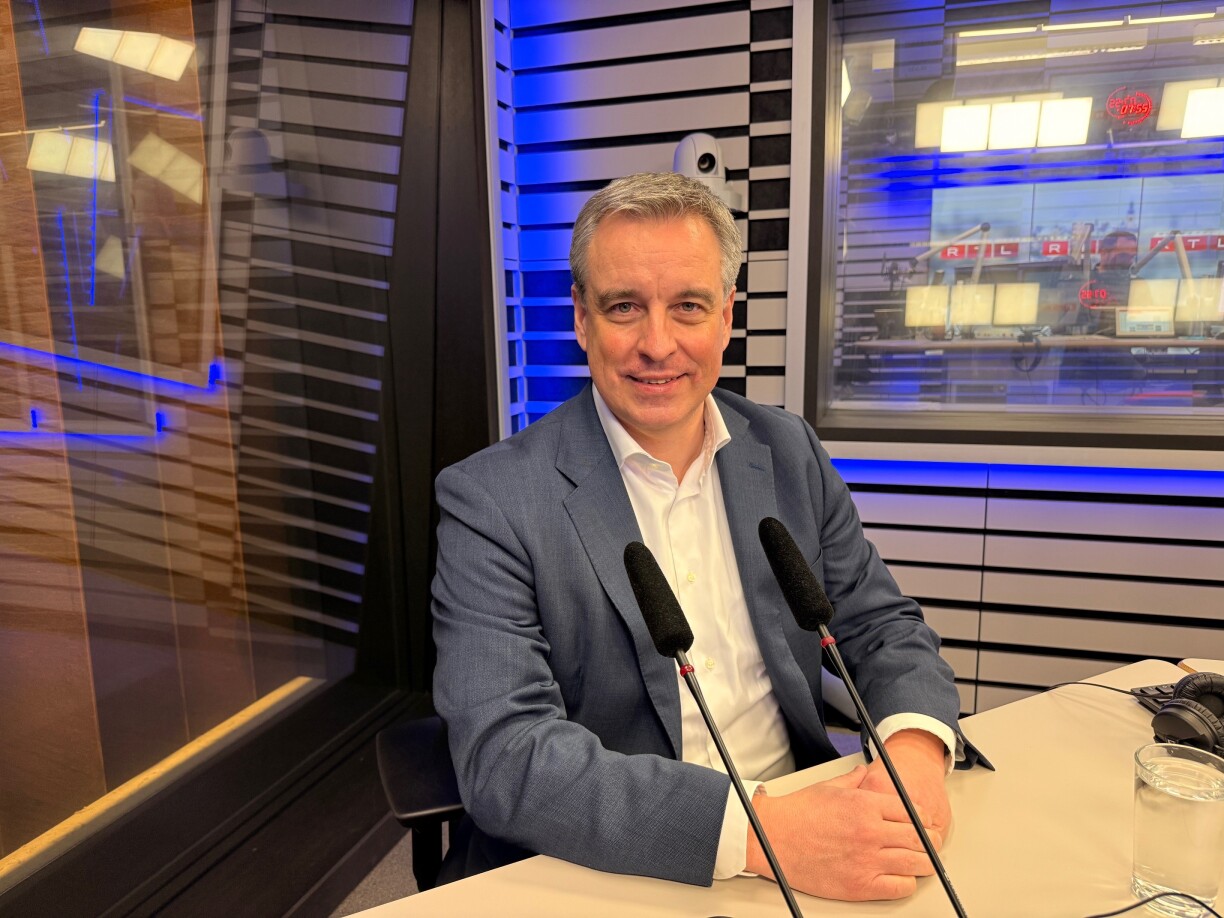
On Wednesday morning, our colleagues from RTL Radio invited their listeners to call in and discuss the topic of unisex toilets in schools. Minister of Education Claude Meisch was live in the studio to respond to questions and comments from the public.
At the outset, Meisch acknowledged once again that communication around the issue had not been ideal. He clarified that girls' and boys' toilets would remain in place, with a third, neutral option being added. The unisex toilets – where no distinction is made between genders – were only ever intended as part of a pilot project at the new Lycée Technique du Centre (LTC), scheduled to be built in Gasperich by 2032. Meisch added that the project has not yet been approved by the Chamber of Deputies.
One listener, the mother of a trans daughter, questioned whether the funds allocated for unisex toilets might be better spent on awareness campaigns. She described the battle her daughter had faced to be allowed to use a girls' toilet. In response, Meisch argued that both measures are necessary. According to the minister, neutral sanitary blocks are needed precisely to prevent students from having to fight such battles. However, he stressed it was equally important to avoid stigmatising neutral toilets as spaces reserved solely for transgender students. They should be sanitary facilities accessible to everyone, he said.
Meisch assured listeners that education and awareness efforts would continue. He noted that discussions in the parliamentary committee had also raised the question of what to include in future school curricula and how to train teachers. As for the financial aspect, the minister emphasised that the project does not involve renovating existing infrastructure. Instead, the new LTC is being built from scratch, allowing for an entirely new model of sanitary facilities to be considered. The goal, he said, is to reduce oppression, bullying, and discrimination, while ensuring greater safety for all students.
Several listeners pointed out that only an estimated 0.5 to 2% of students identify as non-binary – out of 500 students, that would be roughly ten. Their question was why the majority should have to adapt for a minority. Meisch said he understood this line of reasoning but stressed the importance of taking minority concerns seriously. "Everyone, at some point in their life – and probably more than once – belongs to a minority," he argued. For a young person searching for their identity, this is a significant issue, regardless of how few students it affects. He also reiterated that no one is being forced to change their habits. Rather, students are being given a choice between girls', boys', or neutral facilities.
Minister Meisch went on to describe the security situation in secondary school toilets as difficult and delicate – a reality that has once again come into focus in recent days. Violence and bullying occur repeatedly, he noted, adding that this aspect of the discussion has unfortunately been somewhat overlooked.
In the parliamentary committee, discussions had touched not only on neutral toilets but also on the concept of safe toilets, Meisch said. He argued that the overall design of sanitary facilities had not received sufficient attention in the past. Future plans include more open washbasin areas, featuring transparent glass blocks and frosted glass facing outward. Entrance doors to toilet blocks should also remain open, allowing passers-by to hear if something is happening inside. This visibility, Meisch suggested, would encourage a degree of self-regulation among the students.
At the same time, individual cubicles will be fully enclosed, offering greater security and privacy. According to Meisch, the level of privacy would in fact be so high that the separation between boys' and girls' facilities would no longer be necessary. However, he acknowledged that the time is not yet right for such a discussion. On the subject of urinals, the minister offered reassurance: "There will also be a urinal in one of the cubicles in the boys' toilet."
Meisch clarified that the proposal presented in the parliamentary committee was, in fact, an interim assessment of the national action plan for the rights of LGBTQIA+ people. He described the mention of unisex toilets as a "sneak preview" of a pilot project that has yet to be discussed with school partners, including headmasters, unions, parents, and student representatives.
The minister stressed that the subject deserves to be debated objectively and that schools, in particular, must lead by example in this regard.





