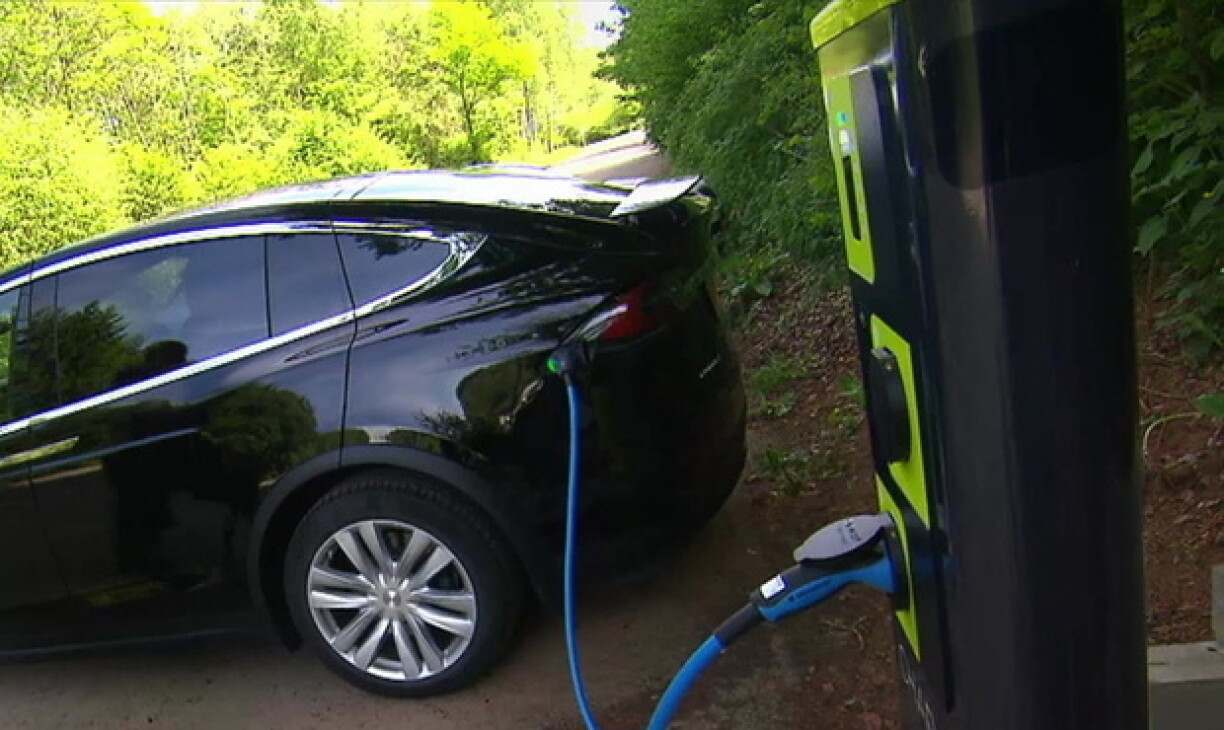
In his response, Turmes outlined that by the end of 2020, there would be around 800 open electric vehicle charging stations installed by operator Chargy. Turmes specified that these are the free ones, as other public or private actors would also install "Chargy OK" stations.
As a result, Luxembourg will belong to the top three countries in Europe with the densest electric vehicle networks.
The Chargy network consists of charging stations using green sources of electricity. A given charging station will charge an electric car with up to 22 kilowatts of alternating currents, in turn providing cars with a mileage of up to 150 kilometres.
The entire purpose of the free infrastructure is to provide people who leave their cars at Park & Ride car parks with the opportunity to to charge their cars throughout the day. The charging stations are meant to supply at least 10% of the national vehicle fleet, which corresponds to around 40,000 cars.
If the demand rises, the infrastructure will be expanded in order to allow 20% of vehicles to charge without issues. In response to Engelen's question about whether the electricity network can cope with this demand, Turmes assured him that the electricity network is more than able to deal with the infrastructure.
A government and Luxembourg Regulatory Institute study from 2011 shows that 95% of vehicles are charged at private stations, either at home or in garages.
In the future, there will be charging infrastructures built at key major European motorway hubs in order to allow electric cars to travel further. These charging stations will charge vehicles with 150 kilowatts, which in turn will allow cars to travel distances of several hundred kilometres.
The government is currently examining how long it will take to install such fast charging stations in Luxembourg. Faster charging stations would be installed near motorway networks and should be compatible with the Chargy system.
According to the European Alternative Fuels Observatory, over 6,300 fast charging stations existi in Europe alongside 120,000 ordinary ones. Luxembourg will collaborate with the other Benelux countries to create a charging infrastructure throughout Europe.
Turmes ended his response by highlighting the government's key goals of meeting their climate goals and improving air quality in the Grand Duchy. In that sense, further developing the electric vehicle network is an important means to achieve these goals.
Mobility: Government to provide up to €5,000 as incentive to buy eco-friendly cars
Electric cars: Chargy network has 277 electric vehicle charging stations in Luxembourg





