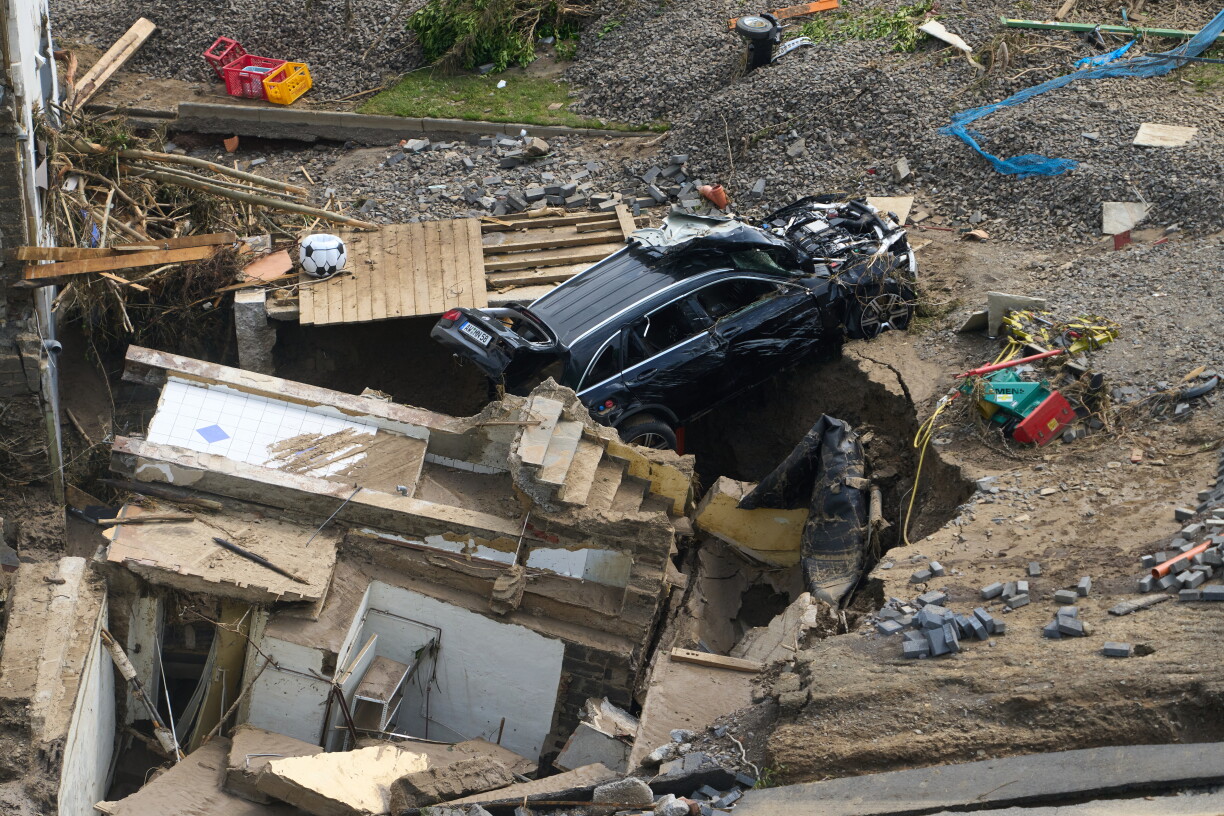
Five years ago, the Ahr Valley was devastated by floods, resulting in nearly 200 fatalities and destroying thousands of homes. Communication was lost within minutes, as people were quickly reported missing, creating a difficult situation for the emergency services.
In future, however, satellite communications and technology from Luxembourg could help to restore communication and make information more accessible in unexpected emergency situations.
There are still many regions across the globe where communication is unreliable. The Luxembourg company OQ Technology hopes to supply solutions to these areas, but also in cases of natural disasters, when regular communication is unable to cope.
Omar Qaise, CEO of Luxembourg-based OQ Technology, explained how satellites could even play a role in cyber attacks in the future.
"Our satellites can be used to establish direct communication with mobile phones. They could allow government alerts to be sent out, or in future people could even communicate directly using satellite technology", he said.
This could have a huge impact in natural disasters or other issues causing classic networks to drop, according to Qaise.
In the event of a natural disaster, he said, first responders could be alerted more quickly, and it could reduce financial damage and injuries or fatalities to the public. Qaise pointed to the Ahr Valley floods as an example.
"1,700 people were reported missing straight away. Not because they were actually missing, though, but because they had no network and were uncontactable. It wasn't feasible for first responders to reach them", he explained.
OQ Technology can currently provide global communication coverage at intervals of four to six hours. Once its constellation expands to 48 satellites, those intervals will become shorter, enabling more frequent connections, which is a key advantage for critical communications.
The Luxembourg-based company has also developed technology that enables drones to operate using 5G satellite communications.
OQ Technology has been operating in Luxembourg since 2016, where it develops its technology and manages its satellites from a local control centre.
The company has been supported by the Luxembourg government, the Luxembourg Space Agency (LSA), and the European Space Agency (ESA). One of the company's main goals is to eventually manufacture the satellites themselves in Luxembourg.





