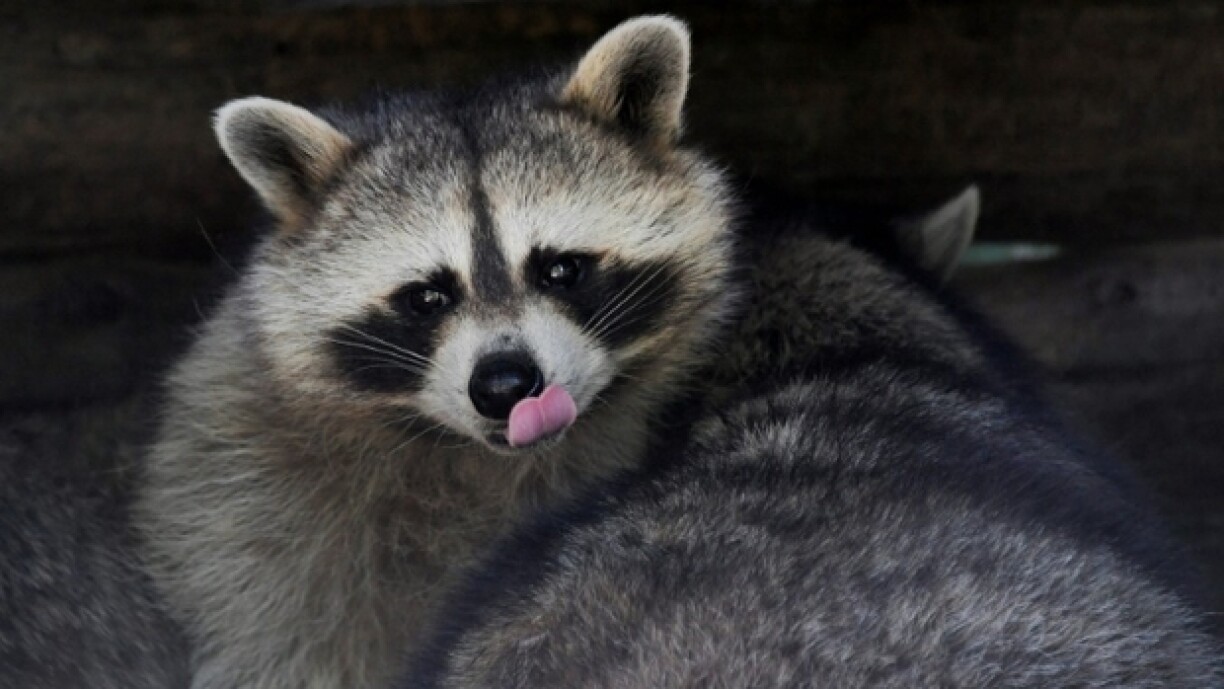
At the start of the 20th century, both the nutria and the raccoon were brought into Europe for their fur.
Since then, both species have spread unchecked across Central Europe and now feature on the EU list of invasive animal species.
A 2014 regulation requires countries to take targeted measures against invasive species in order to protect native biodiversity.
In Luxembourg, that responsibility lies with either the Nature and Forestry Agency (ANF) or the Water Management Agency (AGE), depending on the habitat in question.
The Haff Réimech nature reserve is one of the locations where the ANF is frequently active, notably when it comes to setting traps.
Groups of nutria repeatedly establish themselves in the reed beds, and need to be captured before they cause excessive damage or go on to reproduce.
Since 2017, this "beaver-rat" with the orange teeth has become established in Luxembourg, leaving behind a trail of its characteristic signs: consuming reed beds, destroying the banks of water bodies, and preying on native mussel species.
To date, the ANF has captured and culled 600 nutria.
The first raccoon was recorded in the country as far back as 1979.
Since then, the species has continued to spread, until the raccoon was opened to hunting in 2011.
Culling figures give a sense of its proliferation: while around 600 raccoons were shot in 2012, the annual figure has now reached nearly 2,000.
The damage they cause is also plain to see, whether by eating the eggs of rare bird species or by decimating entire amphibian populations during their seasonal migrations.


Raccoons have also made themselves at home in urban environments.
However, raccoons found in private gardens or attics no longer fall under the ANF’s jurisdiction, explains Laurent Schley, deputy director at the agency.
As an authority, Schley said, they did not intervene directly in such cases.
Instead, individuals had to apply for a special authorisation to capture the animal, and it then had to be euthanised in a humane, species-appropriate manner.
With both the nutria and the raccoon, Schley notes that the country has reached a point where eradication is no longer a realistic option.
They had, he pointed out, been brought into Europe by humans.
Now that they were part of the natural environment, people had to learn to coexist with them.
As the ANF, their focus remained on biodiversity, by protecting it specifically where the impact of these animals was greatest.
In practical terms, that would mean animals being regularly trapped in sensitive areas, or the nests of rare bird species being protected in such a way that raccoons cannot climb the trees to reach them.
The work of the ANF could not realistically go much further than that, even taking into account restructurings and a planned revision of the action plans.





