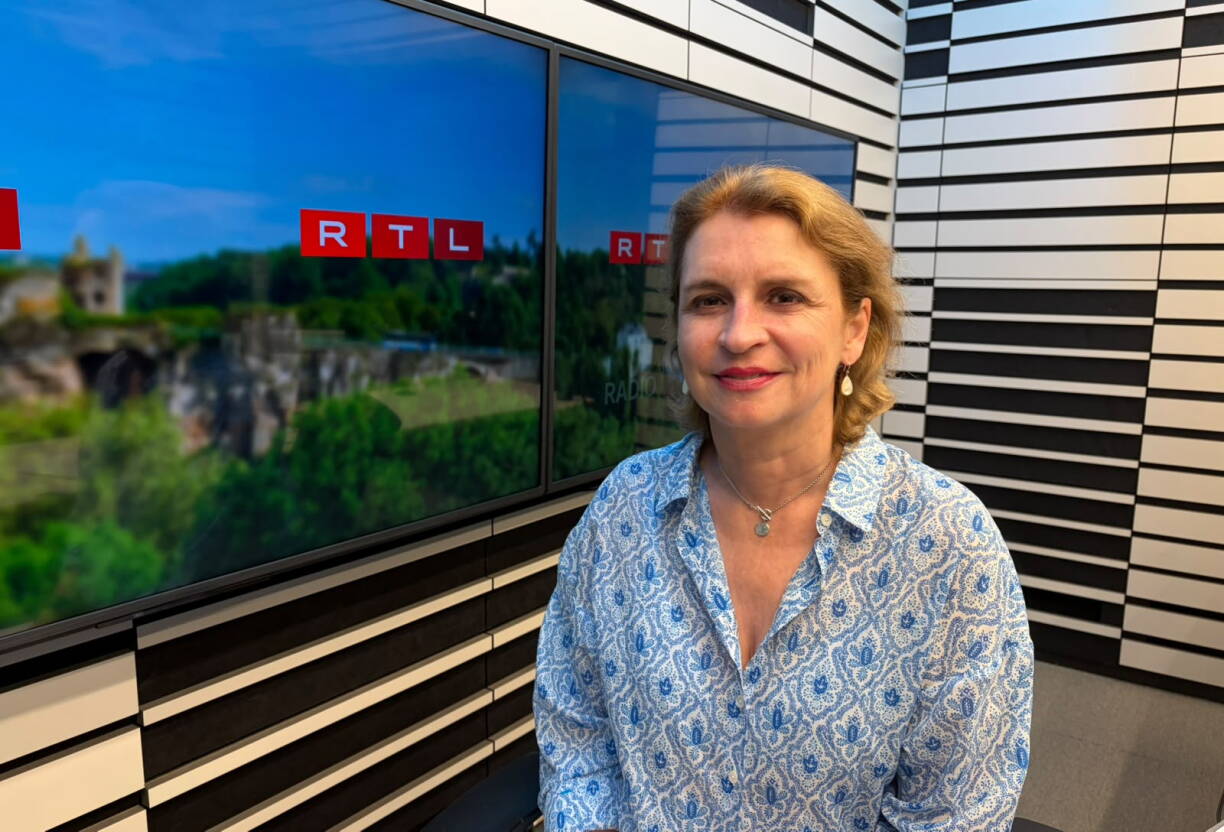
Speaking to RTL Radio on Wednesday morning, Luxembourg Ombudsman Claudine Konsbruck warned that the country was taking too long to implement essential reforms affecting prisoners, minors deprived of their liberty, and asylum seekers.
Konsbruck took over as Luxembourg's fourth ombudsman in April 2025, succeeding Claudia Monti. Her office handles complaints involving state and municipal authorities and other public bodies, while also independently monitoring places where people are deprived of their liberty, including prisons.
Presenting her latest annual report, Konsbruck said progress was particularly slow whenever extensive structural changes were required.
One of the report's main concerns is the situation of women in prison. Konsbruck explained that all female detainees continue to be housed together in a single block at the Luxembourg Penitentiary Centre in Schrassig, without sufficient separation according to their legal status or individual circumstances.
Women in pre-trial detention, convicted prisoners, and, occasionally, minors may therefore be accommodated in the same area, she said.
Konsbruck added that women accounted for only around 10% of Luxembourg's prison population and consequently had little public visibility or influence. Although some associations advocate on their behalf, their concerns are rarely heard, she noted.
Konsbruck stated that prison authorities introduced several smaller changes following the ombudsman's report, including improved access to workshops. However, she argued that these adjustments did not address the underlying structural problem.
She welcomed the decision by ministers Yuriko Backes and Elisabeth Margue to visit the prison personally after the report was published. They subsequently stated that renovating Block F, where the women are housed, would be treated as a priority, according to Konsbruck.
The recently opened Uerschterhaff remand prison accommodates only men, meaning that women awaiting trial must still be held at Schrassig. The activities traditionally offered to female prisoners have also often been stereotypically gendered and provided few meaningful qualifications.
"That is rather ridiculous", Konsbruck said, expressing hope that the situation would now change.
The treatment of minors deprived of their liberty remains another major concern. Last year, 28 minors were placed in the adult prison at Schrassig, while the UNISEC secure unit for young people in Dreiborn has only 12 places and remains severely overcrowded.
Konsbruck described youth protection reform as an example of how such a project should not be managed. She recalled working on the issue as a civil servant at the Ministry of Justice around 20 years ago, yet the relevant legislation has still not been fully adopted.
A dedicated juvenile detention centre is planned for young people who have committed criminal offences, a development welcomed by the ombudsman. However, she stressed that the facility would need appropriate structures to provide individual support and separate different groups of minors.
The current plans provide for 30 places, but Konsbruck questioned whether this would be sufficient. The authorities would also need to consider distinctions between boys and girls and between young people with different backgrounds and needs.
Her office would have preferred a scientific study to establish the actual demand, examine available data, and produce short-term forecasts before the centre was planned.
"We are a modern country, we have a lot of money, and a competent public administration. Yet we implement our projects incredibly slowly", she said.
Konsbruck fears that minors will continue to be placed at Schrassig for some time, as major construction projects and new institutional concepts tend to progress slowly. A director has now been appointed to develop the juvenile centre's operating model, but the ombudsman called for the project to be treated as a clear priority.
Under the EU's new Migration and Asylum Pact, the ombudsman is also responsible for monitoring compliance with fundamental rights during the new screening procedure for asylum seekers.
A permanent screening centre is due to open in the former ADEM building on Rue Bender near Luxembourg City's Gare district. For the time being, however, the procedure is being carried out in a provisional facility occupying half a floor of the Immigration Directorate on Route d'Arlon, Konsbruck said.
Konsbruck's team visited the site shortly after the relevant legislation entered into force in June. She said the provisional centre was not yet operating around the clock, despite being intended to remain open 24 hours a day, seven days a week.
She explained that the centre should carry out security and health checks on new arrivals, including specific assessments of unaccompanied minors. However, the medical screening service was not yet available because the Ministry of Health had not recruited the necessary staff, according to Konsbruck.
The permanent facility is expected to become partly operational at the beginning of next year, she noted. A closed unit is also planned, although this will not be ready by then, Konsbruck said.
Konsbruck described the current arrangement as a provisional structure with significant room for improvement, once again pointing to delays in implementing structural reforms.
The ombudsman would also like her office's monitoring responsibilities to be extended to institutions where residents may not formally be detained but are nevertheless not entirely free to leave.
These could include residential and nursing homes, facilities for people with disabilities and children's homes.
Konsbruck stressed that this expansion was not yet guaranteed. She recalled that MP Dan Biancalana of the Luxembourg Socialist Workers' Party (LSAP) submitted a draft bill proposing such powers in April 2025, and the ombudsman has issued an opinion on the proposal. Her office is now awaiting the Council of State's assessment, she said.
Beyond monitoring detention facilities, the ombudsman receives complaints from members of the public experiencing difficulties with municipalities and public institutions.
The number of complaints is increasing each year, while the cases themselves are becoming more complex. However, the office has limited powers to compel public bodies to act.
Konsbruck explained that her office can issue recommendations, submit them to the Chamber of Deputies through its annual report, and send them directly to the administrations concerned. The ombudsman can then follow up on whether any action has been taken, but it has no stronger enforcement mechanism, she said.
Konsbruck said she hoped parliamentary scrutiny would encourage administrations to examine the recommendations carefully.
Her office is also continuing to advocate for a formal "right to make a mistake" in administrative procedures. This would allow people to correct an honest first-time error without immediately losing access to benefits or assistance, she said.
Such mistakes may include selecting the wrong option on an increasingly complex digital form, forgetting to attach a document, or submitting the wrong supporting evidence, according to Konsbruck.
The ombudsman argued that administrations should respond more proactively when they notice an obvious error and allow people to correct it, provided it was made in good faith and was not part of a repeated pattern.
Some authorities remained extremely rigid, she said, adopting the position that "a deadline is a deadline" and refusing to consider anything submitted afterwards.
"We strongly advocate recognising a right to make an honest mistake", Konsbruck concluded.





