Normally around this time of year, farmers across the country would be busy harvesting, but right now the fields remain quiet. The ground is simply too damp, and forecasts suggest the situation will not improve in the coming days.
Up until now, the harvest outlook had been relatively positive, but that could still change if the weather does not shift soon.
Ideally, farmers would be out with their combine harvesters by now, but current conditions simply do not allow it. This is not yet cause for alarm, as the winter barley harvest actually started as early as 1 July – three weeks earlier than usual.
Harvesting progressed well, though the wheat at that point had not quite reached maturity. That has now changed, but in the meantime, the moisture levels have become too high.
What is needed now are four dry days with temperatures around 25°C to resume work. If the wheat stands too long in the field, it could be at risk.


Sam Mille, a farmer in Perlé, explained that his particular crop is bread wheat, destined for milling and flour production, which demands a very high standard of quality. He warned that if the rain continues for another ten days, the wheat could lose its baking properties and begin to sprout prematurely, rendering it unfit for flour.
In that case, it would be downgraded to animal feed, which would represent a serious setback for producers, according to Mille.
Earlier in the season, there had already been problems with slugs damaging part of the wheat crop, which prompted the sowing of additional summer barley as compensation. Despite this, expectations of strong profits are low this year, with grain prices down compared to previous years due to abundant supply.
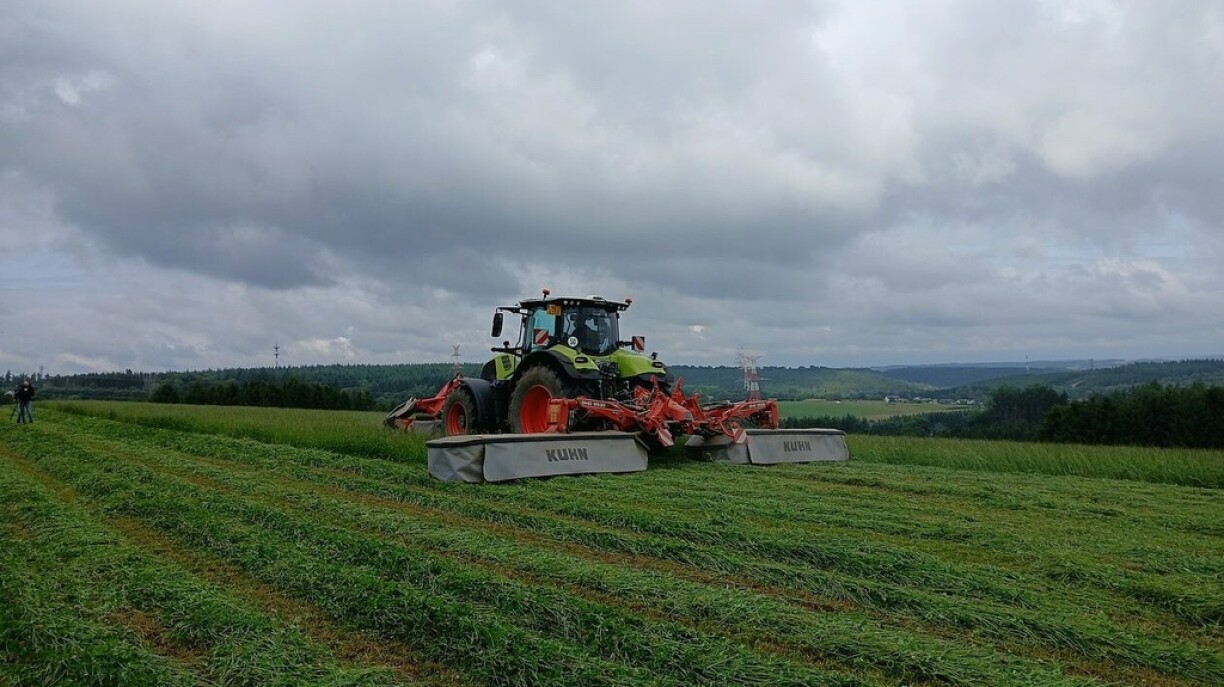
Although harvesting is currently not an option, that does not mean there is nothing to do, according to Mille. Farmers have shifted focus to mowing clover grass for silage to feed livestock.
Mille noted that they are currently mowing a third cut of clover-grass forage, which serves as a valuable protein source for their cattle. Growing this grass reduces their need to purchase additional feed, he said.
Mille further explained that after a dry first cut earlier in the season, recent rainfall has significantly improved conditions. This is essential, considering the farm in Perlé has about 300 head of cattle to feed – and part of that feed also includes grains harvested from their fields.
It all ties back to a larger agricultural cycle. Mille explains that some of the grain is sold, while some is kept on the farm and fed to the animals, adding that the resulting manure returns to the fields, which enriches the soil for next season's crops. As Mille put it, the real challenge is maintaining this circular system while minimising nutrient loss.
As for the broader harvest outlook, farmers are anticipating average yields this year, but with good overall crop quality –provided the summer weather finally makes a proper return.





