
Marianne Donven recently made headlines as the first senior civil servant to resign in protest over the Luxembourg government's asylum policy. In an interview with our colleagues from RTL Infos, she criticised the Frieden government for failing to address the plight of refugees and migrants, describing its approach as "inhumane". Even before her resignation, Donven was actively working to propose concrete solutions to the challenges faced by asylum seekers.
At 58, Donven acknowledges that her decision to leave her position at the Ministry of Foreign Affairs and the High Council for Civil Protection has definitely resulted in a lower income. However, she insists she "doesn't see things that way" and has "no regrets" about her resignation. She explained that she could no longer morally align herself with the policies of the CSV-DP coalition government led by Prime Minister Luc Frieden.
When Donven shared her resignation letters on Facebook, she did not anticipate the overwhelming response. Messages of support poured in, with comments such as "Chapeau Madame", "Respect for your honesty and courage", and "bravo". Donven expressed feeling "encouraged" and "understood" by the public reaction, and she even received several job offers, which she found amusing.
While the outpouring of support from the Consultative Commission on Human Rights, various associations, and public figures has been heartening, Donven noted that her decision was further validated by reports of "many other very complicated situations" in Luxembourg. Cases similar to that of the single mother with a 10-month-old baby and a 5-year-old child who was recently expelled from a facility run by the National Reception Centre (ONA), which falls under the Ministry of Family Affairs.
Donven acknowledged that it was "clear" the new government would adopt stricter policies. However, after more than a decade of working to provide asylum seekers with shelter, meeting spaces, and employment opportunities, she believes the government has "crossed a certain line that is not acceptable."
By resigning, Donven is protesting what she describes as the "inhumane" treatment of refugees and migrants. She particularly condemns the government's decision to evict families, single mothers, and young children – including babies – during the winter months. "I can't accept that", she stated firmly after a pause.
Donven, who works closely with migrants and witnesses their struggles and determination firsthand, emphasised the human impact of such policies. "You always have to bear in mind that these are women, men, and children. You can't just do whatever you want", she said. She criticised the practice of expelling individuals from reception facilities while they are still in apprenticeships or education, stressing the need for psychological preparation and support. "You can't kick people out who have already been through so much in their lives and put them back into unbearable distress", she added.
The root of the issue, Donven explained, lies in the pressure on Luxembourg's housing market. While she acknowledges that individuals granted international protection are technically no longer eligible to stay in reception centres – especially if they are working or receiving the Social Inclusion Income (REVIS) – they often cannot find alternative housing. "They are generally not invited to view properties, and as a result, we end up putting them on the street", she summarised. Donven also highlighted the "enormous delay" in building social housing, which exacerbates the problem.
Donven's resignation did not come entirely out of the blue. For 11 years, she led humanitarian aid efforts within the Directorate for Cooperation, Development, and Humanitarian Action at the Ministry of Foreign Affairs. After a period of unpaid leave, she transitioned to cultural and international affairs but remained deeply involved in solidarity projects.
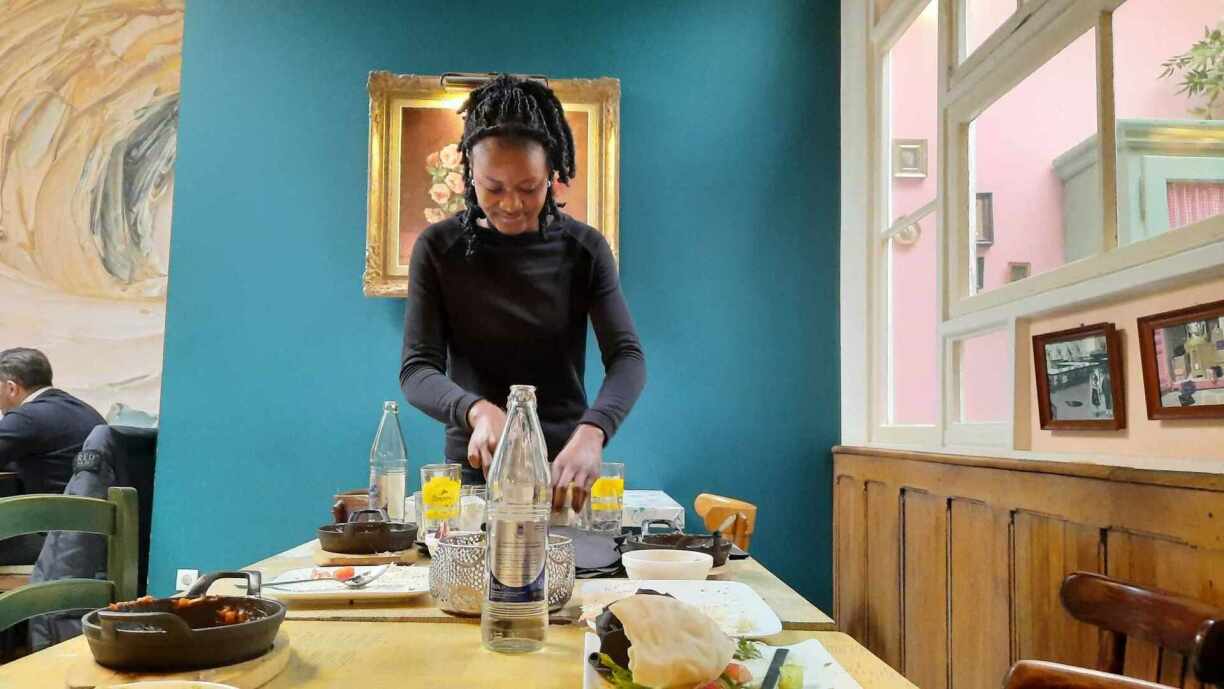
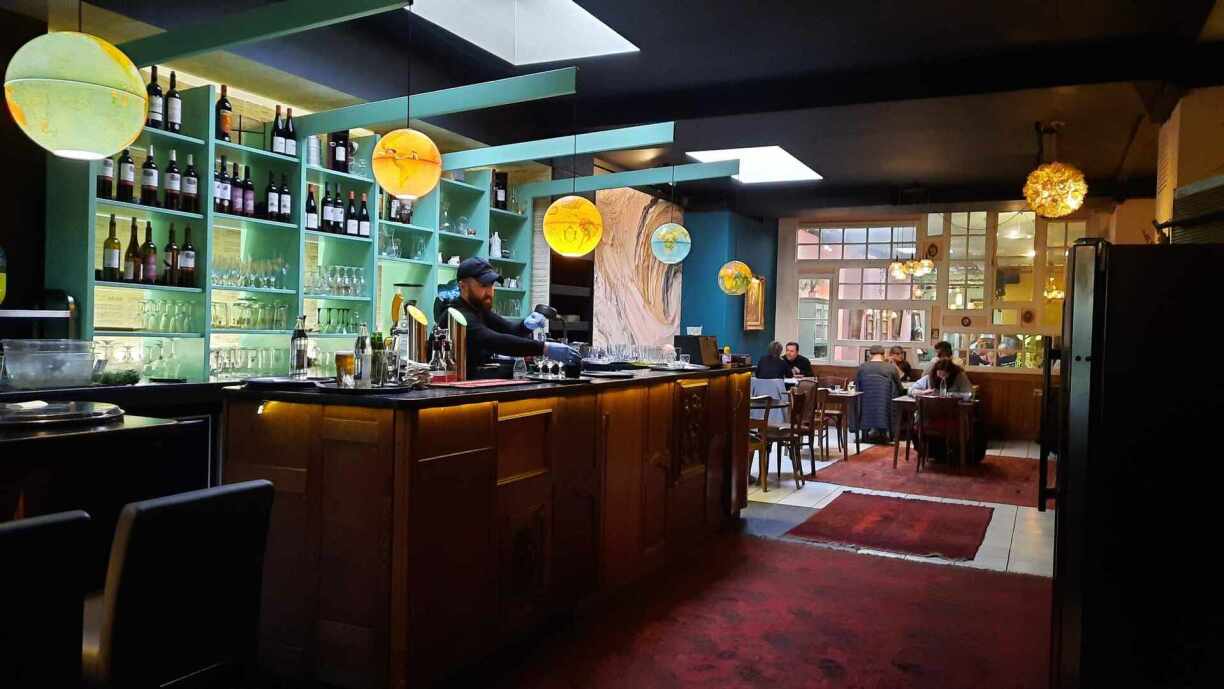
Donven has been a driving force behind several initiatives aimed at fostering inclusion and support for refugees. She spearheaded Hariko, a Bonnevoie-based project promoting inclusion through art, co-founded Oppent Haus, an initiative encouraging Luxembourg residents to host refugees, and played a key role in establishing Chiche!, the first Syrian-Lebanese restaurant in Luxembourg, which opened in Hollerich in 2017.
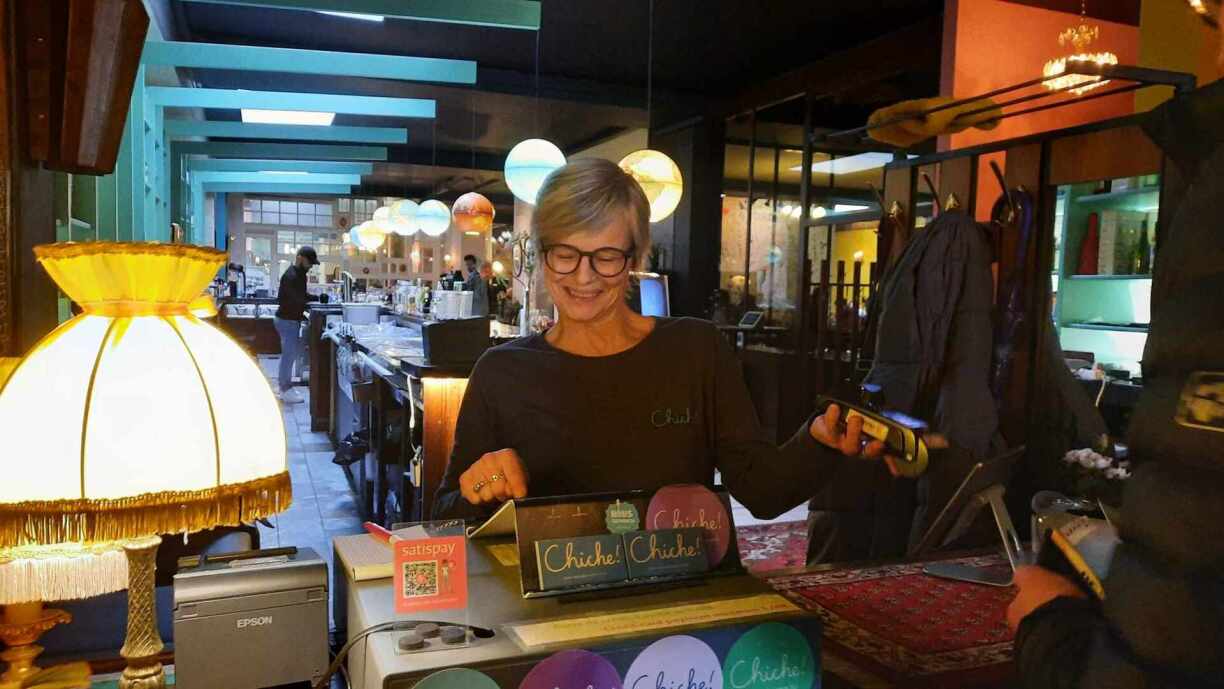
The Chiche! project was designed to help individuals granted international protection build a future in Luxembourg. "It's not easy to find a job if you don't speak the language", Donven explained. "This allows them to pay rent, provide for their children, and for those who weren't granted asylum but were later regularised, it means they can stay in Luxembourg through employment."
The initiative has grown significantly, with six restaurants now operating across the country. The latest opened in Ettelbruck on Tuesday, and Donven plans to dedicate "100%" of her time to expanding the project further. "Maybe I’ll be able to open more restaurants. My goal is to create 100 jobs. I'm at 72 now, so there's still work to do", she said with a smile.
What inspires Donven are the "absolutely incredible stories" of those who have benefited from the project. She highlighted the story of a Pakistani survivor of human trafficking who earned a Higher Technician Certificate (BTS) in logistics with "excellent" grades, as well as Ousmane, who trained to become a mechanic. "There are also many people who obtained residency papers thanks to Chiche! before returning to school or training to build a life for themselves in Luxembourg," she added.
Read also:
Chamber of Deputies: Motion to put an end to expulsion of vulnerable individuals rejected





