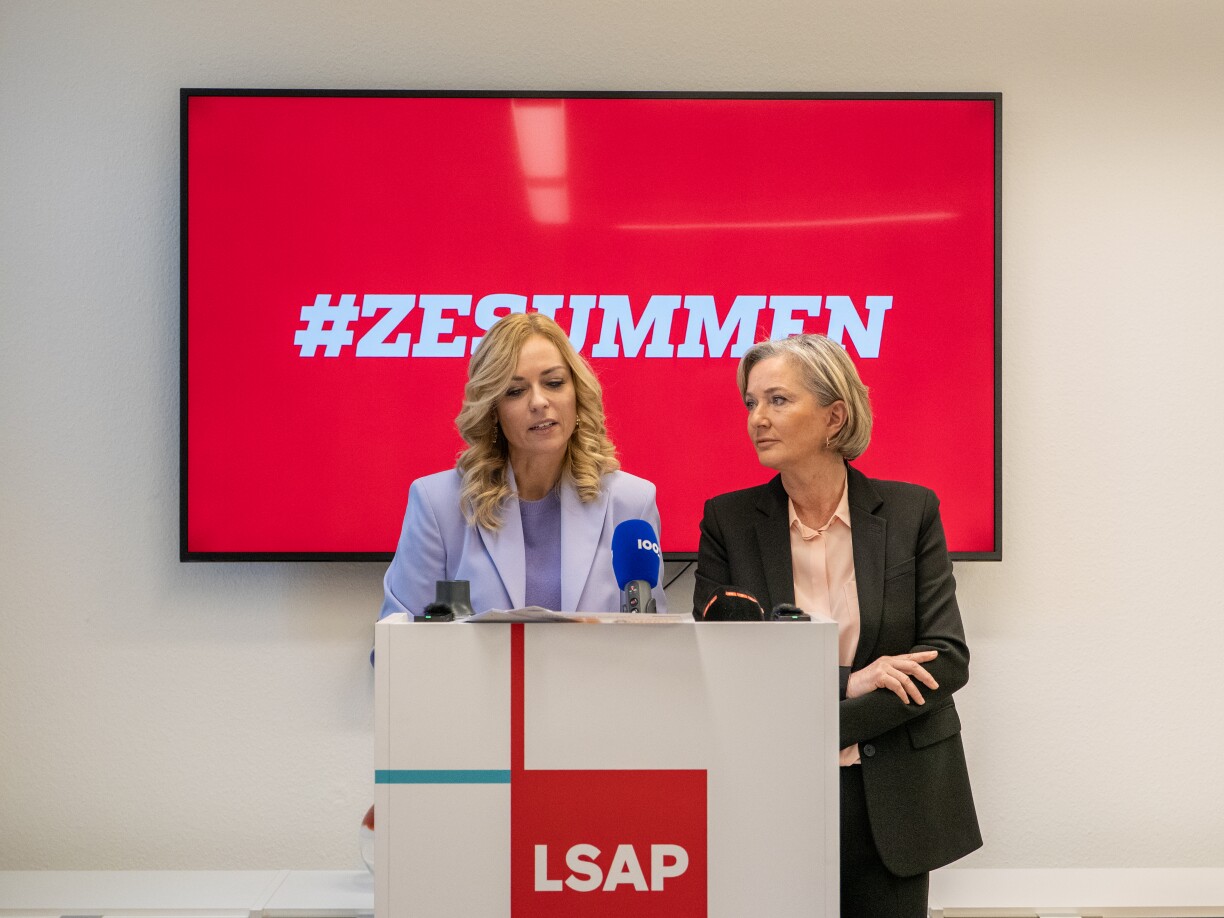
At a press conference on Monday afternoon, the Luxembourg Socialist Workers' Party (LSAP) warned that the country could find itself dangerously exposed in the event of a serious emergency. In its view, Luxembourg currently lacks the level of preparedness needed to deal with a crisis and urgent, concrete action from the government is required.
While a strategy may exist on paper, LSAP MP Paulette Lenert stressed that, in practice, very few people would actually know what to do if a crisis occurred. She recalled that an LSAP motion on resilience and crisis management was adopted in parliament as early as April last year, but said no meaningful follow-up had taken place since then. Other countries, she noted, have been far more proactive, not to alarm the public, but precisely to prevent panic.
Relying solely on a website is no longer sufficient, Lenert argued. She called for a nationwide awareness campaign aimed directly at households and tailored to different age groups. In other countries, she explained, there are brochures designed specifically for children or for older people, and hospitals are expected to be fully prepared.
Luxembourg, she added, also faces the particular challenge of having thousands of cross-border commuters entering the country every day. If everything were to come to a sudden standstill, she said, key questions would arise: would these workers know where to go, would they be properly informed, and where would they be able to find shelter?
Raising awareness, according to MP and LSAP parliamentary group leader Taina Bofferding, also means providing regular information rather than relying on one-off messages. She suggested that exercises involving municipalities and the civilian population could be a useful approach. Other countries, she said, have developed effective initiatives that help people learn how to cope with such situations.
While Luxembourg has previously carried out large-scale exercises with the police and the Grand Ducal Fire and Rescue Corps (CGDIS), she emphasised that it is just as important to actively involve citizens themselves. She explained that in an actual crisis, people would need to be informed quickly through a combination of direct and indirect communication channels.
Bofferding also underlined the need to further develop the LU-Alert system and give it a central role. In her view, alerts should go beyond simple warnings and include clear, practical instructions. For example, if there were a problem with drinking water, people should be explicitly told to boil it, she said. In the event of a severe storm, she added, messages should clearly advise people to stay indoors. Bofferding argued that the key is not only to alert the public but to clearly explain what is expected of them in a given situation.
Among her additional proposals is the introduction of a compulsory first-aid course, which she suggested could be linked to obtaining a driving licence – a longstanding practice in neighbouring Germany. Overall, the LSAP parliamentary group insisted that the government must now deliver concrete measures to genuinely strengthen the resilience of the population.





