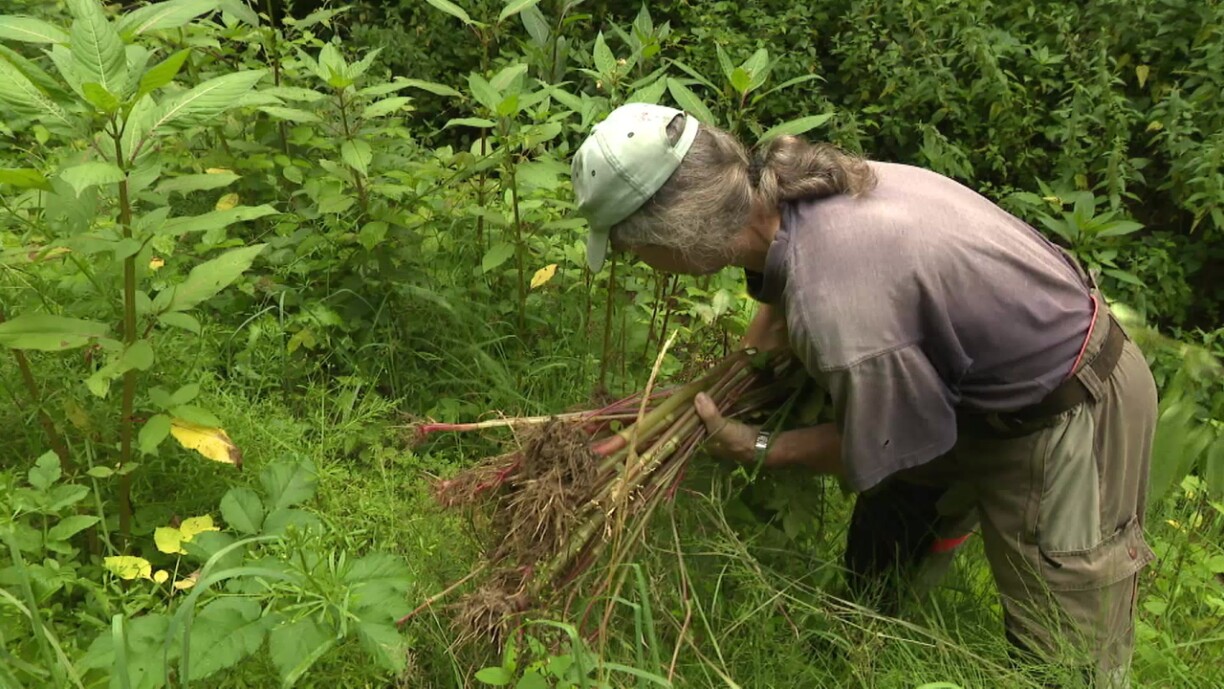
The plant, commonly known as "policeman's helmet" or "copper tops", was originally found in the Himalayan regions. It was brought to the northern hemisphere over the course of the 19th century, mostly by gardening enthusiasts who liked their blossoms. However, the plant can be disruptive to our local eco-system, since it can spread rapidly along riversides and push out other domestic vegetation.
A single plant can produce up to 4,000 seeds, which it can then launch 7 meters across its surroundings. Without persistent suppression of spreading, the species could evolve into a major problem for the Grand Duchy's wildlife. After being torn from the ground, the plants are disposed of in a local biogas plant.
To support the initiative, volunteers need to register with the administration of a nature park in advance.





