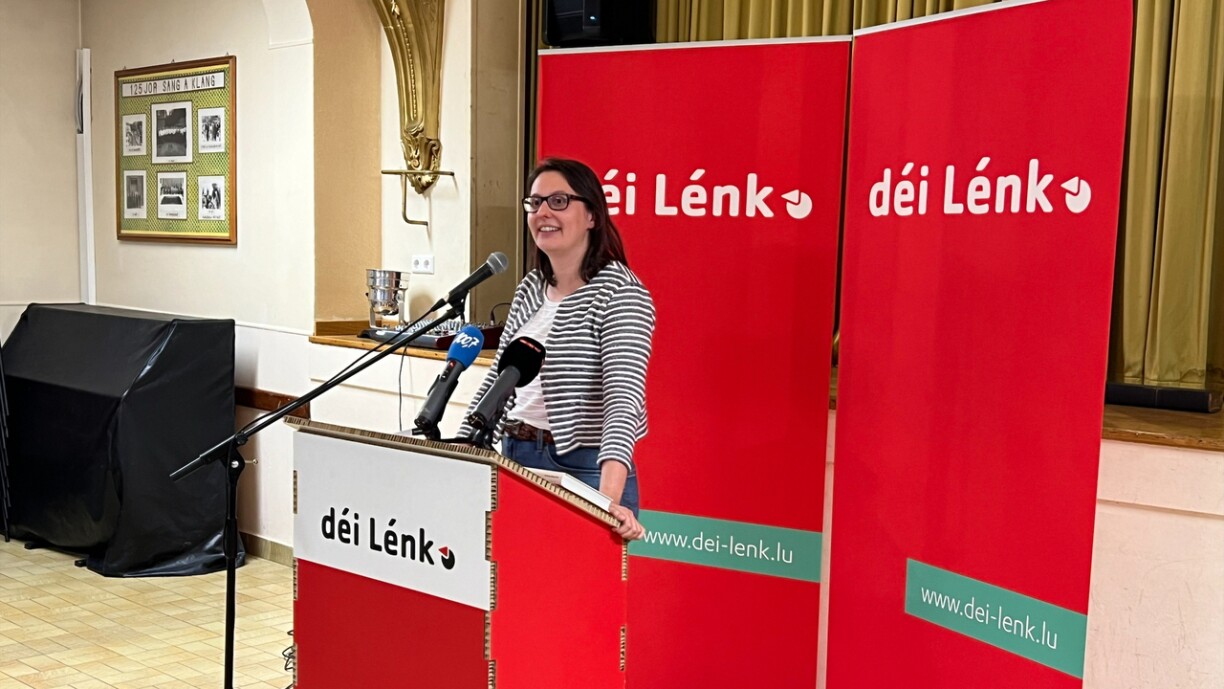
At the New Year's reception of the Left Party (Déi Lénk) on Wednesday evening in Pfaffenthal, Luxembourg City, party speaker Carole Thoma launched a sharp critique of the Christian Social People's Party (CSV), accusing it of abandoning its Christian values. Thoma also took aim at the broader government coalition, sparing no criticism in her address.
"Under the leadership of CEO Frieden, the name of his party has been reduced to three letters that no longer stand for anything", Thoma declared. She argued that social values have been absent from the CSV's agenda "for some time" and were "fully buried" during what she called the "disgusting" debate over the begging ban. Thoma further questioned the CSV's claim to being a "people’s party", stating that it has failed to address the "real challenges" faced by Luxembourg's population.
The Left Party highlighted alarming poverty statistics, noting that over 21% of Luxembourg's population is at risk of poverty, with the figure rising to 26% for children. The party pointed out that the European Commission has placed Luxembourg under monitoring for the first time due to these concerning trends.
Thoma also addressed the ongoing pension debate, emphasising that no demographic has seen a sharper increase in poverty risk than pensioners. While she acknowledged the urgent need for pension reform, she insisted that any changes must guarantee a decent standard of living for retirees. However, the Left Party expressed scepticism that the current CSV-DP government coalition would deliver such a reform.
On housing, Thoma criticised the government for reverting to policies that prioritise the private sector, effectively rolling back progress by a decade. She accused the state of being "reduced to handing out tax gifts to developers and large investors", rather than addressing the housing crisis through meaningful public intervention.
On environmental policy, the Left Party criticised the government for abandoning meaningful climate initiatives, noting that the policies that once bothered the now governing parties have now "developed into a policy that no longer exists". In a pointed remark, the party questioned whether Minister of the Environment Serge Wilmes was even aware of his role, asking, "Has anyone told Serge Wilmes that he is actually a minister?"
In contrast, the Left Party acknowledged that Minister of Labour Georges Mischo has been more active, though not in a positive way. The party accused Mischo of undermining social achievements that were "the result of years of struggle", particularly through the generalisation of Sunday work. The Left Party argued that the government has effectively dismantled social dialogue within just one year and pledged to support trade unions in any protest actions they might organise.
The topic of abortion also featured prominently in the party's address. The Left Party recently submitted a proposal to the Chamber of Deputies to enshrine the right to abortion in the constitution. The party emphasised the urgency of safeguarding human rights while the political balance of power still allows for it. According to the Left Party, anti-democratic, misogynistic, queerphobic, and racist forces are gaining strength, posing a significant threat to societal progress.
The party attributed the rise of extremism to the failure of centrist parties to effectively counter right-wing populism. Thoma made it clear that her party does not position itself as a centrist or catch-all party. "We are not a party of the centre, and we are not a party for everybody", she stated. Thoma emphasised that the Left Party does not represent the interests of the wealthy, who refuse to contribute their fair share to society, nor does it align with right-wing forces that seek to divide communities.
Looking ahead to 2025, the Left Party vowed to continue its fight for a more just society, ensuring that the wealthy contribute their fair share and that right-wing ideologies are prevented from ever rising to power again.





