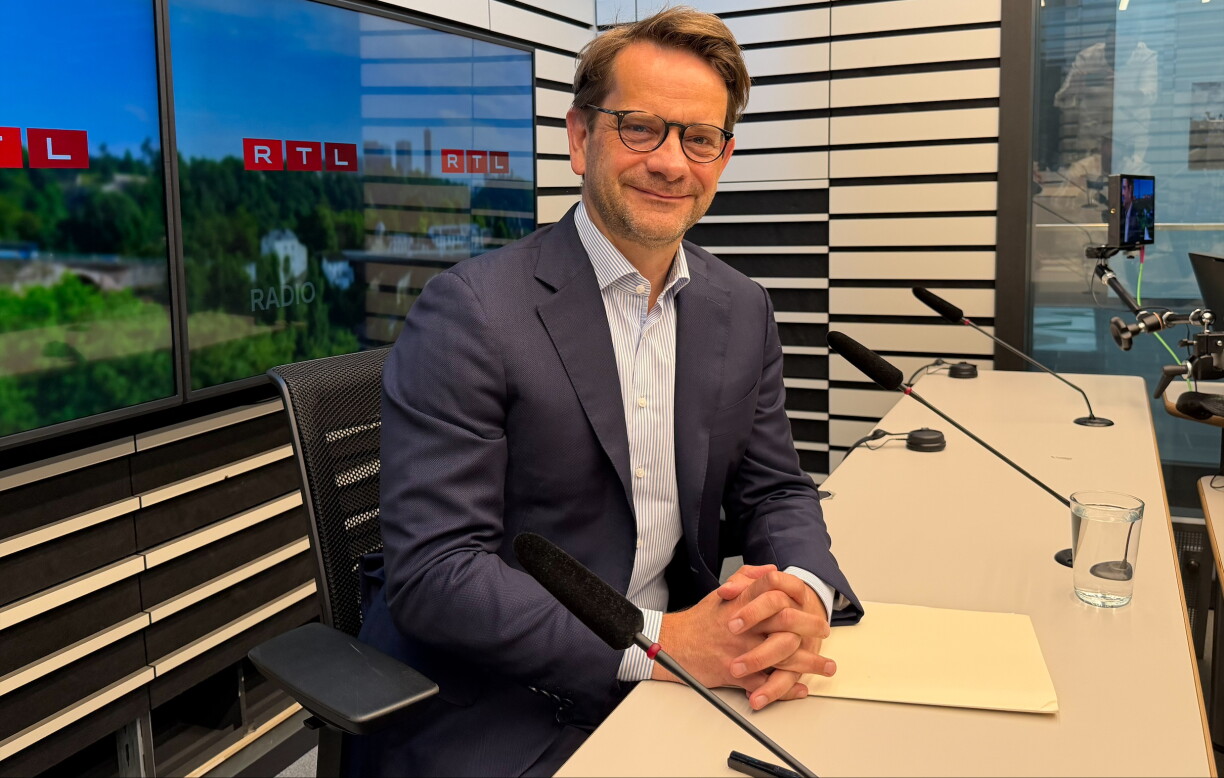
Speaking to RTL Radio on Monday morning, parliamentary group leader Laurent Zeimet of the Christian Social People's Party (CSV) said he understood why some municipalities and schools had decided to allow pupils to leave early because of the heat.
A red alert is due to remain in force for at least three days, with temperatures already close to 20°C early in the morning.
Zeimet said municipalities were best placed to decide whether school buildings remained suitable for lessons. Some had chosen to close schools entirely, while others were granting exemptions or allowing pupils to leave early.
He described this as part of municipal autonomy, noting that local authorities had to take responsibility and adapt their arrangements to the circumstances in their communities.
Parliament, meanwhile, will continue working, with committee meetings scheduled throughout the week apart from National Day, he said.
Zeimet acknowledged that the high temperatures could make Tuesday's celebrations particularly memorable. He is due to attend events at the Philharmonie and the Grand Duke Jean Museum of Modern Art (MUDAM).
Asked whether the unusually high temperatures showed that the effects of climate change were now being felt directly in Luxembourg, Zeimet cautioned against dramatic language.
He said climate change was a reality and required changes to both public policy and people's habits. However, he argued that each episode of extreme heat should not trigger panic.
Instead, Luxembourg should pursue a consistent climate policy and strengthen its ability to cope with increasingly difficult conditions.
The activation of a crisis unit should not be interpreted as panic, explaining that "It's a crisis unit, not a panic unit." Its purpose was to ensure that the authorities were prepared for the possible consequences of the heatwave, according to Zeimet.
He stressed that the country's resilience depended on preparing as thoroughly as possible for events that might occur.
Zeimet, who was appointed chair of Parliament's special tripartite committee last week, also explained the body's role.
According to Zeimet, the committee was created to prevent discussions about the tripartite agreement from being spread across several specialist committees. Instead, it will examine the main legislative proposals resulting from the agreement and prepare them for votes in the plenary chamber, he said.
Zeimet added that the committee was currently expected to consider around 16 legislative texts.
MP Sam Tanson of The Greens (déi gréng) had complained, among others that Zeimet, had blocked discussions about the substance of the measures agreed during the tripartite negotiations.
Zeimet rejected that this was the case. He said he had pointed out that the committee's task was not to repeat the negotiations or conduct a historical analysis of how the agreement had been reached.
The agreement had already been concluded between the government and the social partners, he said, and Parliament now had to process the resulting legislation.
Some measures are intended to apply retroactively from 1 June, meaning the relevant texts must be adopted before Parliament's summer recess, he said.
Zeimet nevertheless acknowledged that opposition MPs had every right to question government decisions critically.
However, he noted that opposition parties, including the Greens, had long called for tripartite negotiations. Such negotiations take place between the government, trade unions, and employers, without Parliament participating directly, Zeimet noted.
The Chamber of Deputies could ultimately reject the resulting legislation, he said, but would then have to accept the political and social consequences.
The agreement, called the "resilience package", is expected to cost around €450 million over the next two years.
Asked where the government would find the necessary budgetary room, Zeimet said state revenues were currently reported to be developing favourably.
He assumed that the government had considered how the package would be financed and how future budgets would need to be structured.
Not every planned expenditure might remain possible, he acknowledged, meaning political choices would have to be made. Such decisions would not please everyone, but Luxembourg remained in a comparatively strong position against many other countries, he said.
Zeimet also praised Finance Minister Gilles Roth, describing him as a capable politician who had prepared a long-awaited tax reform after the previous government failed to produce results.
Asked whether the tripartite agreement could improve PM Luc Frieden's popularity, Zeimet said Frieden's job was not to top political opinion polls.
Frieden's responsibility was to lead the country calmly, he said, adding that Frieden had shown that he could secure an agreement through dialogue despite widespread doubts that a compromise would be reached.
Zeimet said many had predicted severe political consequences if the negotiations failed, including the possible collapse of the coalition. The agreement had now been reached, and he believed the public would recognise Frieden's role in achieving it.
He described Frieden as someone who considers his decisions carefully before acting.
Former PM Jean-Claude Juncker recently questioned whether it was sensible for Frieden to serve simultaneously as prime minister and CSV president.
Zeimet responded that the CSV's most recent party congress had elected Frieden as party president.
He said similar arrangements existed in other political parties and sister organisations, pointing to German Chancellor Friedrich Merz, who also leads his party.
Zeimet added that former prime ministers should exercise restraint when commenting publicly on their successors. Drawing a comparison with his own time as mayor, he said he also avoided continually offering public assessments of how his former municipality was now being run.
Turning to foreign affairs, Zeimet said the European Union was under pressure from several directions, including Russia, China, and the United States.
In such a difficult international environment, he argued, Luxembourg needed to continue acting calmly and carefully.





