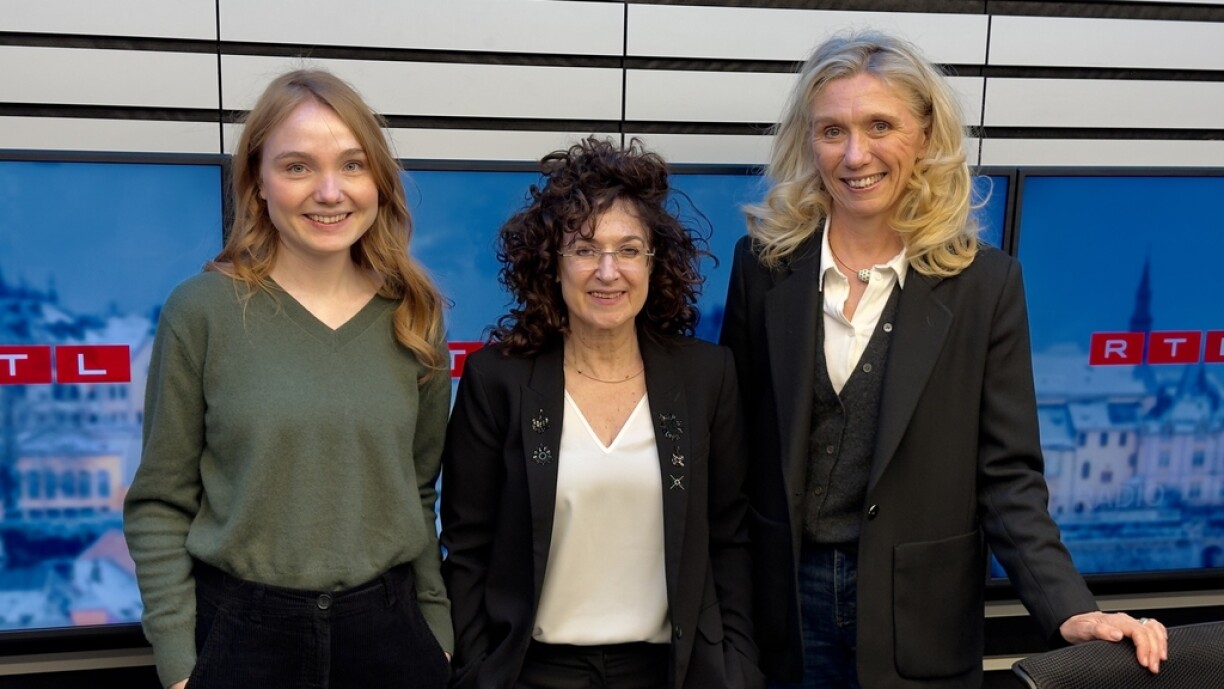
On Saturday, our colleagues from RTL Radio hosted a roundtable discussion on women's health, featuring Shirley Feider, president of the Umbrella Organisation of Patient Associations (CAPAT), Chantal Keller, nurse, author, and founder of the non-profit "Blëtz", and Claire Schadeck of the feminist group CID Fraen an Gender.
The guests unanimously agreed that women face systemic discrimination in medicine and research, citing issues such as misdiagnoses, a lack of data, and persistent gender stereotypes.
One of the key challenges discussed was the absence of reliable figures and studies on women's health. Feider emphasised the importance of having accurate data to address these issues effectively. The guests welcomed the upcoming study on gender, set to be presented in February by the Ministry for Gender Equality and Diversity and the Luxembourg Institute of Health (LIH), as a step in the right direction.
Keller, whose non-profit "Blëtz" focuses on stroke awareness, highlighted the lack of data in this area as well. To address this, Blëtz has begun collecting information from individuals who contact them via phone, aiming to build a comprehensive dataset. According to the Ministry of Health, the average age of stroke victims is 75 years. However, Keller revealed that preliminary data collected by Blëtz so far suggests the average age is actually 57, with an equal representation of men and women.
The roundtable also explored the structural problems that contribute to disparities in women's health. The guests noted a tendency to prioritise psychological explanations for women's health issues, often reducing them to hormonal or "hysterical" causes – a phenomenon referred to as the "HH" approach. Schadeck pointed out that the term "hysteria" has a long history of being used to discredit women, whether for expressing political opinions or refusing to conform to societal expectations, such as fulfilling "marital duties". In the past, many women were even hospitalised and diagnosed with hysteria based on these stereotypes.
Schadeck argued that such gender stereotypes persist today, often leading to delayed or incorrect diagnoses for women.
The roundtable discussion on women's health also highlighted significant differences in how men and women are treated in the medical field. Shirley Feider provided an example, noting that diagnosing rare diseases takes an average of 5.4 years for women, compared to just 3.9 years for men. The guests emphasised the need for a more nuanced approach to analysing symptoms and prescribing medications, taking gender differences into account alongside factors like age and weight.
For instance, women metabolise drugs differently than men, often requiring lower doses and experiencing more side effects.
For individuals who feel they have been misdiagnosed or dismissed due to gender bias, several resources are available. Many hospitals allow patients to file reports through their websites, while a mediator for the healthcare sector can also be contacted. Additionally, the Patient Advocacy Group offers support to those who believe their care was mishandled. However, the guests agreed that feedback mechanisms need to be more accessible and user-friendly to empower patients and drive systemic improvements.
The panel called on policymakers to increase funding for gender-specific medical research and improve inter-ministerial cooperation to address these issues effectively. They argued that tackling gender disparities in healthcare requires a multifaceted approach, including raising public awareness and implementing targeted reforms within hospitals and medical training programmes.
One key recommendation was the introduction of mandatory gender studies for future healthcare professionals, such as doctors and nurses. The guests also emphasised the importance of practical, application-based training for current practitioners, moving beyond theoretical knowledge to ensure real-world impact.





