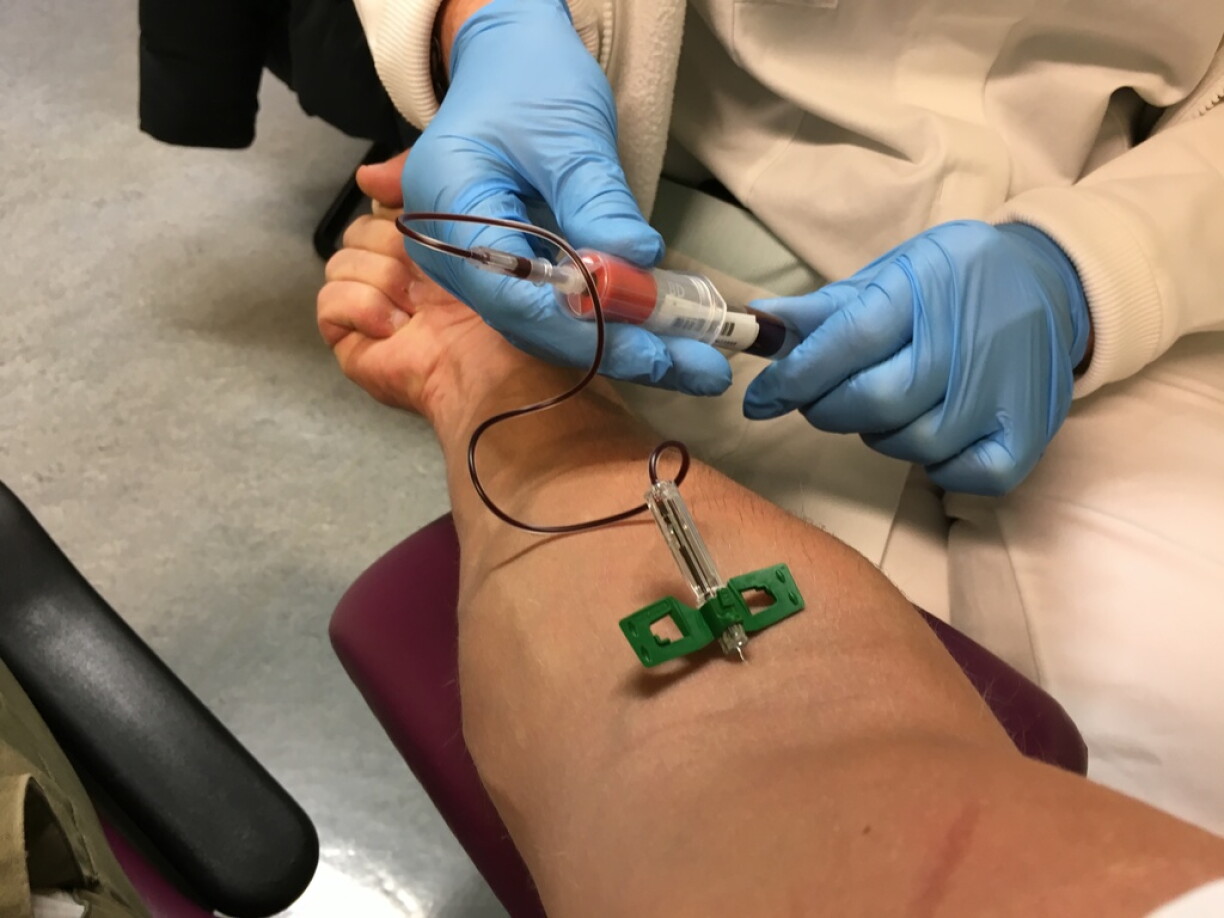
The World Hepatitis Day is organised by World Hepatitis Alliance and aims to raise awareness about the risks of viral hepatitis, infection prevention and control. At the global level, around 230 million people have hepatitis B without knowing it while 58 million unknowingly live with hepatitis C, according to estimates of the World Health Organization (WHO). The organisation is therefore urging people to get tested and play an active role in eradicating the disease.
Hepatitis A, B, C, D and E viruses cause inflammation of the liver, which, in return, can trigger serious illnesses and, in the worst case, even lead to death. Hepatitis B and C are considered to be most dangerous.
Hepatitis B is mainly spread through unprotected sex and contact with infected blood, but in some cases also through saliva. Hepatitis C is usually spread when blood from a person infected with the hepatitis C virus enters the body of someone who is not infected. Most infections for example occur due to contact with an open wound.
Hepatitis C can cause both acute and chronic hepatitis, ranging in severity from a mild illness lasting a few weeks to a serious, lifelong illness. Health officials estimate that 0,7% of the population are affected.
The Ministry of Health reiterated the importance of prevention and of getting tested on a regular basis.
Luxembourg hopes to protect its most vulnerable inhabitants, namely drug users, against hepatitis C with a new awareness campaign that is held in the supervised drug consumption room Abrigado. Staff members of Abrigado, the Luxembourg Institute of Health (LIH), the Centre Hospitalier de Luxembourg (CHL) and the HIV counseling service of the Luxembourg Red Cross will go to the drug consumption room and shed light on the various risks of transmission that the drug users encounter in their daily lives. They will also offer Hepatitis C tests.
Officials have also made other considerable efforts in recent years to reduce the transmission rates of Hepatitis C in Luxembourg. They for example conducted a pilot study with drug users in different locations. Said study was widely praised in Europe as a positive example of detecting and managing hepatitis C and the European Monitoring Center for Drugs and Drug Addiction (EMCDDA) explicitly named Luxembourg as one of the countries that have successfully adopted an innovative approach to hepatitis prevention and testing.
Part of this innovative approach is the Grand Duchy's HCV-UD project, which was brought to life by Infectious Diseases Research Unit of the Luxembourg Institute of Health and the national infectious diseases service of the Centre Hospitalier de Luxembourg (CHL). The project, among other things, facilitates testing and treatment for high-risk drug users.
368 drug users participated in the pilot study between 2015 and 2018. 48 of them received direct-acting antiviral treatment and 55 received support to live with their hepatitis infection. Dr. Carole Devaux, who serves as the head of the Infectious Diseases Research Unit, explained that the study demonstrated "the feasibility and acceptability of hepatitis testing in reception and support centers" as a harm reduction strategy among high-risk drug users.
Due to its success, the project will also been extended to homeless shelters and other drug consumption rooms like the one in Esch-sur-Alzette. Abrigado clients will also be invited to participate in the study again.
"Only the drugs help me forget": inside Luxembourg's drug consumption room





