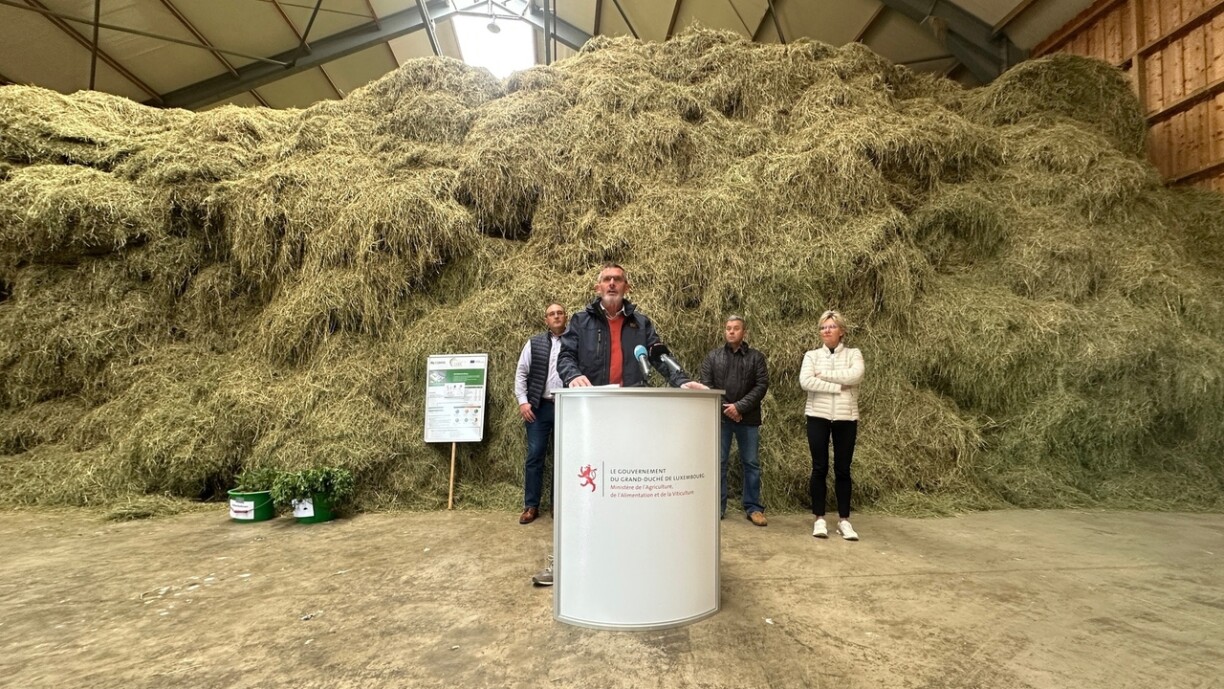
By 2030, farmers are required to reduce their ammonia emissions by 22% compared to the levels recorded in 2005. Ammonia is a harmful gas, primarily produced through agricultural activity as a byproduct of nitrogen compounds found in fertilisers and slurry. These substances eventually make their way into the meat and dairy products we consume. Currently, ammonia emissions stand at 11%, according to Agriculture Minister Martine Hansen, who spoke at a press conference organised by an organisation called Taskforce Ammoniak on Monday at the Marx brothers’ farm in Garnich.
Standing in a barn in front of a towering heap of hay, the Christian Social People’s Party (CSV) MP emphasised a key point: “More than 50% of our agricultural land is grassland, which is why we need our cattle, our milk and beef industry. These are the two main pillars that will remain.” The government, she added, is introducing alternative measures to reduce ammonia emissions by a further 11%, without decreasing livestock numbers.
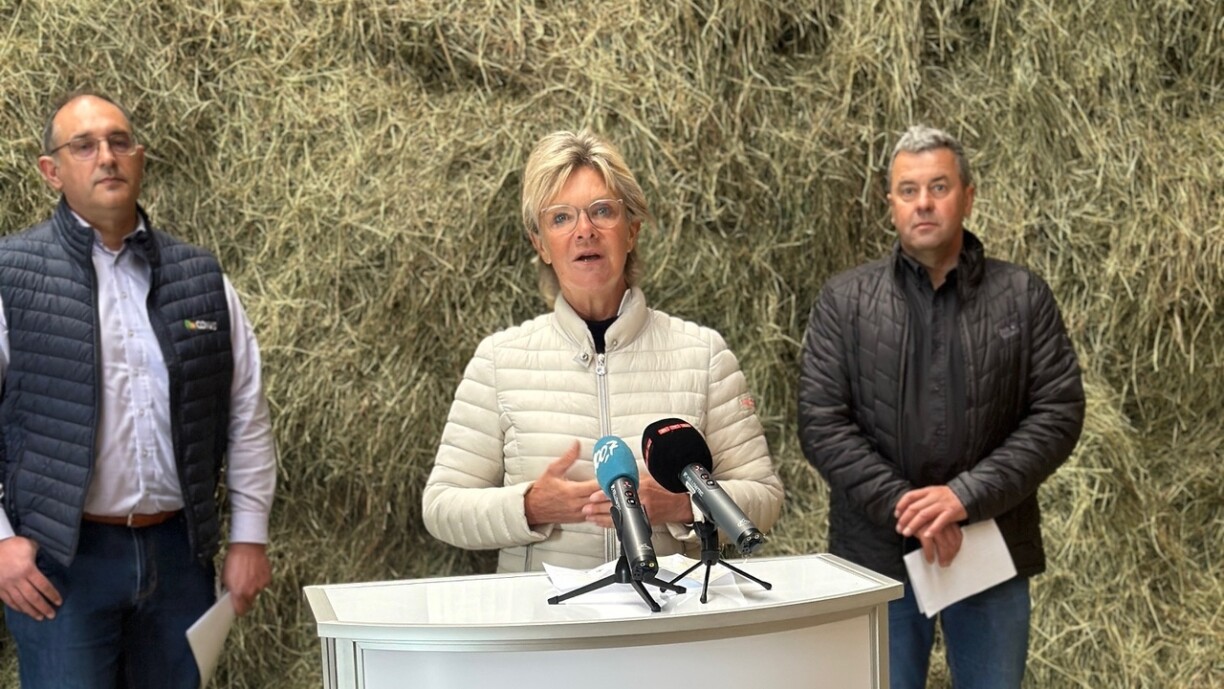
With the aid of a monitoring tool, every farming business can potentially lower their ammonia emissions. Nico Antony, a member of CONVIS, the association for animal production, as well as the Taskforce, stressed that “every business has the opportunity to reduce their emissions without incurring additional costs.” Key factors in achieving this include animal feeding practices and herd management, followed closely by how fertiliser is purchased, stored, and distributed. Improving efficiency is central to cutting down ammonia emissions.
Farmer Aloyse Marx named a few examples of how he modified his farm to produce less ammonia. He now stores grass as hay rather than using fresh grass, as cows digest protein more efficiently this way, producing fewer nitrogen-based gases. When it comes to manure, covering it with a lid during storage helps reduce emissions. Marx also invested in a drag hose distributor, which allows him to inject manure directly into the soil rather than spraying it, further limiting gas release. “One of the most important steps,” he added, “is compiling a report and then taking targeted action based on the findings.”
When asked whether farmers will be punished if they do not achieve these goals, Minister Martine Hansen responded it was dependent on the outcome of the upcoming European agricultural reform. However, it has not been decided whether the reform will focus on analysing businesses individually, or rather focus on an entire country. Marx remarked that "this is the reason why we need to have further conversations with M. Hansen". EU Agriculture Commissioner Christophe Hansen not only shares a surname with Martine Hansen but also belongs to the same political party.
To follow the farmers' journey, two instructive events have been organised: one on 20 May in Berdorf and on 11 June in Heisdorf.
More details are listed on the Ministry of Agriculture' s website.





