Thibaut, age 29, was born in Luxembourg but still lives with his parents. Despite approaching his thirties, he says he is unable to find a decent place to live. “I’m not asking for much – a studio would be fine. But as a freelancer, banks won’t consider me unless I have a permanent contract”, he explains.
The prospect of house-sharing no longer appeals to him: “I did that for four or five years, but there comes a point when it's enough. Landlords are asking for outrageous rents – €1,000 for a simple room is just absurd”, he says.
Thibaut is grateful to his understanding parents, who continue to support him, but insists he wants to be independent: “My parents never had to go through this. They were able to buy a home, but I can’t even rent or save, even though I earn a Luxembourg salary.”
As the clock approaches 6pm, crowds begin to gather at Hamilius for the protest. Among them is Marc, 55, responsible for security at the demonstration. “I’m not overly worried – this is Luxembourg, after all – but you never know”, he jokes. Marc considers himself fortunate to be renting an apartment from his sister at below-market rates, but he recognises the challenges facing younger generations: “They already struggle to find jobs, and when it comes to finding a place to live, it’s practically impossible.”
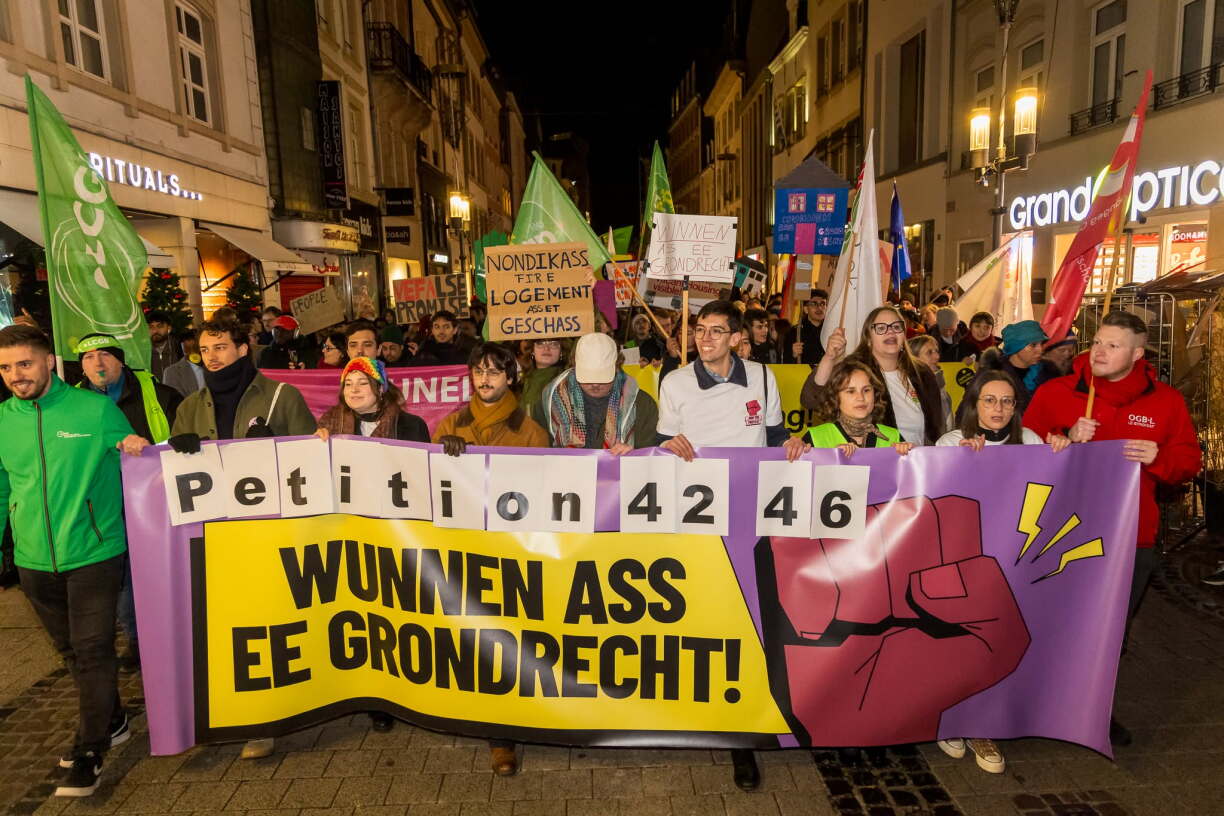
The protest, organised by the housing crisis collective, brought together about 33 trade unions and associations. Patrick Dury, president of the Luxembourg Confederation of Christian Trade Unions (LCGB), expressed solidarity with younger people: “Housing is a fundamental right. I’ve been hearing about a housing crisis for thirty years – it’s time for change.” He called for more housing supply, criticising the “oligopolistic” market structure, where a handful of major owners and developers control a disproportionate share of land and properties.
The demands of the Logementskris collective reflect these frustrations. After a disappointing meeting with Minister of Housing Claude Meisch earlier in the week, the group is hoping to force the government to act more urgently. Their proposals include creating a national housing register by mid-2027, imposing taxes on vacant properties, investing in affordable housing, better tenant protections, rent caps, and the creation of a crisis commission.
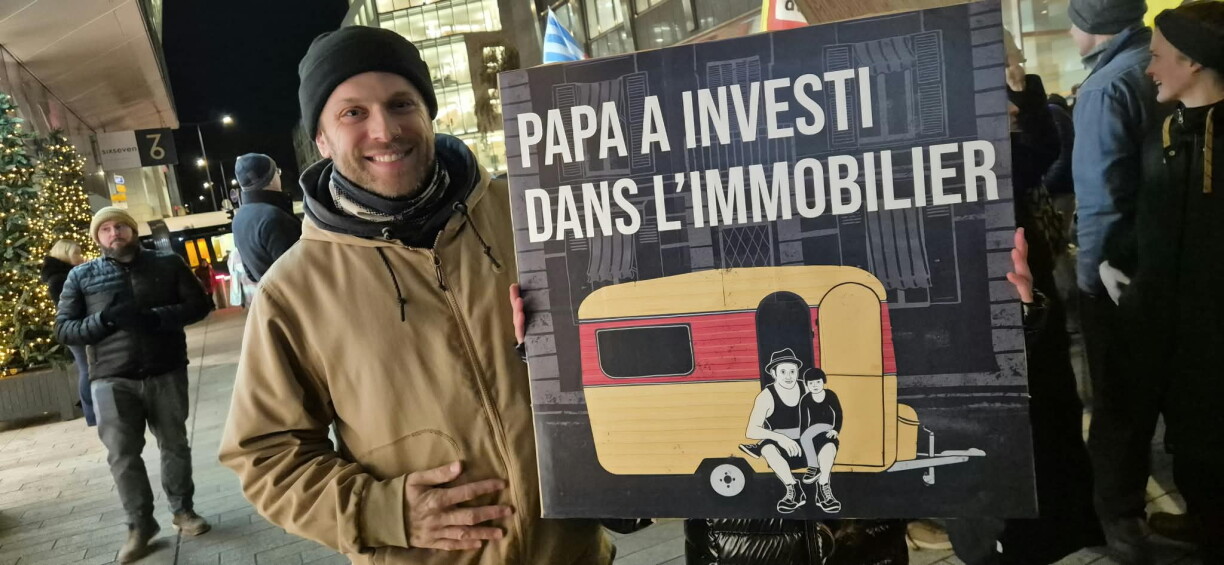
The march eventually sets off in good spirits, with demonstrators singing “Our House, in the middle of the street” and brandishing creative placards. Among them is Rémi, a 45-year-old single father accompanied by his daughter Charlotte. Her sign reads “Dad invested in property” above a photo of the two of them beside a caravan.
“We live near Findel. As a single dad, I’ll never be able to buy in Luxembourg – except perhaps a caravan, if I’m lucky”, he says. “I want Charlotte, who is French-Luxembourgish, to understand how difficult things are, and that we are fighting for her right to hope for a home in Luxembourg one day.”
Other participants, like Bento and Heloiza, share similar challenges: “I lived in Longwy before moving to Hollerich. We pay €1,450 for 27 square metres. It’s expensive, and we’d like a bigger place, but there’s nothing available.”
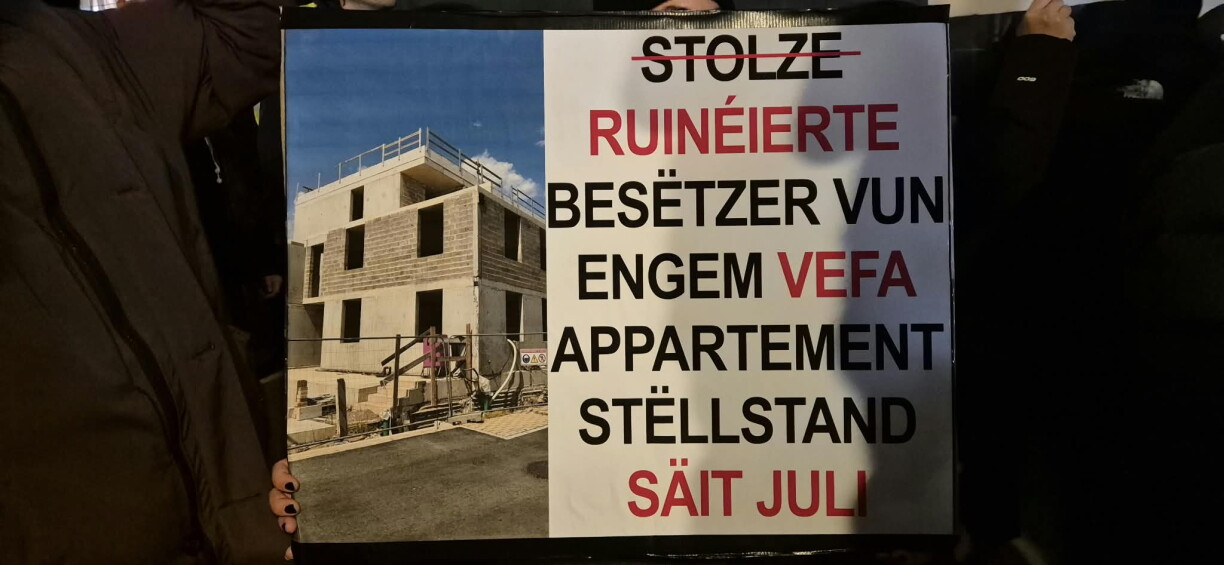
A key grievance concerns sales in the future state of completion ('VEFA' off-plan property sales), which many feel have become a nightmare. Stéphanie, for example, holds a placard reading “Owners ruined by a VEFA apartment, stalled since July.” She describes buying a flat off-plan in 2020, only for construction to be repeatedly delayed and then halted, with legal and banking costs mounting.
“The developer’s bankruptcy was finally declared in May 2025, but the ordeal isn’t over – we were meant to get the apartment in 2023. It’s now 2026 and we’re still waiting, paying the lawyer and the bank. It’s ruining us. The planned 2027 VEFA reform apparently won’t be retroactive. We no longer trust this sector and expect more from the government – this is a question of political will.”
The march arrived in front of the Chamber of Deputies, drawing curious looks and smartphone cameras from tourists. Marlie, 23, hands out flyers with her fist raised, asking: “Can you still afford to live here?” She still lives with her parents in Ettelbruck and is uncertain when she might be able to move out. “I think our generation is less resigned than previous ones – even if Luxembourg isn’t known for activism, young people are more engaged now.” Marlie is campaigning for a rent cap and stricter taxes on empty homes: “Speculation is absurd and inhumane.”
While young people are at the forefront of Luxembourg’s housing crisis, they are not alone. Florence, aged 70 and full of energy, is proud to see young people mobilising: “It’s wonderful to see youth movements across Europe – including in Luxembourg! This country is a paradise for a select few, but young people are under pressure here, too. My son is 36, and I worry about him, especially with global and climate crises.” She adds: “When I was a single mother working part-time, social aid allowed me to become a homeowner. For a young person today in the same situation? Impossible!”


