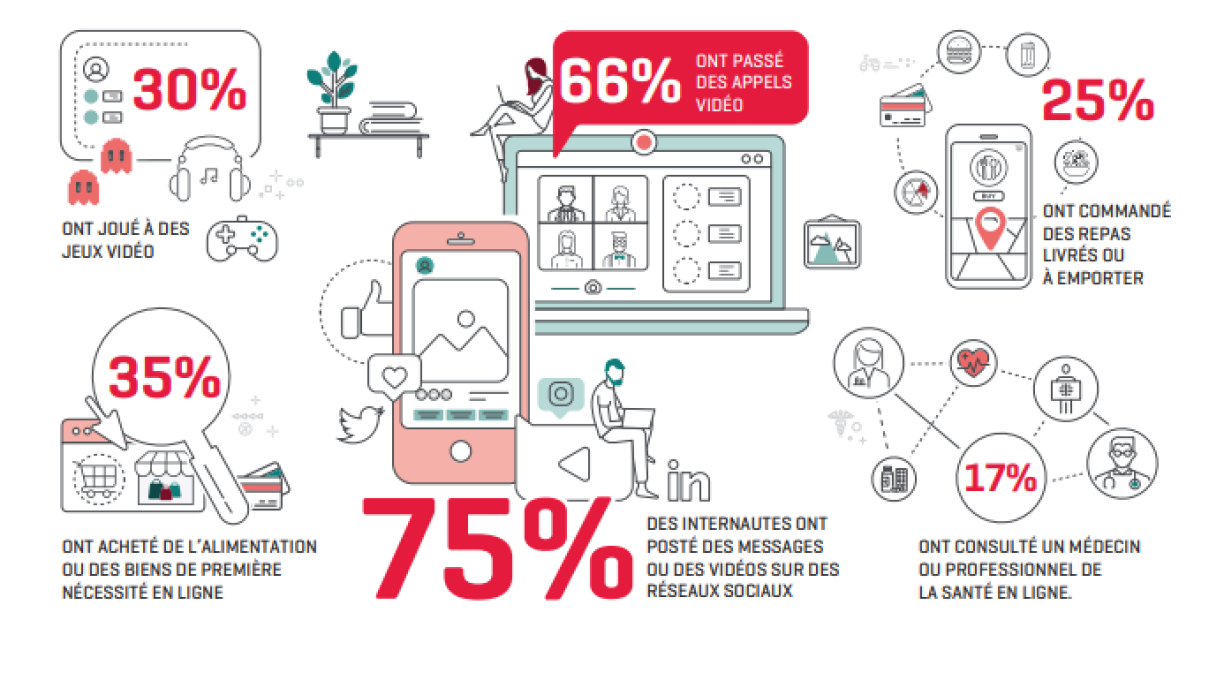
According to STATEC data on the private use of information and communication technologies by households and individuals, 38% of Internet users have, more often than before confinement, posted messages or videos.
60% bought more food or basic necessities online. 51% ordered more meals online are just some of the sharp accelerations in the frequency of certain online services such as video calls or medical consultations.
Telecommuting, professional video calls and lessons and online training methods have to adjust to the needs of the working day in the last 12 months, so it is no real surprise that video calls for private use since the start of confinement have seen s spurt. 66% of Internet users have made personal video calls (via platforms such as Skype, FaceTime, Teams, Zoom etc.), 71% of women and 62% of men. 67% of those answering the poll have done so more often than they did before confinement, where figures sat at 55%.
72% among young people aged 16 to 24 and 79% among 25 to 34 years have used this mode of communication during confinement.
Overall, the trend for this activity tends to decrease from the age of 44 onward. However, in all age groups, the majority of Internet users have taken video calls more in recent times than before containment.
Among the 45 to 54 and 65 at 74 years old, 4 out of 10 internet users have not changed their habits.
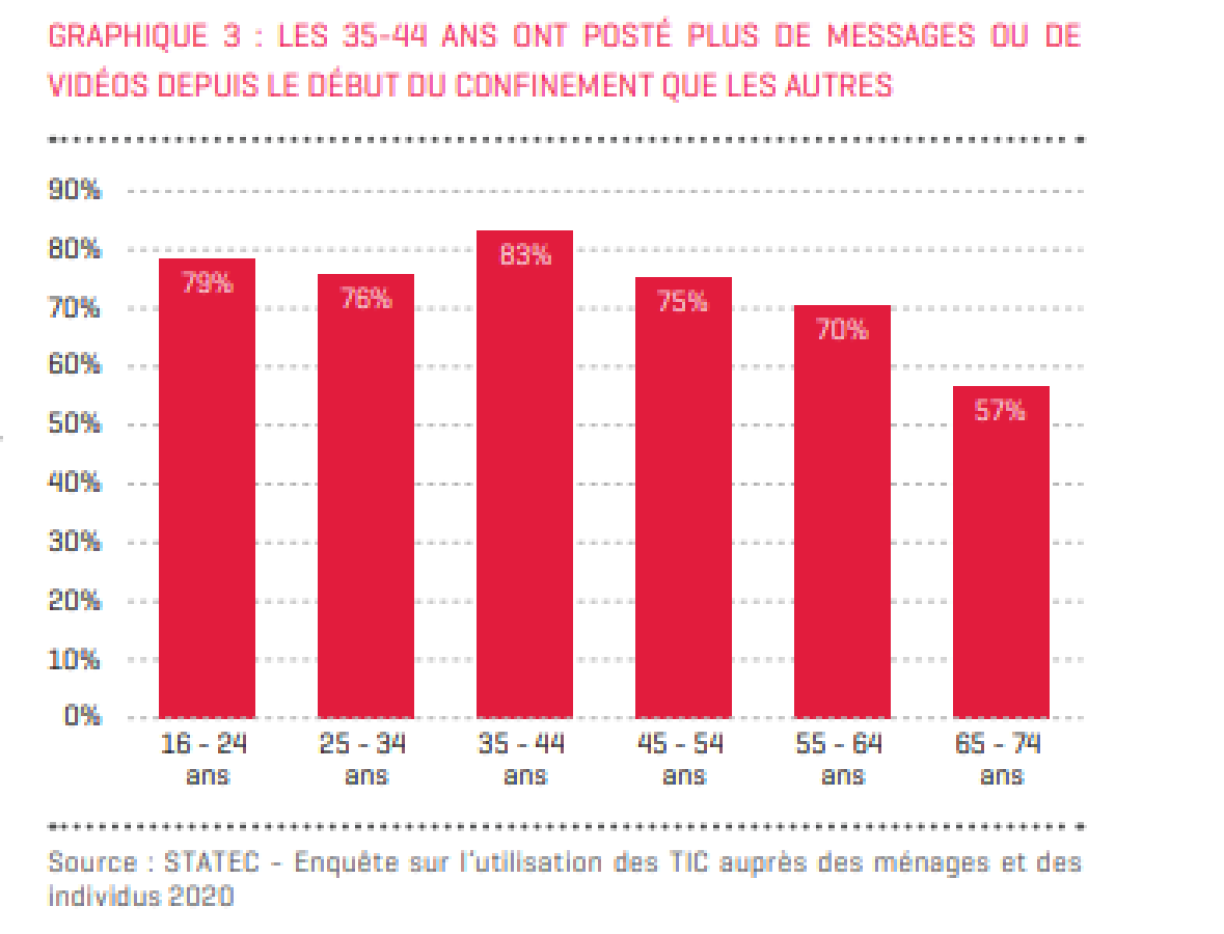
During this unprecedented pandemic period, 75% of Internet users posted messages or videos on social networks such as
WhatsApp, Facebook, Twitter, Instagram etc. to keep in touch with family or friends.
One could argue that this practice was already relatively high even before covid-19, 38% nevertheless declared having posted more often than before confinement; 27% among the youngest and 46% among the oldest.
Messaging was overall a little more popular than the video calls, especially among 55-64 year olds, 70% of whom posted
messages or videos versus 47% who made video calls.
30% of Internet users have played online during the confinement. This data is not out of the norm but almost half said they played more often than before.
55% of 16 to 24-year-olds had fun online, half of them more often than before. As this activity decreases sharply with age, the data skews less favourably but there were still 19% of those aged 65 to 74 heading online to gamble, the study suggests.
Gaming, as a hobby varies a lot depending on gender and level education; 39% of men, 21% of women, 35% of
Internet users with a low level of education and 24% at a higher education level high have been playing online during this time.
Overall, 35% of Internet users have ordered goods online during lockdown, 60% more often than before.
They were 42% among 35 to 44 years old and 29% in both classes of the lower and higher age brackets. Internet users in a office environment were more likely to order food or essential online than those undertaking manual tasks (39% against 30%), and this pattern continued to be active regarding teleworkers (43% vs. 35%).
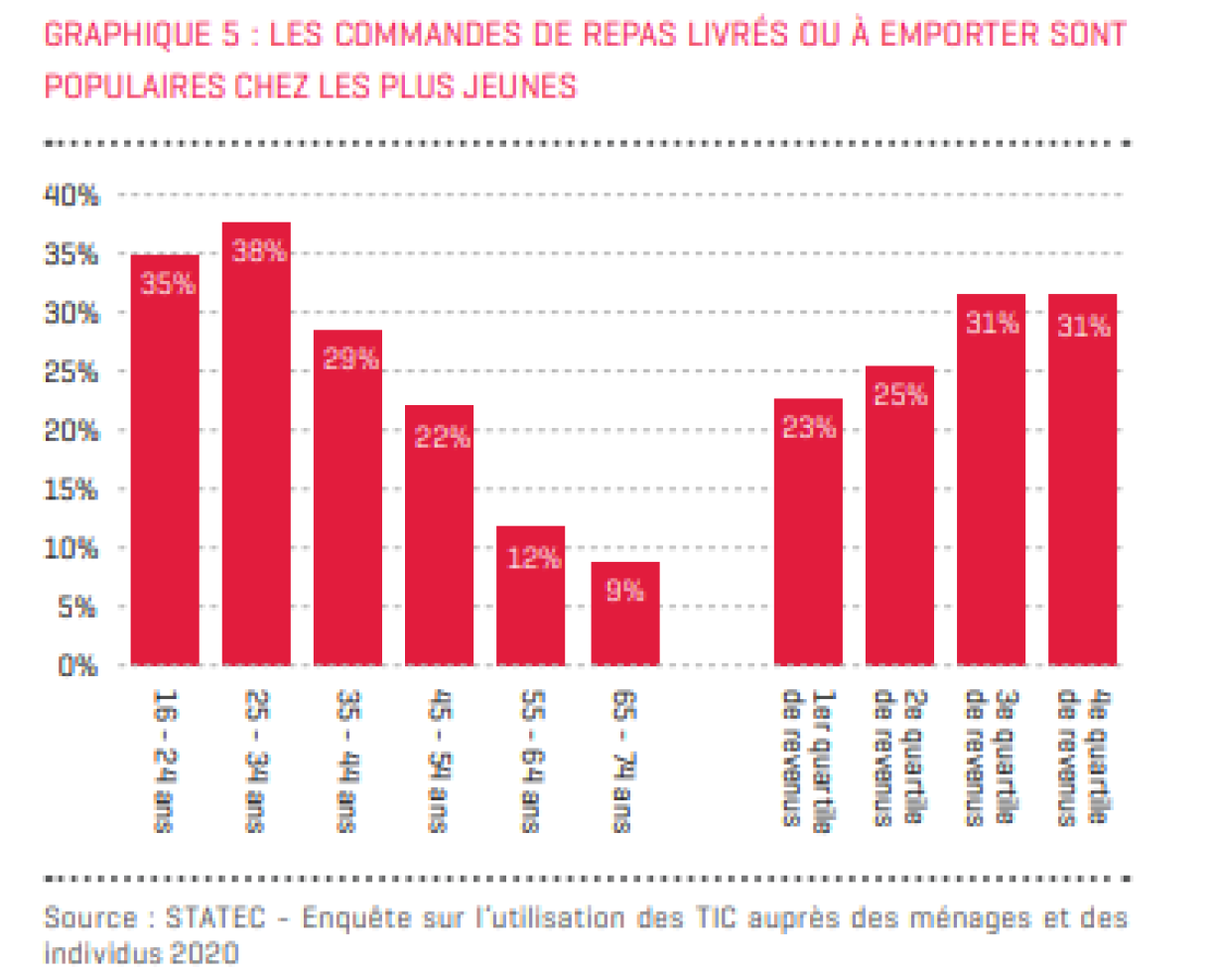
25% of all Internet users ordered meals from take-out or home delivery online during containment,
half of them more often than usual.
They were 35% among those in professional activity and 19% among the inactive; 36% when they worked from home and 23% if they were not telecommuting.
Men outnumbered women: 27% of males taking the quick eats option as opposed to 24% of women respondents.
There was a marked increase in deliveries in the 3rd and 4th quarters were 31% of people said they had ordered food online. This compares to 23% in the first confinement period.
Meals delivered or ordered as take-away decrease from mid-thirties on; among those over 64, only 9% have ordered meals delivered or taken away.
66% of internet users were adding credit card details to online retail sites during confinement, this marked an increase of over a third at 38% from data compiled at the start of the year.
Overall, 43% of Internet users have used online services to contact public services or submit forms during confinement, 31% more often than normal.
Between the ages of 25 and 64, almost half have resorted to filing administration online.
Statec state that more detailed breakdowns of these habits will follow in later publications.
Online banking services, which are already widespread in normal time (72%) also found more followers during
containment (83%).
The increase in number of e-Banking followers has most readily been recognized in 16 to 24 year olds (+15%) and 25
at 34 (+18%)
Almost 6 in 10 people searched for information related to online health during confinement; 66% did so more often than
usually.
The pandemic has therefore not unusually prompted more Internet users to carry out this type of research, perhaps because they were already informed via other types of media.
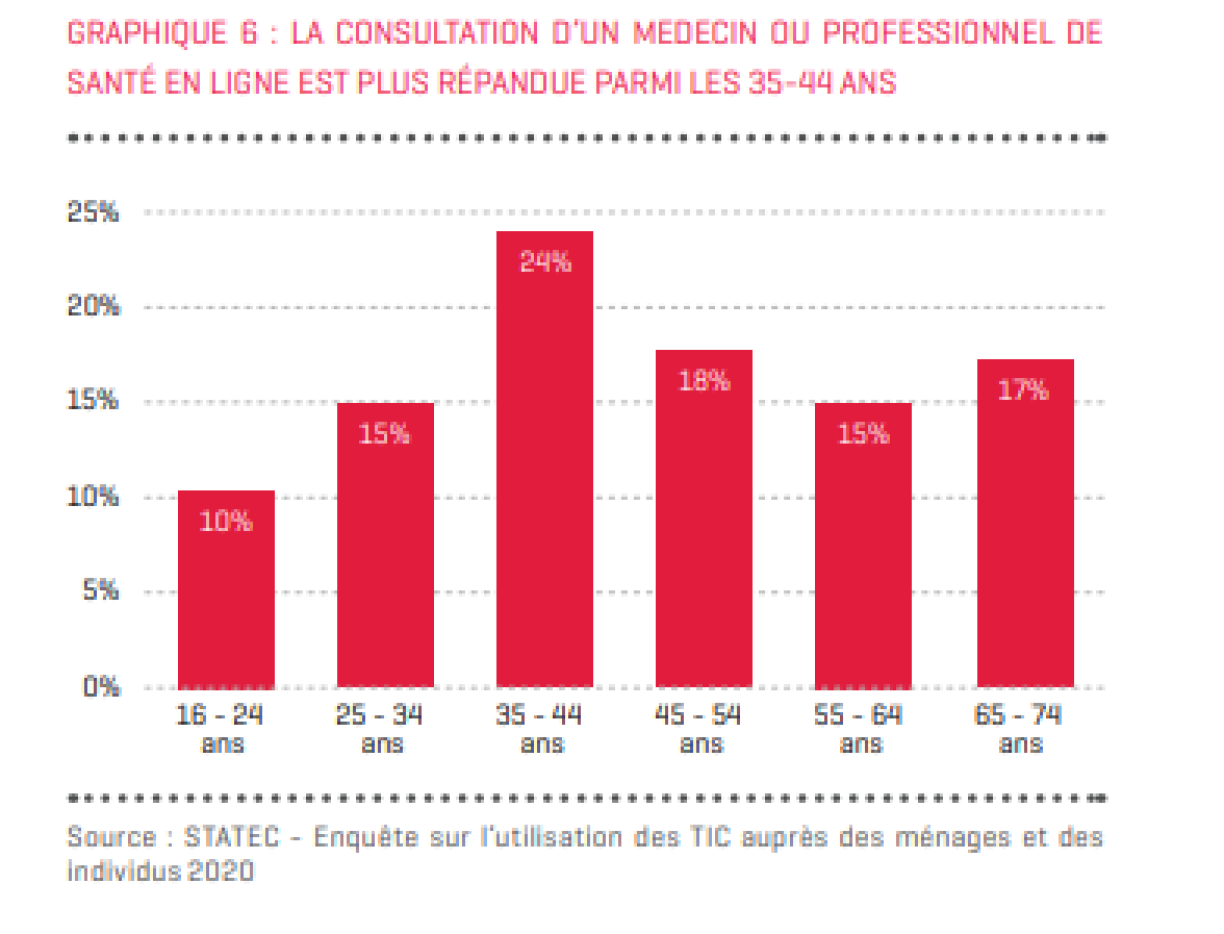
17% of Internet users declared having consulted a doctor or health professional during confinement, this trend was especially prevalent among 35 to 44 years old.





