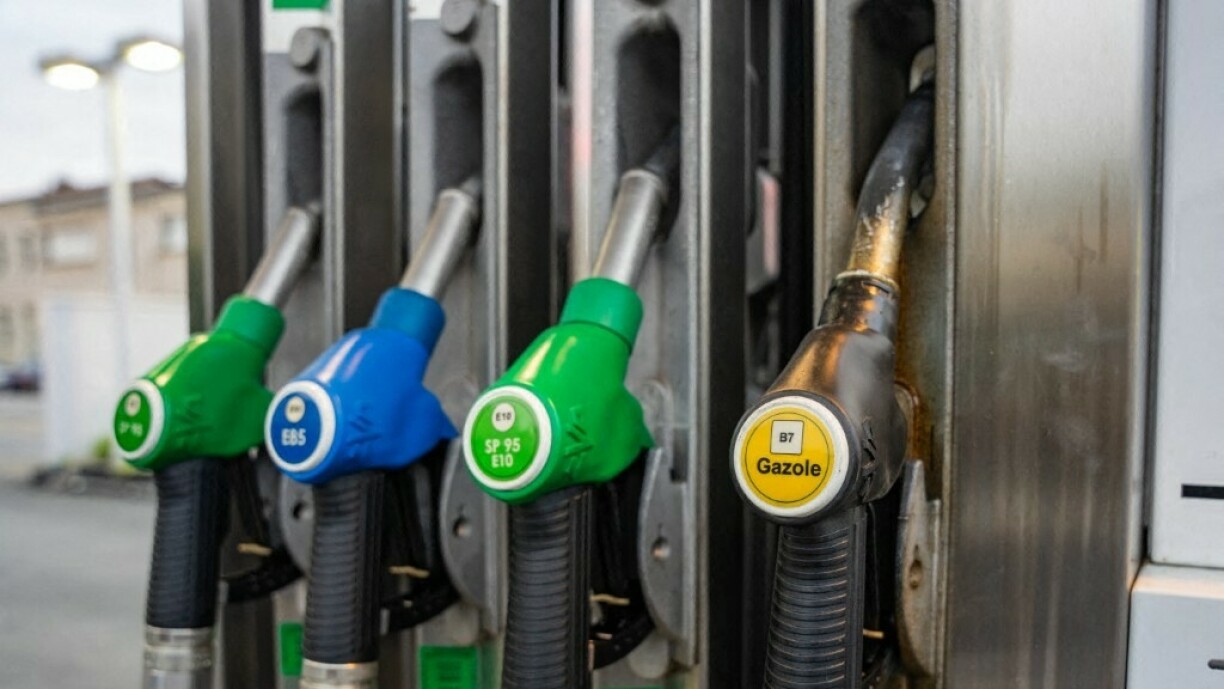
Despite the slowing economy, fuel prices have been steadily climbing for several months, much to the frustration of motorists. Over just a few months, the cost per liter of diesel soared from €1.39 in mid-May to €1.73 by mid-September. Although there have been recent declines, the big question is, will this trend hold?
The energy market has experienced a mix of signals, influenced by factors such as the price of the American dollar, the state of the global economy, the Israel-Hamas war and reductions in production. Responding to a parliamentary inquiry, the Ministers of Economy and Energy acknowledged the uncertainty surrounding fuel prices.
"Macroeconomic factors should be pushing prices down, but the actions of cartels and specific countries in a concentrated market can reverse this trajectory," it said in a statement.
Key oil-producing nations like Saudi Arabia and Russia have intentionally curtailed production to artificially limit supply, at least until the year's end. This happens even as economies in many countries slow down. Recent clashes in the Middle East and the looming risk of spillover have consequently driven up barrel prices since the start of October. This increase is likely to have an immediate impact on consumer prices if it holds.
In light of these multifaceted uncertainties and external influences, the ministers refrain from making definitive comments. Nevertheless, they emphasise that despite the burden on consumers, "petroleum product prices in Luxembourg remain notably lower than in neighboring countries." In some cases, the difference can be as much as twenty cents per liter, as currently observed between Luxembourg and France.
As of 15 September, when a litre of diesel was priced at €1.704 at the pump, the breakdown for motorists included approximately €1.04 for the fuel itself, €0.43 in excise (including CO2 tax), and an additional 16% for VAT. Similarly, for gasoline, which was selling at €1.678 on the same day, the cost comprised €0.91 for fuel, €0.54 for excise duties, and 16% for VAT.
It's noteworthy that these prices have exhibited minimal sensitivity to the reduction in VAT implemented in 2023, resulting in a marginal decrease of less than two cents per litre. Looking ahead, beyond the termination of the reduced VAT on December 31 and the upcoming increase in CO2 tax in 2024, motorists in Luxembourg should anticipate further fluctuations in fuel prices.





