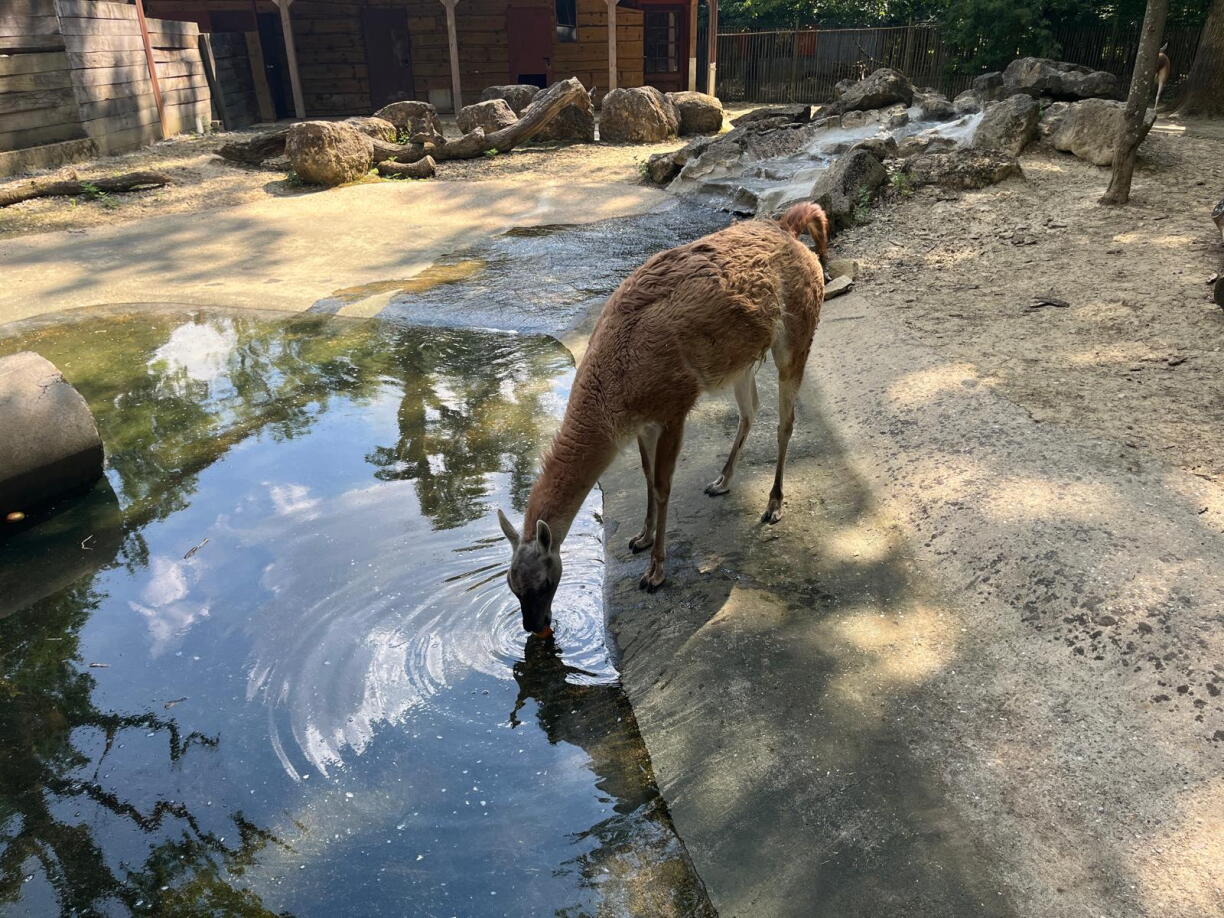
As Luxembourg swelters in the current heatwave, staff at Parc Merveilleux in Bettembourg are taking extra measures to keep the park’s animals cool and comfortable.
Shade, water, and protection from direct sunlight are essential for the animals at Parc Merveilleux, regardless of whether they originate from Europe, South America, Asia, or Africa.
The red pandas, which come from the Himalayas, are finding the heat particularly difficult. They are better suited to winter weather. They are panting and less active, and their indoor area has been air-conditioned for the past week, according to Guy Willems, the park's vet and curator.
"So far, they haven't gone inside since the air conditioning was switched on. Before that, they did", he noted.
Some South American animals, such as llamas and capybaras, have fewer problems coping with the heatwave, although there are differences between species. Alpacas live in the mountains of Peru, where temperatures are cooler than they currently are here.
"We start at midday. They are sprayed with water for half an hour, followed by half an hour without water, then another half-hour shower, and this continues until 6pm", Willems said.
Another species particularly affected by the heatwave is the Argentinian penguin. Along the South American coast, the birds are accustomed to lower temperatures.
The rocks and hollows in their enclosure are therefore cooled with water. In their natural habitat, seawater regulates itself through the movement of the waves, whereas the freshwater in the enclosure requires a different approach, Willems explained.
There are not many animals at Parc Merveilleux that are particularly sensitive to heat, according to Willems. Nevertheless, animals such as the lemurs from Madagascar are treated to frozen fruit and vegetables, even though they are accustomed to warm temperatures.
As the climate changes, the park will increasingly have to adapt to the animals' needs. Willems cited the example of Loro Parque in Tenerife, where emperor penguins are kept.
According to Willems, visitors view the penguins through a window into the refrigerated enclosure. He explained that adapting to rising temperatures could eventually require the park to build large, air-conditioned enclosures at considerable cost.
"If we want to keep animals like these, we will have to provide the appropriate facilities", he said.
Ultimately, keeping the animals in conditions suited as closely as possible to their natural needs remains the priority, with heating their enclosures in winter often proving more difficult than helping them cope with summer heatwaves, according to Willems.





