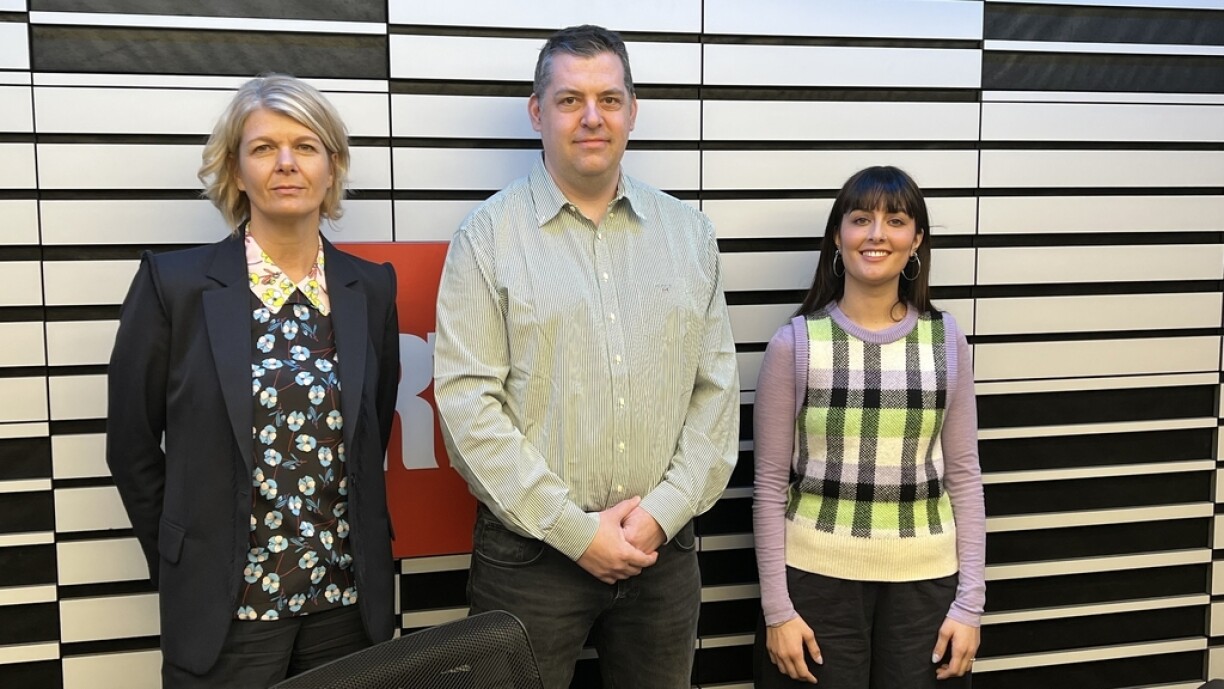
The general director of the Luxembourg Institute of Socio-Economic Research (LISER), a representative of the International Women's Day platform JIF, and the director of the Chamber of Employees joined the discussion.
Exploitation of refugee women
While there is a great amount of solidarity amid the Ukrainian war, there is a chance that Ukrainian refugee women get caught up in long-term exploitation through work or sexual trafficking, says Jessica Lopes, organiser of the women's strike and social worker at Asti.
Women who have no papers and are victims of violence would rarely file complaints because they are systematically reported by the police to the Directorate of Immigration, Lopes underlines. Women without a European passport are especially vulnerable.
Last year, NGOs had denounced the case of a Brazilian woman who, following a complaint against her employer, was at risk of being expelled for abuse and mistreatment. She had so far not received her residence permit, Lopes criticises.
Aline Muller of LISER highlights that reports have already shown that violence against women in the Ukrainian conflict regions of Donetsk and Luhansk has increased.
Tax relief to counteract price increases
Many people, especially women, are dependent on their car because they work shifts. Even prior to the pandemic, 25% of households had troubles getting around. That is why the recent spikes in fuel prices and a drop in purchasing power require a stronger political response, the director of the Chamber of Employees Sylvain Hoffmann says.
The state has survived the pandemic very well, according to the director, and therefore tax revenue should be spent on people who need it.
Liser study on the impact of the pandemic on gender
This week, LISER also published a study on the impact of the pandemic on women and men. It concluded that women were more affected by the socio-economic consequences of Covid-19 than men.
Despite crisis measures being designed as gender-neutral, their impacts are not, says Muller, a finding that was also shared by Lopes and Hoffmann.
For example, more women have taken leave for family reasons, been doing home office and homeschooling, and been fully or partially laid off during the pandemic. Women were also more exposed to the risk of infection due to their occupations, such as in the care or cleaning sectors.
In Luxembourg, 16 percent of women are in the lowest income bracket, but only 8 percent of men.
Working time reduction to full wage equalisation for more equal opportunities
Although the gender pay gap in Luxembourg is one of the lowerst in the EU (1.4% of the hourly wage difference), more women than men work in low-paid occupations. In the financial sector, wage differences are as high as 30%.
Hoffmann and Lopes also called for a reduction in working hours with full pay - ideally 4 working days a week. A 40-hour week of only 4 days, where you would have to work 10 hours instead of 8 every day, would certainly not be the right approach, both argue. A general reduction in working hours, on the other hand, would help to better distribute the tasks at home, and it would also counteract the fact that many more women than men work part-time.
More women in leadership roles through quotas
Even in leadership positions, women in Luxembourg are still under-represented. Politics has so far relied on "positive actions". All three guests, however, agree that quotas could be a more effective tool for implementing this change sooner. In a perfect world, quotas would seem pointless, but for now they are still necessary.





