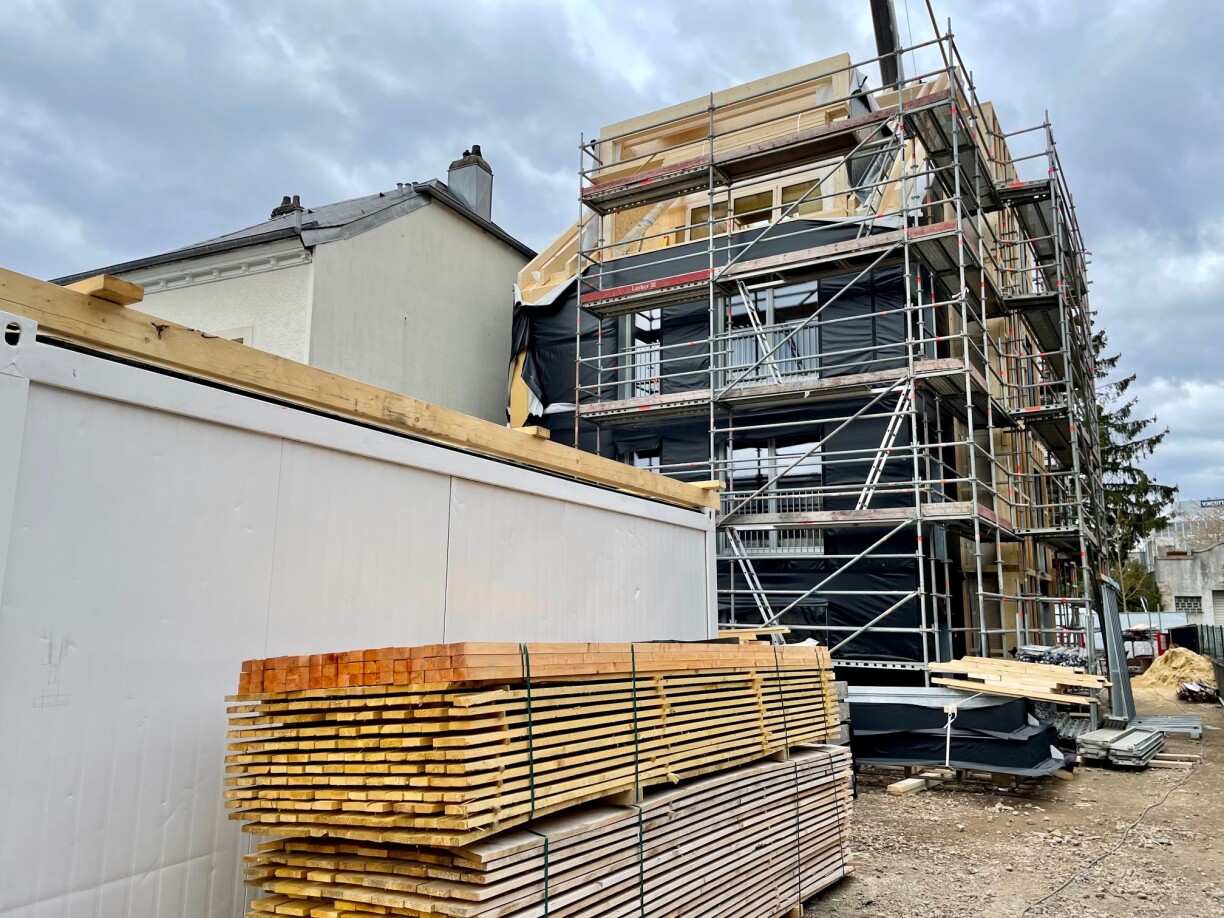
A housing cooperative removes the profit motive from property ownership, whether in renting or selling. The principle is straightforward: individuals buy shares in the cooperative, which entitles them to a lifelong right to occupy a home managed by that cooperative. They pay rent, but only enough to cover actual costs, meaning it is significantly more affordable than market rates.
MP Paulette Lenert of the Luxembourg Socialist Workers' Party (LSAP), who partially drove the initiative of the roundtable, emphasised that although Luxembourg has little familiarity with this system, there is no shortage of international examples to learn from. She highlighted that in many such cities, cooperatives help prevent rent inflation, create more stability, and lead to higher satisfaction among residents.
She noted that membership does not give a claim to a specific dwelling, but to a place within the cooperative as a whole, allowing people to move to a unit that matches their needs at different stages of life, without returning to the private market. More cities are turning to this model, Lenert said, pointing to examples such as Amsterdam and Munich.
Housing Minister Claude Meisch of the Democratic Party (DP) also views cooperatives as a potential part of the solution, a "puzzle piece" in the wider effort to address the housing crisis. But given that the concept is new to Luxembourg, he argued that the public first needs to be shown concrete demonstrations that the model works.
Meisch insisted that the initial projects will need strong guidance to ensure they succeed, adding that cooperatives may not suit everyone, but could offer an attractive option for certain groups, especially for newcomers from countries where cooperatives are the norm, who might welcome bringing that culture to Luxembourg.
Although housing cooperatives are rare in Luxembourg, the underlying cooperative model is not. Raiffeisen is one example, and its board president, Guy Hoffmann, views the idea positively. He noted that for banks, the difference lies mainly in how loans are structured: instead of lending to an individual borrower, the bank would in effect be lending to the cooperative community as a whole.
Hoffmann said this would require discussions with regulators to clarify the framework, but he expressed confidence that the overall credit risk might even be lower than with individual borrowers.
Also participating in the roundtable discussion was researcher Antoine Paccoud of the Luxembourg Institute of Socio-Economic Research (LISER), who similarly sees cooperatives as one useful element in a broader housing strategy. However, he cautioned that cooperatives cannot replace the need for substantial publicly built affordable housing.





