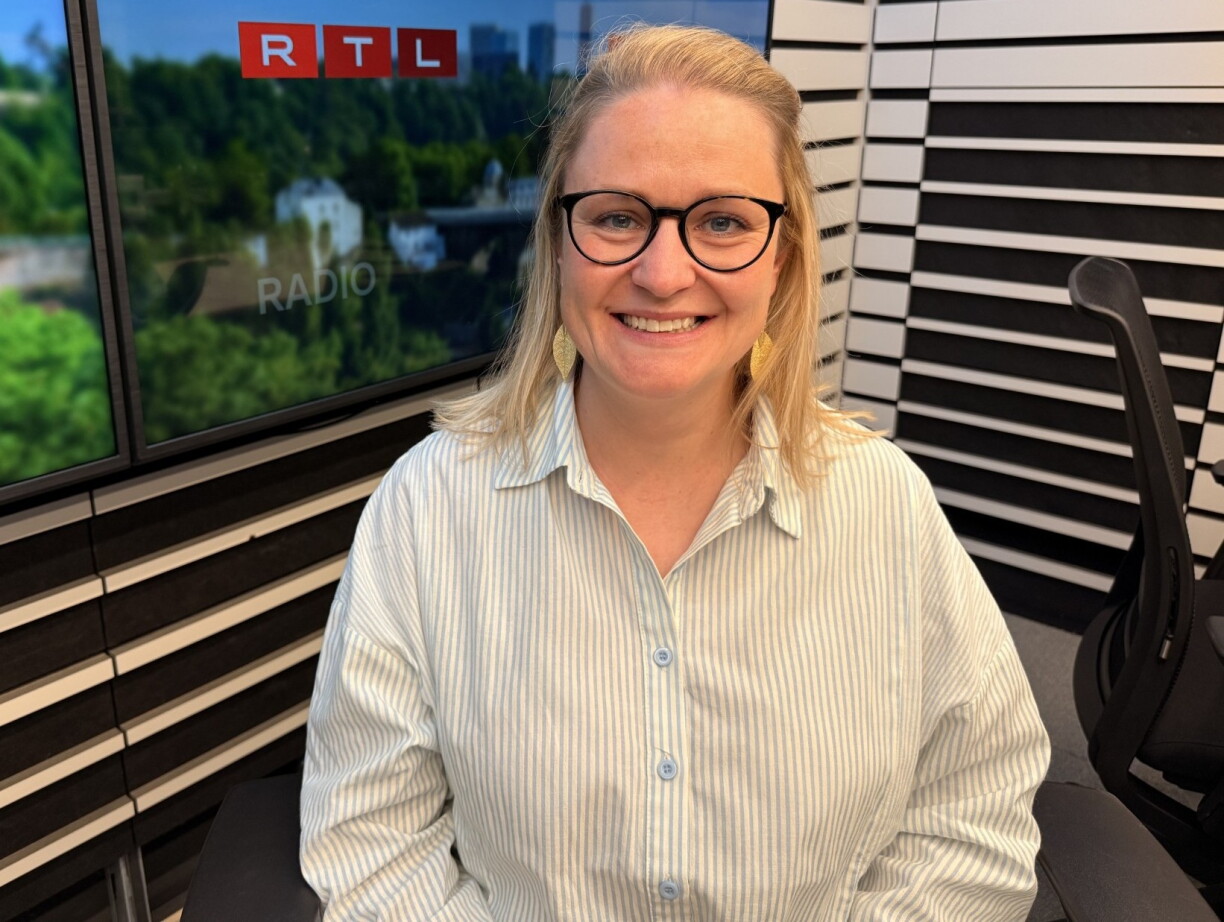
Historian and museum researcher Charlotte Pinon visited RTL on Friday to explain the background to the exhibition.
Photographer Lynsey Addario documented conflicts in over 80 countries throughout a period spanning 25 years. The focus of her work is not just the military aspect of war, but the consequences of conflict for women and children. The exhibition boasts images from Afghanistan and Ukraine, with female fighters, refugees, victims of sexual violence, or women who gave birth in extremely difficult and dangerous conditions. It also covers the ongoing conflict in Sudan.
The mission behind the exhibition is to document and share stories which would otherwise go unheard. Addario focuses on making the lives of women and children in warzones public and visible, while at the same time highlighting human rights violations.
The exhibition also addresses the question of how to convey difficult and emotional images to a young audience. It is not recommended for young children, explains Pinon. But for young people from around 12 years old, the exhibition can be a good opportunity to talk about war, violence, and world politics "[...] to simply enter into the conversation, to enlighten them about what is going on in the world. And we have also developed ideas for this, such as workshops and a pedagogical manual, where we explain these topics in simpler language."
A woman's perspective on war can also open up other perspectives, says Pinon. "Especially in the field of war journalism and war photography, women are really in the minority and that has disadvantages."
This can lead to women having less access in certain situations. On the other hand, their presence can also allow them access to areas that male photographers would not have. For example, with women in Afghanistan, "she was able to take pictures there that a man naturally could not have taken of women who are not completely veiled, who show their faces, which is absolutely forbidden in Afghanistan."
Pinon says photos have a very strong emotional impact. Pictures depicting suffering, displacement, and even death can help people to gain better understanding of historical events, and to empathise with those affected by war. This is particularly important for the Resistance Museum's work and the commemoration of the Second World War.
The museum works closely with lots of schools, and notes that young people are still extremely interested in history. "Of course some students aren't interested at all, that's obvious, but in general I would say pupils are very intrigued."
At the same time, social media presents a growing challenge, as young people tend to inform themselves online. "Social media can circulate the most gruesome things about World War Two, for example. With fake profiles, fake historical personalities, sharing disinformation which isn't true in the slightest."
It is important to raise awareness about disinformation and the museum hopes to do so by highlighting sources, original documents and objects.
The re-emergence of war in Europe is influencing the questions raised by visitors to the museum. Pinon says people are developing new fears. The museum's role is not simply to explain the past, but to create links between the past and the present. While history is not repeating itself precisely, certain mechanisms can certainly be repeated, and the museum's mission is to help people recognise and counter these mechanisms, Pinon explains.





