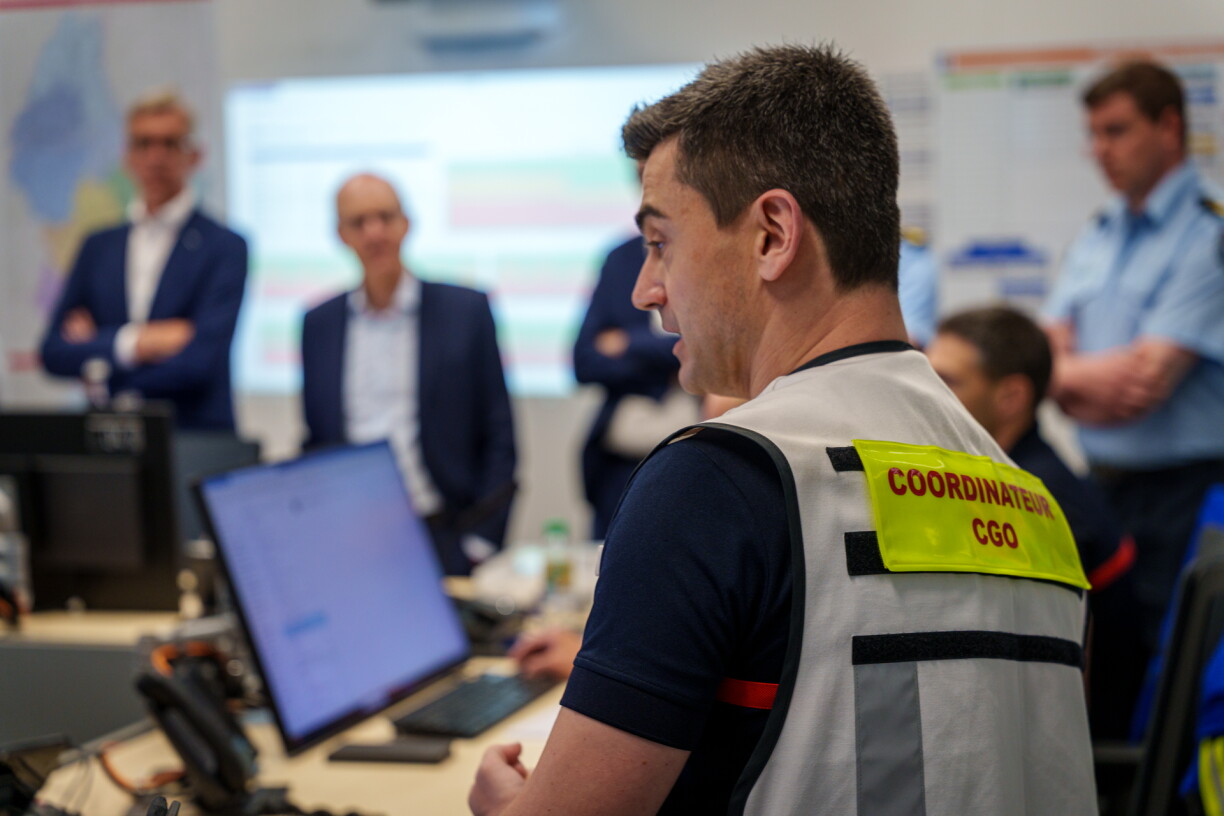
The Grand Ducal Fire and Rescue Corps (CGDIS) workers have been permanently deployed since last Friday.
"On average I would say interventions have gone up by around 30% this week", said Sven Viktor, who has led the CGDIS operations management centre this week. The emergency services have seen a 68% increase in the number of personal rescue operations. On Wednesday, for example, a total of 311 interventions were recorded, compared to the usual average of 200.
The majority of emergencies were attributed to lack of hydration. "This was a clear conclusion drawn from the National Day festivities, for example", Viktor explained.
Elderly people and athletes particularly affected
In the first few days of the heatwave, patients were primarily young people who had encountered difficulties while doing sports in the extreme heat. But as the heatwave drags on, the emergency services have noticed their call-outs changing.
"We're seeing more vulnerable people, more elderly people, suffering from the heat," says Viktor. Children have also been among their patients, he said.
The most common causes are dehydration, heat-exhaustion, and other heat-related symptoms.
CGDIS preparing for continuous exposure and forest fires
Due to the exceptionally long duration and intensity of the heatwave, the CGDIS has adjusted its internal procedures. "Since the first risk assessment cell, which was led by the High Commission for National Protection (HCPN), we have taken precautions," Viktor said.
Internally, the rescue services have been made more aware of the risks and the available resources have been increased. "A big thank you also goes to our volunteer members who have committed themselves", he added. Additional support has also come from the army and accredited organisations such as Luxambulance and the Red Cross, Viktor said.
However, depending on how such a long heatwave develops, there is always the risk of reaching the limits of the CGDIS' capacity, Viktor warned. Any operation in the heat, he noted, is also more strenuous than usual for the emergency services. In addition, the CGDIS must prepare for the increase risk of vegetation fires.
Prevention: avoid sports, drink plenty
Viktor advised the public to avoid sports activities and suggests retreating to cool places as much as possible. The main message is to drink enough. Often, people don't realise they are dehydrated until it is too late, he said.
In addition, people should be careful due to the increased risk of vegetation fires. They should not set fires in nature, nor smoke cigarettes in the forest, or have barbecues there. He also advises people not to drive on to grass or fields with their car. This would greatly help the rescue services, he concluded.





