The charity has been active in Palestine for over 25 years, offering aid and treatment to victims of bombings.
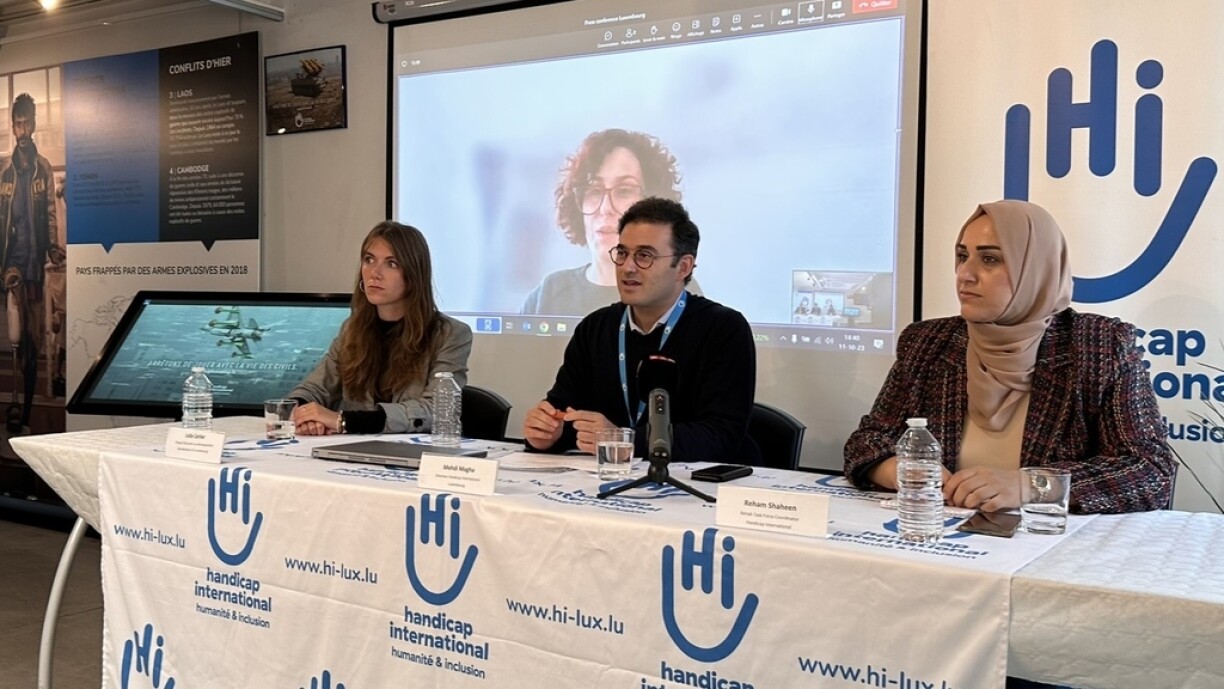
Reham Shaheen, a rehabilitation specialist at Handicap International, left Gaza last week for a work trip to Europe. She described her experience to the assembled media.
"I come from Gaza, I'm away from my children and I can't describe to you how much it hurts and how afraid I am," she said. Shaheen is only able to contact her family once a day when they have power, to make sure they are still safe. She doesn't know when she will be able to return home.
Conditions in the Gaza Strip were precarious for civilians before the most recent outbreak of violence over the weekend. Now, living conditions have deteriorated dramatically over the past few days.
"There is no electricity, no water, civilians have no access to drinking water and are unable to wash. This drastic situation could quickly turn to a pandemic if there is no end to this violence."
The situation is particularly critical for children caught up in the crossfire. Not only are they unable to go to school, but they cannot be shielded from seeing people get injured or killed around them.
"Even if the children survive the physical trauma, they will never recover from this psychological trauma," Shaheen warned.
And there is no chance at present for civilians to escape from Gaza.
"There is no possibility for people to get away, as they are under occupation and the borders are shut. There is no way to leave the Gaza Strip. Frankly, they are sitting within a prison. And as you know, the Gaza Strip is one of the most populated areas in the world, with 2 million people living on 365km².
"It is an overpopulated place, where people's needs are increasing every day, and they are not receiving help to be allowed to live in dignity; to have access to basic supplies such as food and water. There is nothing left for them except praying that God will protect them and the international community will intervene and put an end to the violence."
Although Handicap International's staff in the region are safe for now, they cannot leave and are dependent on UN support to receive emergency supplies. The charity is calling for an immediate ceasefire, for humanitarian aid to enter Gaza, and more generally, for more states to commit to not using explosive weapons in civilian areas.
Director Mehdi Magha said: "In late 2022, there were around 21,000 civilians killed or injured following the use of explosive weapons in populated areas - a figure which had doubled from previous data. 40% of these incidents took place in Ukraine, but other countries are also affected, such as Afghanistan, Syria and Palestine."
Handicap International also held meetings with the Ministry of Foreign Affairs and the Ministry of Defence on Wednesday to advise on an action plan for the protection of civilians, while simultaneously running a campaign to mobilise the population.






