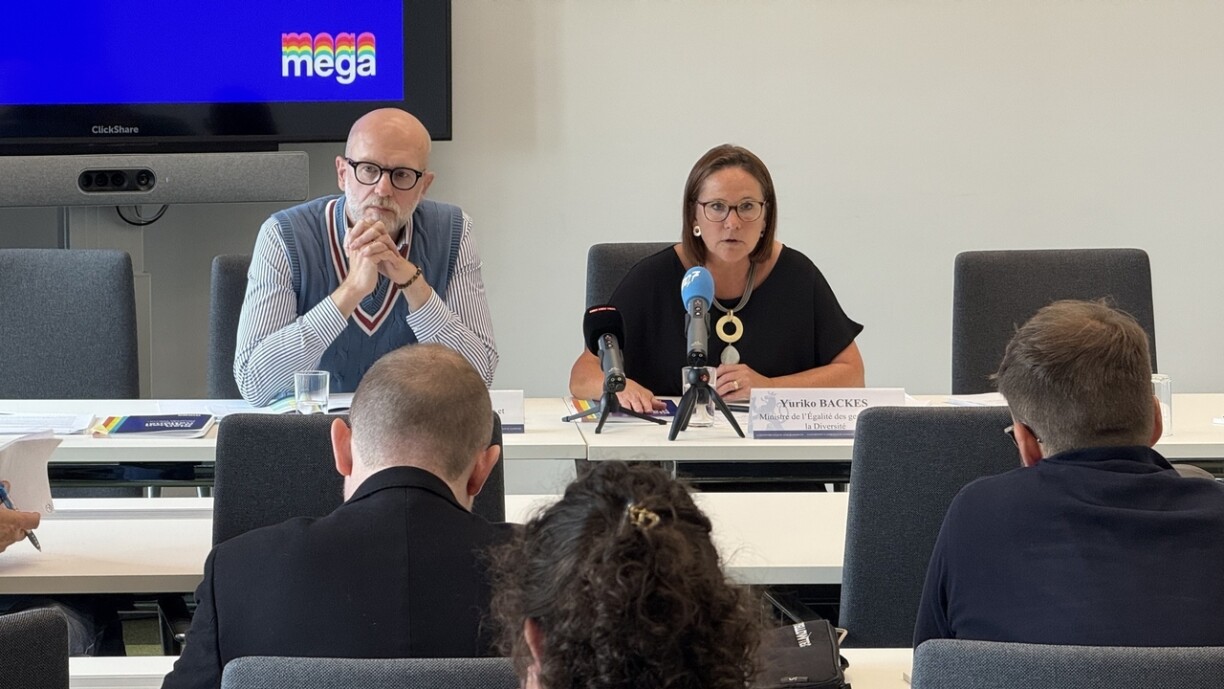
Approved by the Council of Government on 11 July, the plan outlines 81 measures and 147 concrete actions across 15 chapters. It involved collaboration from 15 ministries, underlining the broad scope of the issue.
As Gender Equality and Diversity Minister Yuriko Backes emphasised during the presentation, the plan is not about ideology, as critics sometimes claim. Rather, she stressed, it is about ensuring that every individual is entitled to live with dignity and without violence or discrimination in Luxembourg.
Backes cited data from the European Union Agency for Fundamental Rights as a cause for concern. According to the findings, nearly half of same-sex couples in Luxembourg often – or always – avoid holding hands in public.
While this is slightly below the EU average of 53%, she pointed out, it remains a troubling indicator.
Read also: Supporting your child's coming outAmong the many proposed actions is a draft law to ban conversion therapy. The minister described these practices, which attempt to change someone's sexual orientation from homosexual to heterosexual, as deeply harmful, with potentially irreversible effects on victims.
Backes expressed her hope that the draft legislation will soon be implemented by amending the Penal Code to outlaw such practices. No official statistics are available on how widespread conversion therapy is in Luxembourg.
Still, Backes noted that international trends, such as efforts by the Trump administration in the United States to cut back on support programmes for queer individuals, are not encouraging. She expressed concern that these developments might also influence American companies operating in Luxembourg.
She explained that some US-based firms with offices in Luxembourg are already showing signs of reduced engagement on LGBTIQ+ issues. While the government cannot impose requirements on private companies, it hopes to encourage them to uphold shared values through awareness campaigns and support.
"We need to continue awareness efforts", Backes said, adding that schools must also treat LGBTIQ+ topics as part of their curriculum, and that those responsible for training educators must be properly equipped as well.
The government also aims to expand the role of diversity awareness action within municipal institutions and companies to help prevent discrimination. In addition, several studies have been launched through the Equality Observatory to gain deeper insight into the living conditions of LGBTIQ+ individuals in Luxembourg, including non-binary people who do not identify exclusively as male or female.





