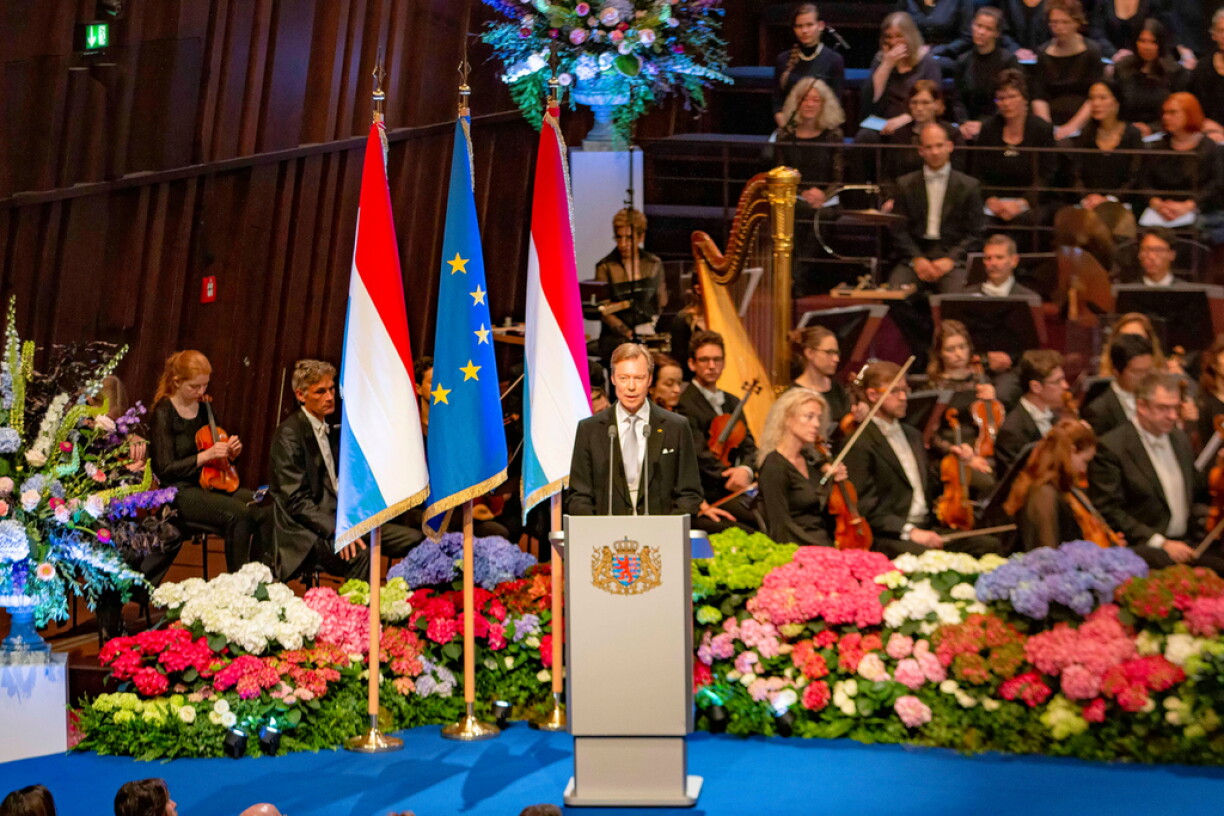
The official National Day ceremony has been hosted at the Philharmonie since 2014. With the Grand Ducal family and various high-ranking diplomats present alongside the general public, authorities subjected this year's ceremony to strict security checks. These precautionary measures, officials hope, allow the event to unfold smoothly and safely.
On 1 July, MPs Laurent Mosar and Gilles Roth (CSV) had asked government officials whether or not access could be refused to an attendee based on his or her "secret" police record. Both MPs had already previously submitted parliamentary questions regarding the same controversial issue. The government confirmed that access could in fact be denies because of these files.
In their joint reply, Xavier Bettel, Jean Asselborn and François Bausch explained that the presence of citizens at the Philharmonie was determined by the Prime Minister who, in return, based his decision on recommendations given by police. Luxembourg's police formulate these recommendations after consulting their "fichier central" (which lay at the heart of the "secret record" controversy) in order to make sure that a guest does not pose a security threat.
The ministers underlined that the government was responsible for the smooth unwinding of events at the Philharmonie and therefore saw it as his duty to "take every precaution."
The government thus confirms that a person's request to be part of the ceremony can be refused. However, the ministers also underlined that the allotment of places was not preferential but done on a "first come, first served" basis.
How covert police files can harm citizens
Opposition remains unsatisfied with "main file"
Wrong to speak of databases: public prosecutor's office
No secret records or data bases within the justice system





