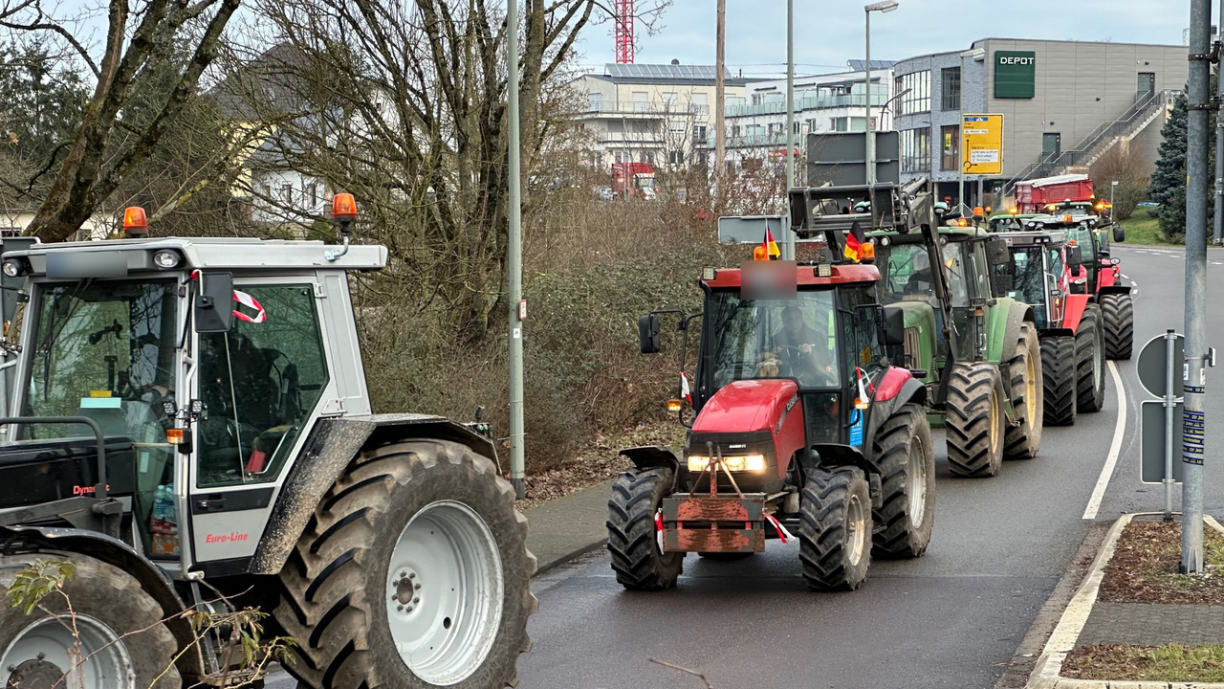
German farmers on Wednesday morning blocked the border crossings to Luxembourg as part of the nationwide protests by agricultural actors. The following crossings are affected by the blockade: Nennig and Remich, Wincheringen and Wormeldange, Wellen and Grevenmacher as well as Perl and Schengen.
The majority of blockades are effective in both directions. While authorities expect further crossings to be affected, motorways are poised to remain open.
The protests in Germany first began after the Bundestag decided to phase out tax breaks for agricultural diesel, a decision partly reversed after he extent of the backlash became clear. A month ago, the German capital was already brought to a near standstill as tractors blocked numerous of Berlin's streets.
At the beginning of January, the farmers' protests in the Trier area caused chaos in rush-hour traffic. At that time, tractors also blocked motorway slip roads. Farmers in Germany have been demonstrating against the government's plans to abolish various subsidies since mid-December. For example, subsidies for agricultural diesel are to be phased out by 2026. However, the government has already made concessions in other areas.
There will also be protests in France on Wednesday, including on the major motorways around Paris and Lyon. This is why German farmers also want to switch to Schengen on Wednesday: as a symbolic act, because it's a European problem triggered by an increase in energy tax.


Read also: Luxembourg farmers opt for dialogue over protests





