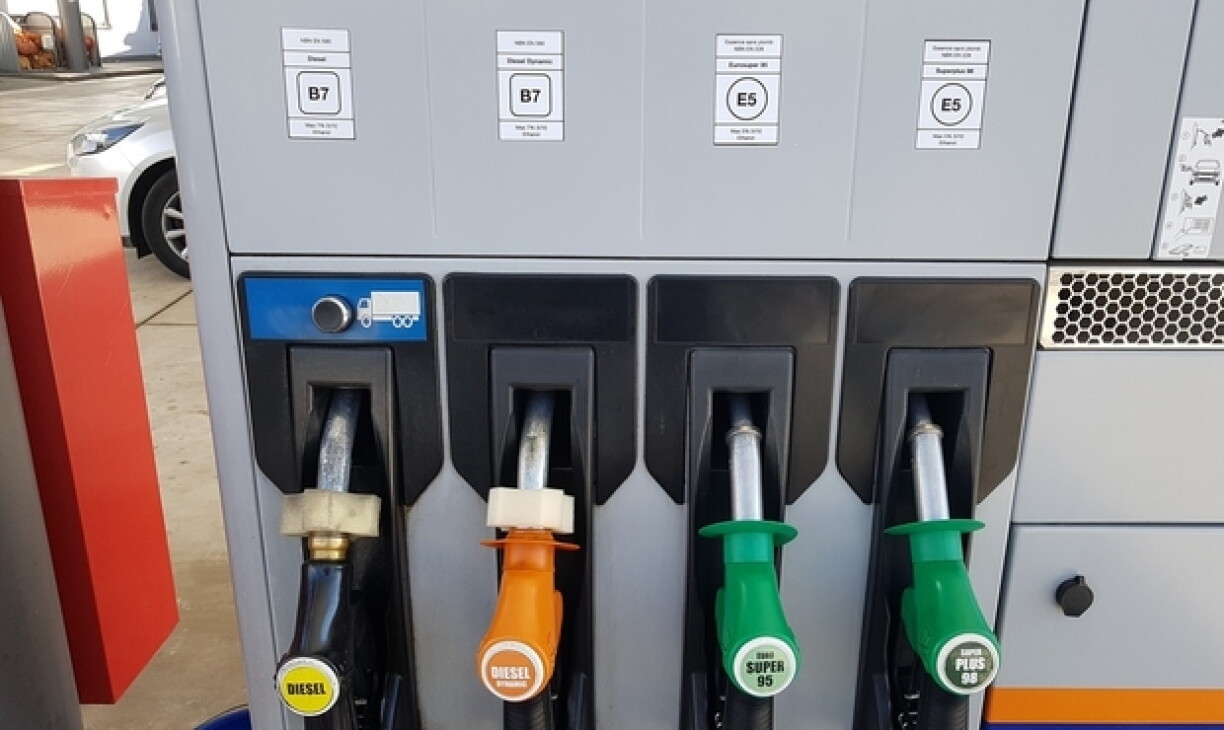
Minister Carole Dieschbourg is keen to adhere to goals set out by the Paris Climate Agreement. In that sense, the Luxembourgish authorities hope to reach the carbon emission reductions as outlined by the agreement. The coalition agreement in December announced an increase in fuel excises as a result.
CSV MPs Martine Hansen and Gilles Roth both requested further information from the minister, who remained vague and simply confirmed that the fuel tax increase will take place this year. As for the actual increase, she explained that this depends on how fuel sales develop and in turn influence the carbon emission reductions goal.
Minister for Energy Claude Turmes, however, was more specific when he spoke to RTL last week. He explained that the tax increase would be announced once the budget had been voted on, ergo definitely in 2019. Turmes cited an initial increase of 1 to 3 cents this year, potentially followed by a further 1 to 3 cents in 2020. Turmes again highlighted that the government would have to observe developments in order to balance climate policies whilst maintaining state revenue.
Dieschbourg explained that an inter-ministerial committee will be formed, including representatives from the ministries of Finance, Environment, Energy, and Economy. The committee will take a detailed look at the evolution of fuel sales and the impact the sales have on the environment.





