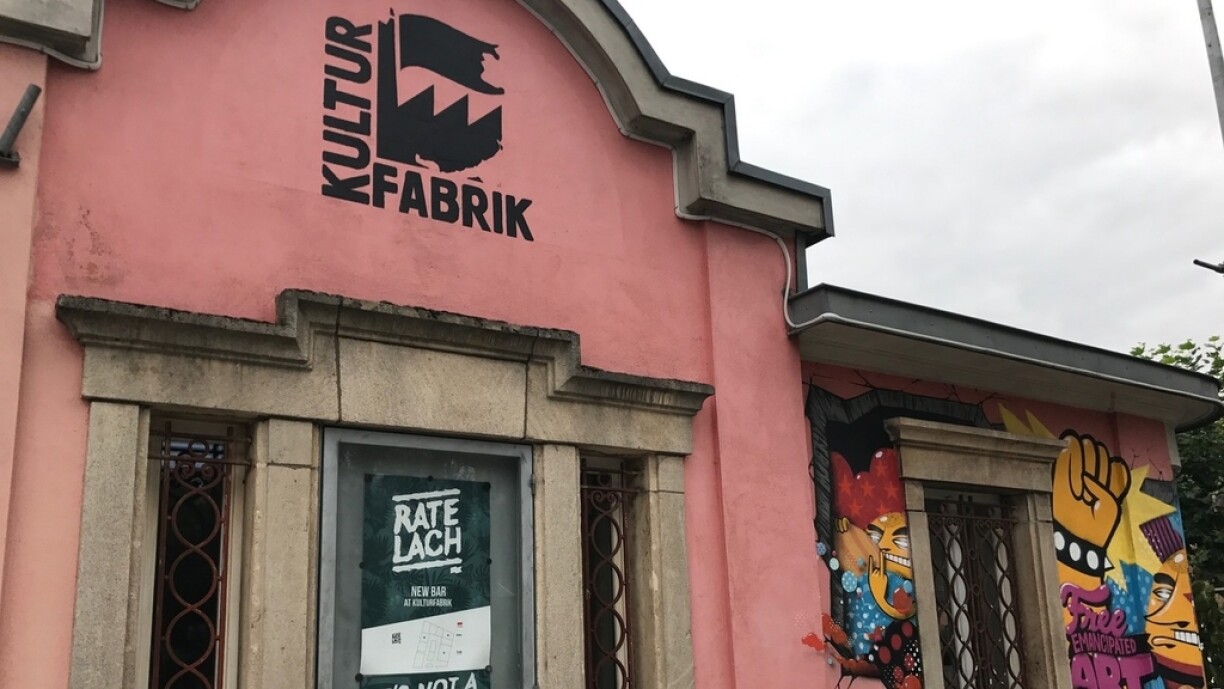
The building on Rue de Luxembourg in Esch, where the Kulturfabrik (KUFA) is situated, was originally constructed as a slaughterhouse, not as a cultural venue. As a result, several essential needs are simply no longer met today.
The building is poorly insulated and fitted with single glazing. Beyond improving the structure itself, the team also aims to reduce the Kulturfabrik's ecological footprint in future, for instance by generating its own electricity and operating as independently as possible.
The last major renovation of the Kulturfabrik dates back almost 30 years. Since then, numerous regulations have come into force that did not apply at the time, including specific requirements for the number of toilets or changing rooms needed for a certain number of employees. The Kulturfabrik intends to comply with these standards in the future.
The heritage of the Kulturfabrik must be preserved. The site's history and architectural character are unique, and the basic structure of the buildings will therefore remain largely unchanged.
The only element still under discussion is the roofing: the roofs currently take up an enormous amount of space, offer poor insulation, and due to their slope cannot support solar panels. One idea is to transform them into green roofs in the future.
Another key factor in the planning process is the future Metzeschmelz district. Around 10,000 people are expected to live there, with a new railway station planned, a tram connection from the capital, and a strong emphasis on soft mobility.
The Kulturfabrik will sit at the interface between the old and new parts of Esch and hopes to act as a link between the two. This is also reflected in architectural considerations: at present the KUFA is only open towards Rue de Luxembourg, while the rear of the building is little more than a blank wall.
The current season and the next are expected to continue as normal, with construction ideally beginning at the end of 2027. The project will be carried out in two phases so that certain spaces can remain operational. Together with the municipality, the Kulturfabrik is also looking for an alternative location to use during the transition period.
Another idea is to create an "archipelago" of indoor and outdoor spaces that could be shared and used in collaboration with other venues. The Kulturfabrik is actively exploring solutions and is determined not to disappear from public life while the works are underway.





