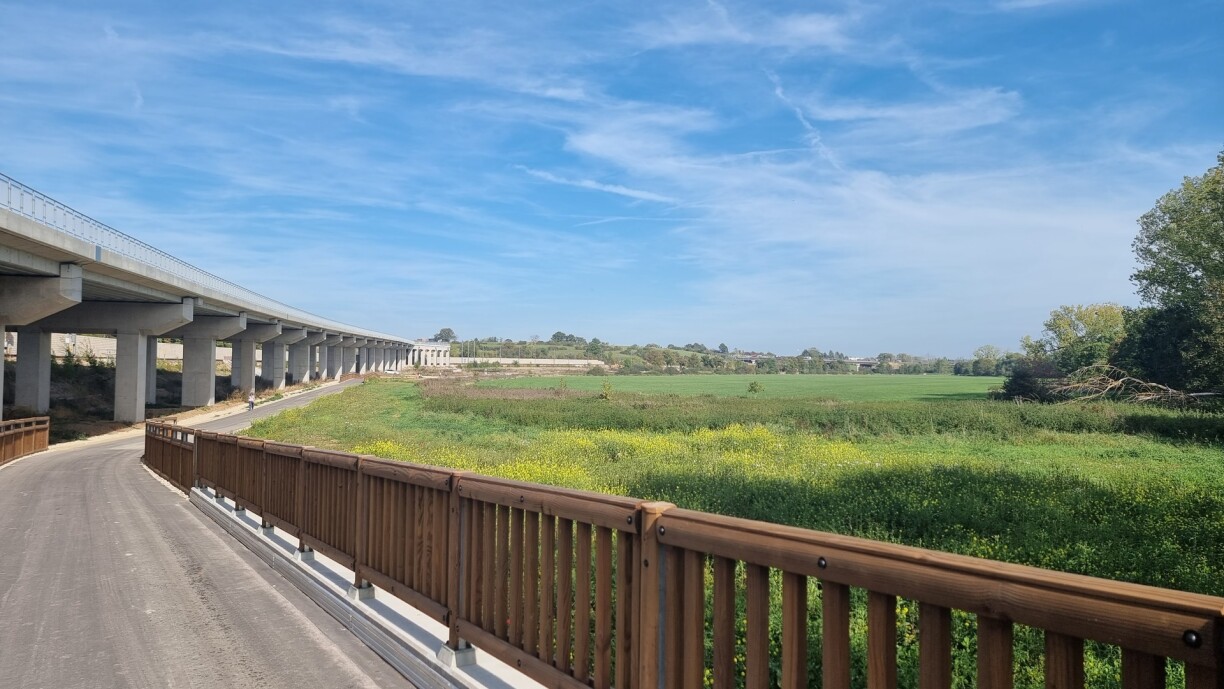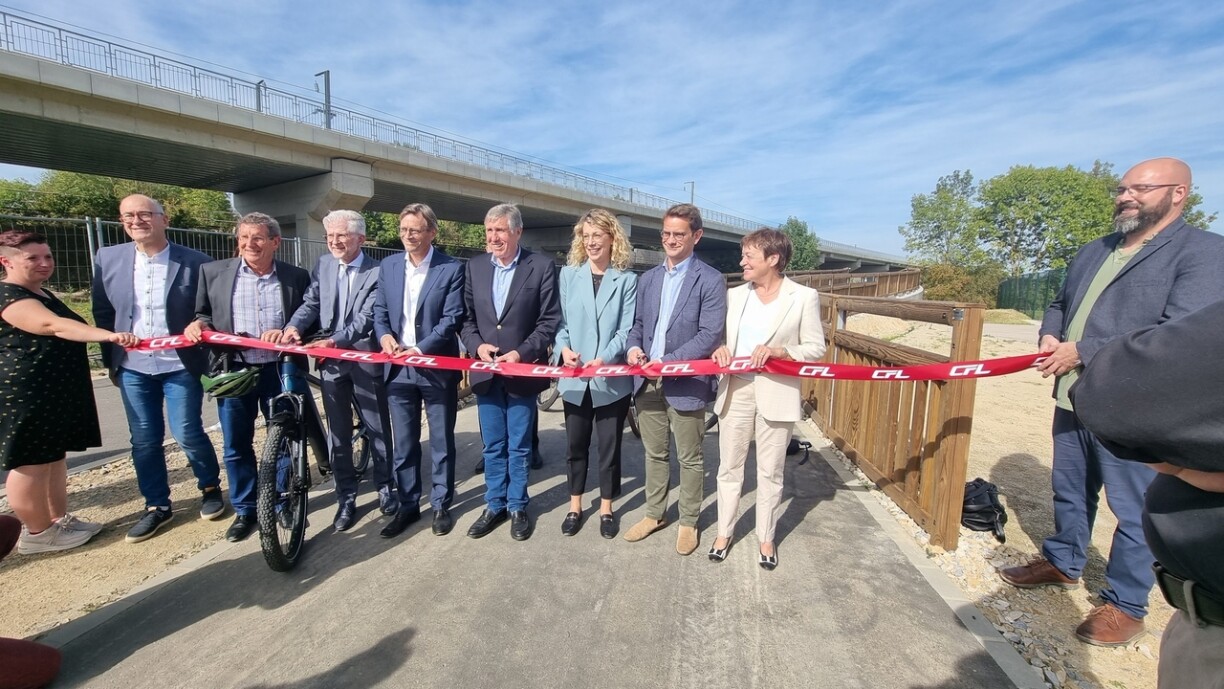
The new cycling track between Bettembourg and the capital is hoped to further promote the use of soft mobility. One interesting aspect of this new track is that it partially crosses through a protected Natura 2000 zone. However, according to Environment Minister Joëlle Welfring, there is no reason for concern that cyclists will have a detrimental impact on nature.
At the inauguration, she explained that potential impacts were reduced through rigorous joint planing with all the affected administrations. She further noted that solutions for flood protection have also been found, referring to a bridge at the inauguration site.
Officials emphasized the need for "multimodal mobility", meaning a combination of different public and private modes of transportation. The idea is to increase the usefulness of bicycles by ensuring that tracks are connected to central access points of public transport.
Transport Minister François Bausch expressed his optimism that in the coming years, many new cycling tracks will be completed: "This one is particularly significant as it is the first express cycling lane. Eventually, it will connect Dudelange to the center of Luxembourg City via Bettembourg, providing an excellent connection to the city."
The Greens Minister also addressed accusations that extensive administrative procedures prevented the expansion of the cycling network: "I think this is a good example that this is not true. It shows that when everything is being planned together from the beginning, then it will work. We jointly have to look for pragmatic solutions. And I have to say that we saved a lot of time by working closely with the railway services."
As of now, only about 100 kilometers out of the planned 430 kilometers of cycling tracks, proposed in 2018, have been constructed. If everything goes according to plan, the entire track between Bettembourg and the capital will be completed by 2025, with a direct connection between Dudelange and Luxembourg City expected by 2028.