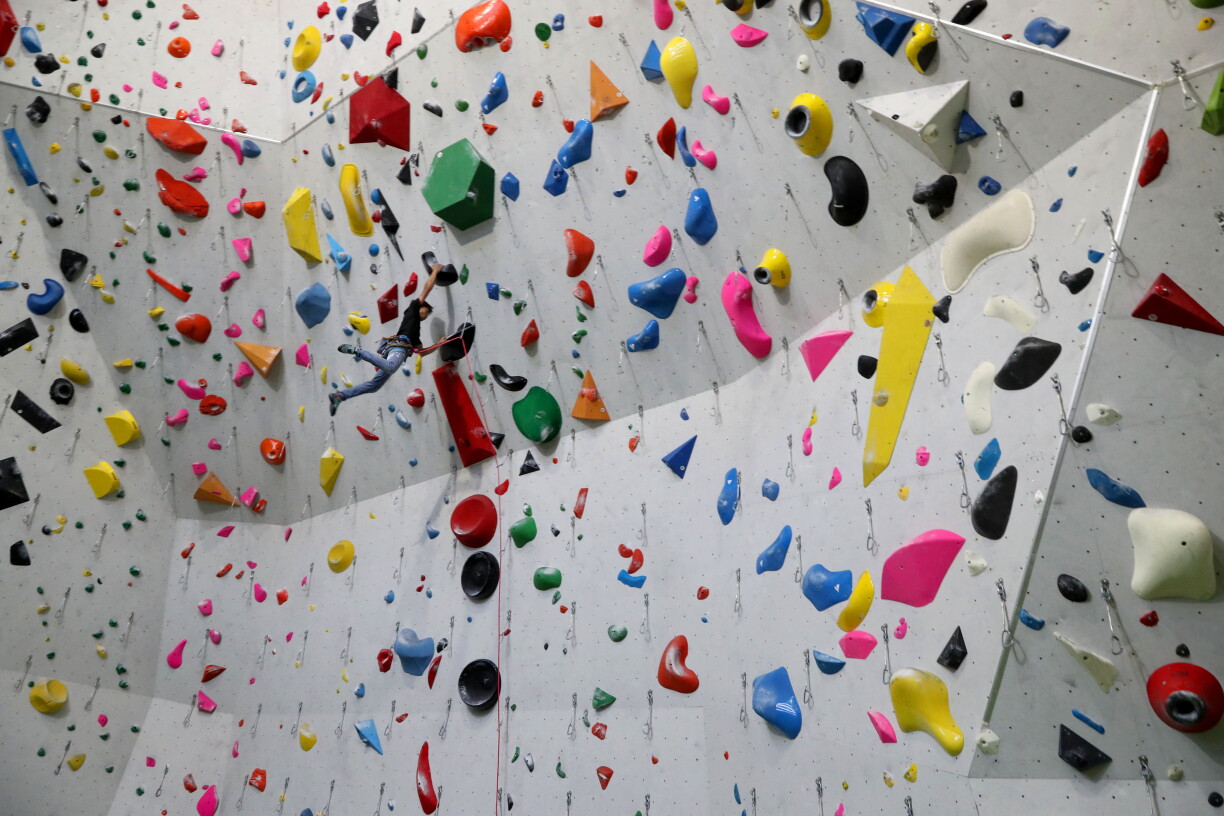
The recent fatal accident at a climbing gym in Soleuvre has reignited concerns over safety in the sport. Although the exact circumstances of the incident remain unclear, the tragedy immediately brought back memories for Gilles Gardula, who suffered a severe climbing accident in Esch-Lallange six months ago.
Gardula, who is still recovering from hearing loss and an impaired sense of smell, considers himself lucky to be alive after sustaining serious head injuries when he fell while climbing with his daughters. He prefers not to discuss the details or assign blame, instead focusing on moving forward and advocating for improved safety in indoor climbing.
Gardula argues that concrete measures are needed to prevent similar accidents in the future. Among his proposals are mandatory helmets for climbers, gloves for belayers, and even a climbing equivalent of the Road Traffic Act – a safety code akin to the one used for road safety or school cycling tests.
Gardula envisions a system in which climbers must undergo training, pass an expert assessment, and earn a permit to demonstrate their competence. Clear pictograms and signage, he says, would also help set expectations for behaviour in climbing gyms, much like road signs or playground rules.
One key issue, Gardula points out, is the lack of a clear legal framework defining responsibility during climbing activities.


This question of liability remains unresolved in Esch-Lallange, where climbing at the local gym has been suspended since Gardula's accident six months ago. In response, local officials decided to tighten safety measures and have since drawn up a new convention in collaboration with the national climbing federation.
André Zwally, Esch's councillor for sport, highlights the main points: before anyone is allowed to supervise climbers, they must be made aware of their responsibility, and stricter controls must be in place, particularly regarding the routes offered and the number of climbers allowed at different heights.
The municipality is also considering fencing off the area around the climbing wall. Unlike traditional climbing walls attached to a building, this structure is free-standing, located in the entrance hall, and accessible from all sides, which poses additional safety challenges.
According to the council, the new agreement was sent to the local climbing club, ClimbX, in mid-April, but the club claims they have yet to receive it. During the RTL interview, however, the club was provided with the document for the first time.
After an initial review, ClimbX president Tom Wecker raised the possibility of the club seeking an alternative venue, questioning the feasibility of continuing activities under the new conditions. He stresses that climbing is not limited to rope climbing but also includes bouldering, and argues that the infrastructure should accommodate all aspects of the sport.
Wecker's main concern is that the new agreement does not seem to prevent another long closure in the event of a further incident, which would disrupt training.
While Wecker is open to stricter safety rules, such as compulsory helmets and floor mats, he emphasises that accidents can never be entirely ruled out, as human error remains a factor. He also notes that the popularity of climbing has grown rapidly in Luxembourg over the past decade, hence why more people are exposed to potential risks.





