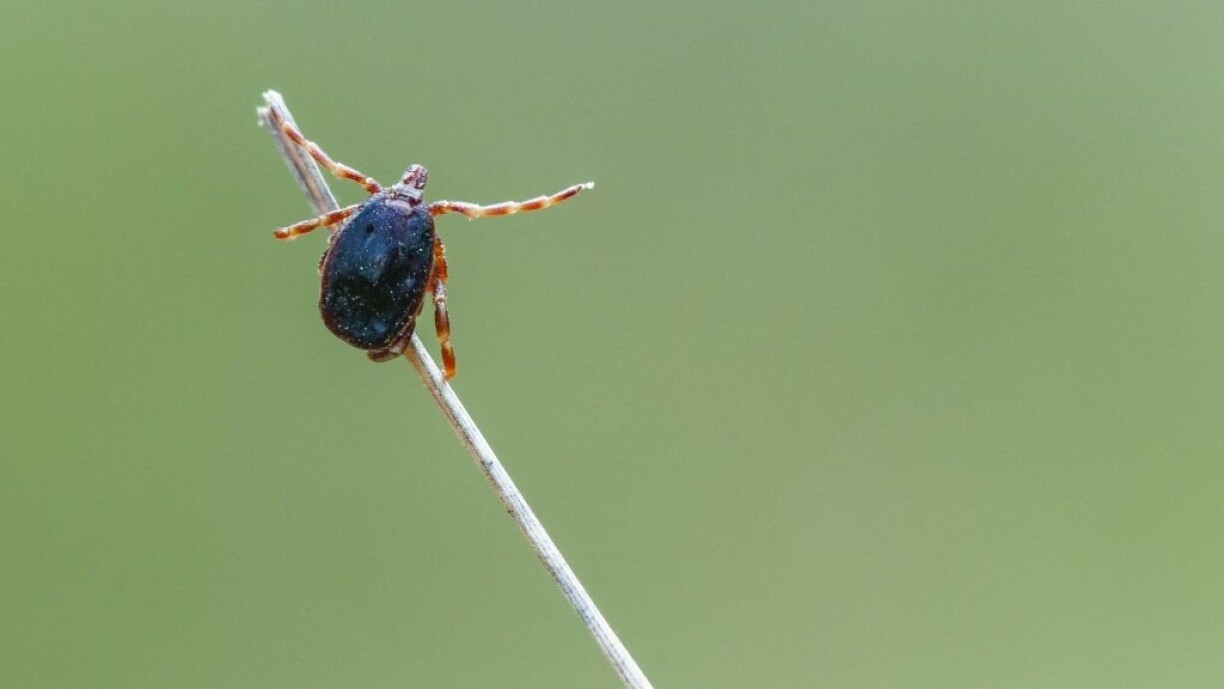
Ticks are among the most disliked creepy-crawlies, alongside spiders and mosquitoes. But they don't just draw blood - they can also transmit dangerous diseases, such as Borrelios or FSME. And since 2018, a new species of tick has been detected in the Grand Duchy - the Hyalomma tick.
These ticks are around three times as big as the castor bean tick, which is the most common type of the parasite in Luxembourg. When fully engorged, a Hyalomma tick can reach 10 times the size of an average tick, and can be identified by their white- and red-ringed leg markings. Dr. Alexander Weigand from the Natural History Museum (MNHN) explains how widespread the Hyalomma tick is in Luxembourg, and whether it poses any risk.
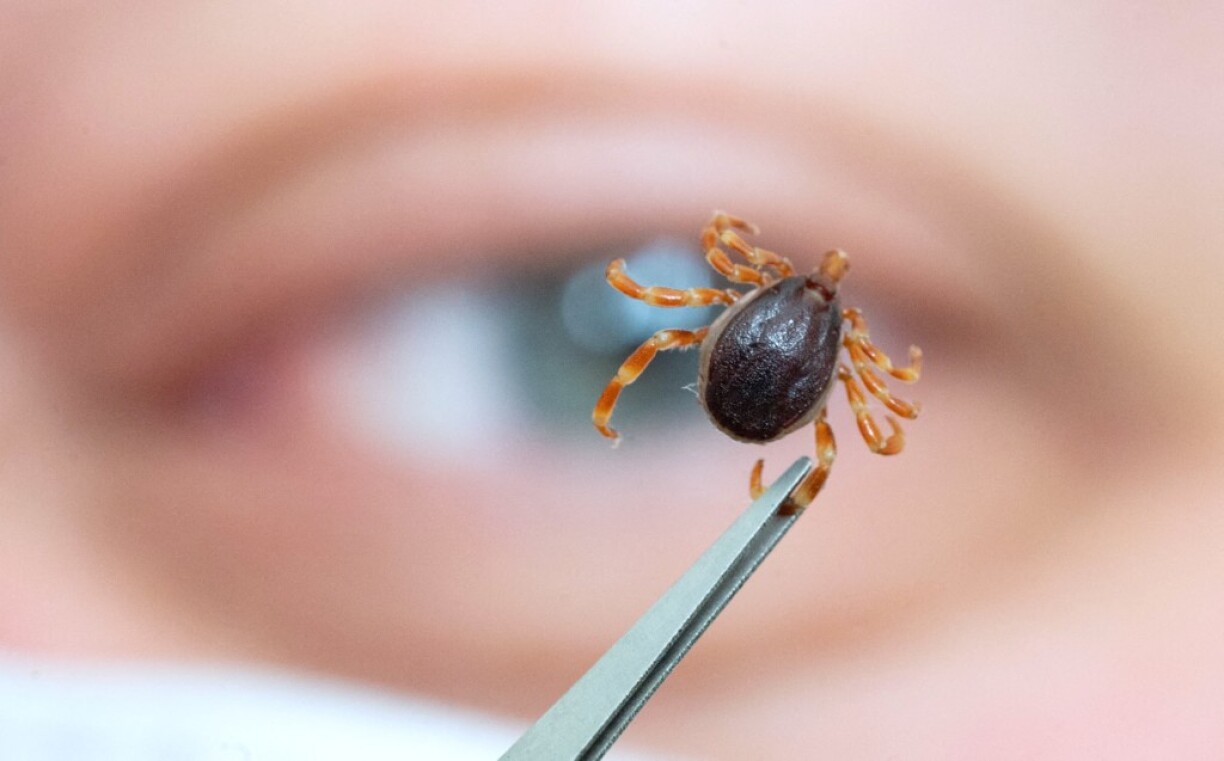
The species was first discovered in Luxembourg in summer 2018. Since then, three more Hyalomma ticks have been found in the Grand Duchy. Three of the four specimens were found on horses, while the fourth was discovered on a human. Dr Weigand says the warmer winters recently have upped the potential for further spread, but to date, the occurrence of Hyalomma ticks in Luxembourg is more a matter of individual cases, brought in by Asian migratory birds.
A nationwide study will be conducted this June to gain a clearer overview of the spread of the Hyalomma tick. Equestrian facilities, farms and Bettembourg wildlife park will all be checked, the latter largely due to the resident water buffaloes. Researchers will also deploy special CO2 traps, as the Hyalomma tick - unlike its more common cousin - does not lie in wait, but instead actively hunts its prey. Dr Weigand says the eight-legged parasites can move surprisingly fast.
Any live specimens located as part of the study will be examined at the Luxembourg Institute of Health (LIH) for potential disease agents, as the Hyalomma tick is known to carry Crimean-Congo fever, which can be fatal to humans.
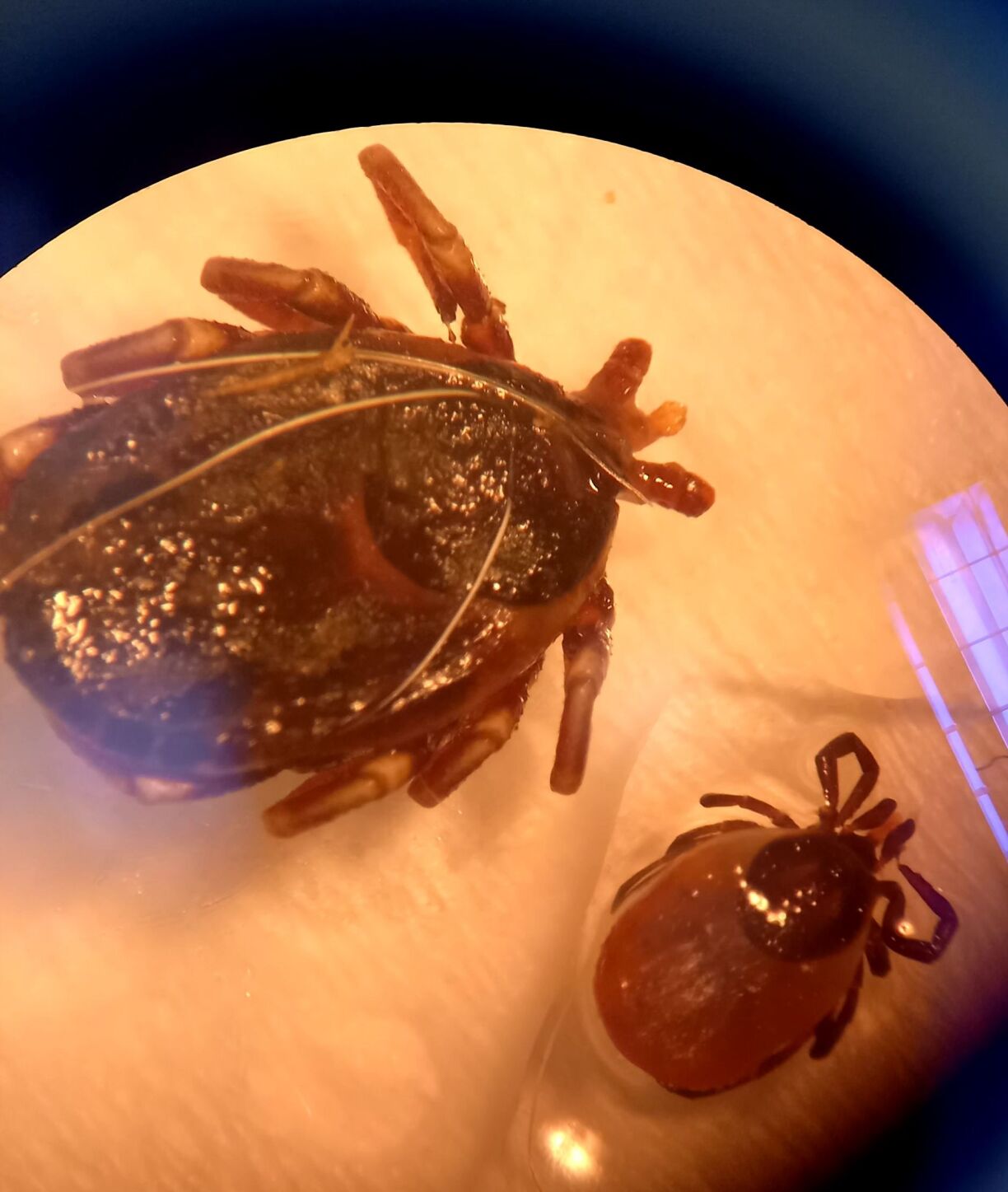
The Auwald tick, also known as the cow or meadow tick, is another type which is established in Luxembourg, and is distinguished by its patterned body. During a test in which Dr Weigand's team pulled a cloth for 100 metres through high grass, the researchers found 40 specimens of the cow tick, which can be particularly dangerous for dogs due to their propensity for carrying canine malaria.
Dr Weigand appealed to the public to report any noticeable tick sightings. "Especially with the Hyalomma, it would be helpful if any of these could be trapped and brought to the museum." However, those who are not keen on approaching the ticks can also upload photos to iNaturalist.lu, which will directly record images to the Luxembourg research database.
Although ticks are most prevalent in the summer months, they can be active any time between February and November. Protection techniques should therefore not be restricted to the high season. For outside activities, it is recommended to wear light, long clothing, closed footwear, and to use tick spray. Any areas with high grass should be avoided.
Upon returning home, it is best to check yourself for ticks. Ticks are drawn to warm places on the body where the skin is especially thin, and can be found behind elbows and knees, on necks and heads, but also behind ears or under armpits.
Ticks should be removed as soon as they are discovered. The longer a tick is attached to the skin, the higher the risk of infection. A tick can be removed using special tweezers to grab the head, then turning until the creature is released. Any bites must be disinfected afterwards.

The number of ticks in the region has increased due to warmer winters and rainy springs. Although in Eastern Europe, Austria and southern Germany have reported the risk of infection with early summer meningoencephalitis (FSME), Luxembourg's Ministry of Health said that as of June last year, it had only detected infections with Borrelia, or Lyme disease. The proportion of ticks carrying the causative agent of Lyme-Borreliosis varies between 0% and 30% depending on the year and region. In a study from the year 2007, the average rate reached 11.3% among the common castor bean ticks living in this country.
A tick's excrement can enter the human system once a bite has been established, which is how this bacteria finds its way into the human body. This process typically takes up to 24-48 hours.
A Borrelia infection is identified by a red spot appearing around the tick bite site after around a week. It can be accompanied by flu-like symptoms. If the disease is not treated with antibiotics, patients may suffer long-term complications such as arthritis, facial paralysis, heart muscle inflammation or even meningitis.
Consult a doctor if you experience the following symptoms:
Further information can be found on the Ministry of Health website.





