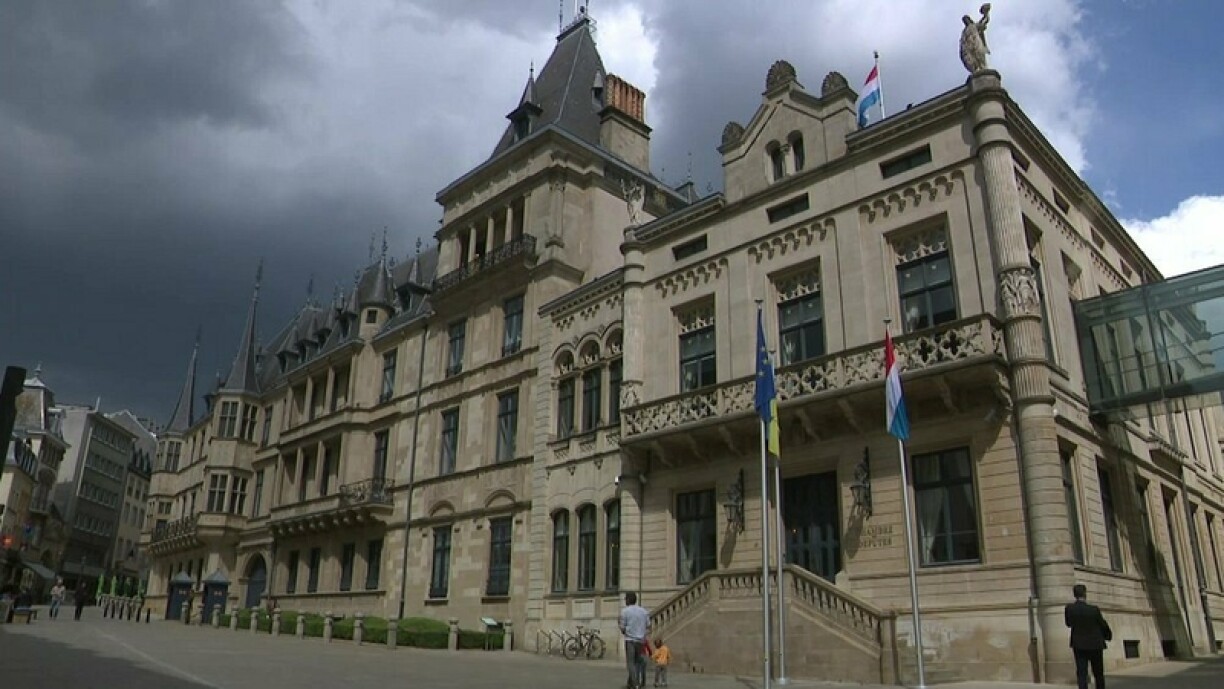
During a press conference last Friday, Carole Dieschbourg explained that she decided to step down as Minister for the Environment, Climate and Sustainable Development to no longer burden the Chamber of Deputies with lengthy processes in relation to the 'Garden Shed Affair'.
However, it is unclear whether Dieschbourg's strategy will actually pay off. Our colleagues from RTL spoke to former state prosecutor Jean Bour about his assessment of the situation.
Bour explained that Articles 82 and 116 in the constitution regulate that only the Chamber of Deputies has the power to accuse a government member. Since this regulation was directly taken from the Belgian constitution, Bour thinks that the jurisprudence of our neighbouring country has to be analysed to determine whether or not the Chamber still holds that power after Dieschbourg's resignation.
According to the assessment of the former prosecutor, it is still up to the Chamber. However, even though this is a constitutional procedure, Bour also underlined that it is actually illegal as it violates the Human Rights Convention: "Every person has a right to be judged by an independent court, not by the Chamber." This is also the case for ministers, Bour noted.
A comparable situation already took place in 2012 with the 'Wickrange-Livange Affair'. At the time, the Chamber abstained from accusing then-Minister of the Economy Jeannot Krecké, arguing that the rule of law does not allow for confusion between parliament and justice system.
It was also stressed that only independent courts have the right to accuse a person, even if they are a minister. Furthermore, the constitutional regulation was said to be outdated and in the process of being revised.
Bour laments that to this day, this revision of the regulation has yet to take place. He explained that the European Council, the Organisation for Economic Co-operation and Development (OECD), and the Luxembourg fraction of the Group of States against Corruption (GRECO) have issued several reminders over the years and that Belgium has also managed to revise its texts in the meantime.
The former prosecutor warned that the case may end up being passed back and forth between Chamber and justice system. This would be problematic for Dieschbourg, as she can neither be convicted, nor exonerated. It would also damage the reputation of politicians, Bour noted.





