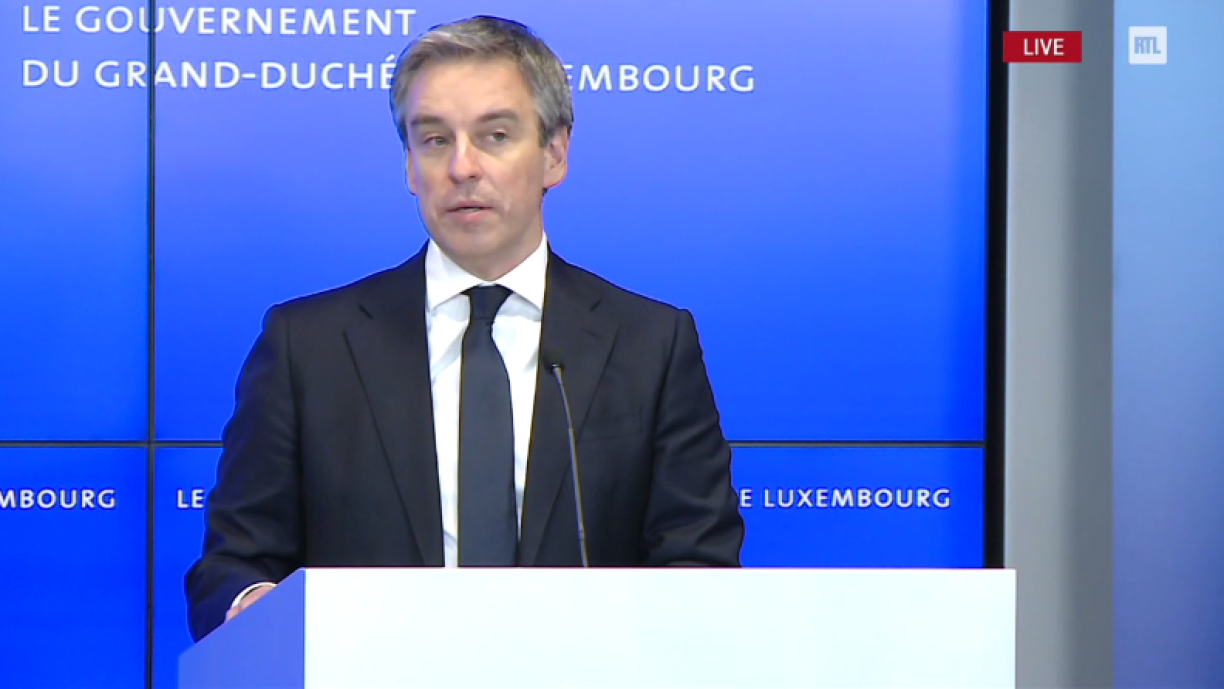
During his press briefing on Friday, minister Meisch focused on the reopening procedures in Luxembourg's preschools and kindergartens, also known as cycle 1. He conveyed his overall optimism that every last remaining issue, be that in the area of infrastructure or staff, would be resolved in time before 25 May. He also emphasised that the first phases in secondary education had all gone according to plan.
Meisch highlighted the importance of communication on all levels during these difficult times. He emphasised that the ministry had consulted a large variety of experts, scientists, and studies to determine adequate measures that would allow children of all ages to return to schools without increasing health risks. He noted that parent associations and unions had been involved in these discussions, although this had previously been contested in an open letter.
The minister further explained that Covid-19 would need to become a topic of conversation in class and that an educational video had been prepared by the ministry.
Additionally, Meisch explained that although no official supervision had been installed before the start of class at 8 am, children could be watched on school premises from 7 am onwards.
Further details were given about the adaptations made in Luxembourg's kindergartens. Work groups will be smaller than in primary schools to normalise the return to schools as much as possible. "We cannot forbid or even explain the prohibition of physical contact to children of that age", Meisch underlined.
Face masks are considered forbidden for children under the age of 2, and not recommended for children below 6. Meisch therefore highlighted the importance of relocating activities outside as much as possible and announced that playgrounds on school premises would be reopened during the day.
Minister Meisch also addressed the situation in Luxembourg's competence centres, which aim at the care and education of special needs children. He explained that all nine institutions had different purposes and thereby different conditions and adaptations.
He stated that work groups in these centres were not subject to adaptations, since the nature of the respective work would only allow for small groups in the first place. He used the past weeks to visit some of the institutions and supervise the new measures.
Claude Meisch had to admit that at this stage, no further preparations had been made for a second wave of infections that might lead to a renewed closing of schools in the autumn. He was positive nonetheless that adaptations could be made on the go and that home schooling had shown its benefices over the past weeks. He finished by explaining the ministry's priority of finishing the current academic year as well as possible to assure a new start in September would be possible for all school levels.
Mounting frustration at lack of information concerning "competence centres"





