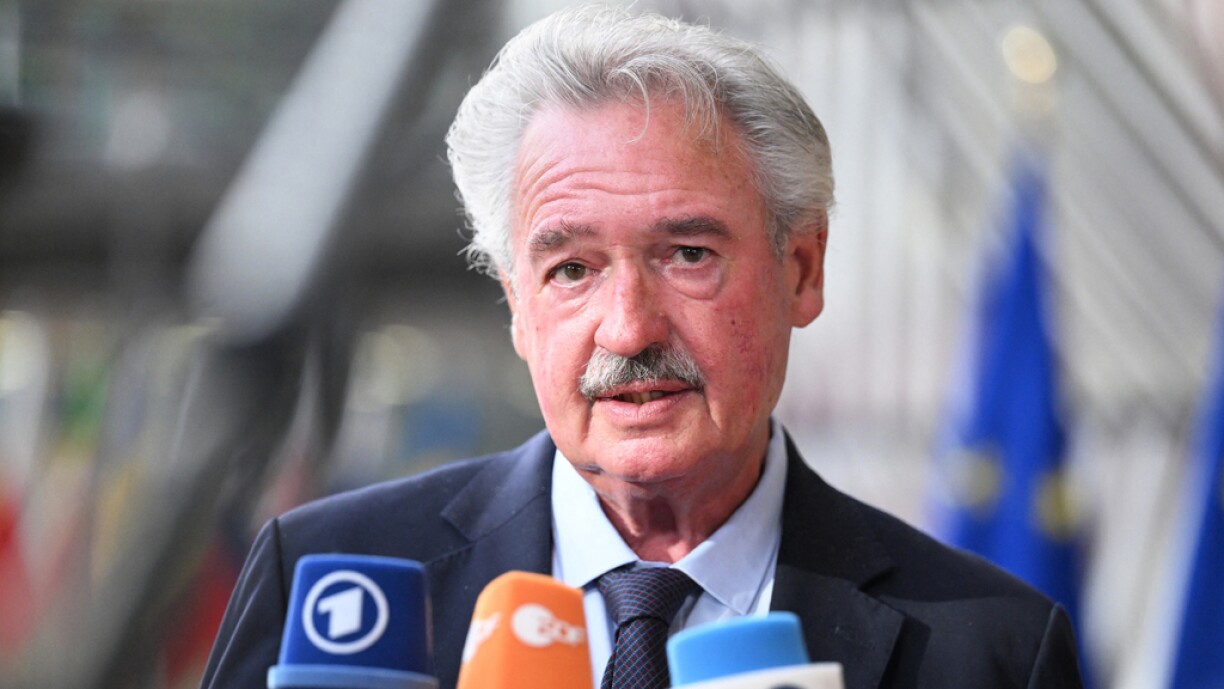
In a Ministry of Foreign Affairs press release, Jean Asselborn repeated his statement that the Israeli government had the right to defend itself again Hamas' terrorist attacks, and strongly condemned the acts directed against innocent civilians in Israel.
The minister simultaneously called for de-escalation and an end to hostilities. He called Israel's announcement of their intentions to cut electricity, water, fuel and gas supplies to the 2.3 million people living on the Gaza Strip "concerning".
In addition, Israel's 24-hour evacuation orders issued to 1.1 million civilians living in northern Gaza ahead of a planned ground offensive were a particular "cause for concern", Asselborn wrote. The foreign minister joined his voice to that of the United Nations in calling for Israel to withdraw this request. On Friday, the UN declared an evacuation of these proportions "impossible [...] without devastating humanitarian consequences". Asselborn echoed this sentiment, saying it was necessary to prevent an already-tragic situation from becoming a catastrophe.
Israel should act in accordance with international law and guarantee the protection of Palestine's civilian population, who should not be held responsible for the deeds committed by Hamas. Asselborn also highlighted that, although it was important to ensure no EU funds were diverted to Hamas, humanitarian aid for Palestinian civilians should continue, as the population was living in extremely difficult conditions.
Furthermore, Asselborn acknowledged a serious risk of the conflict developing into a regional conflagration, citing recent reports of shots exchanged on the Israeli-Lebanese border, and attacks in southern Lebanon, as particular sources of concern.
The conflict should be prevented from spreading at all costs, the minister wrote. This should also apply to the West Bank, where the escalation of violence emanating from Israeli settlers and the forced relocation of Palestinian communities has reached alarming proportions.
Asselborn concluded by reiterating his position that a two-state solution could be the only way to create lasting peace in the region.





