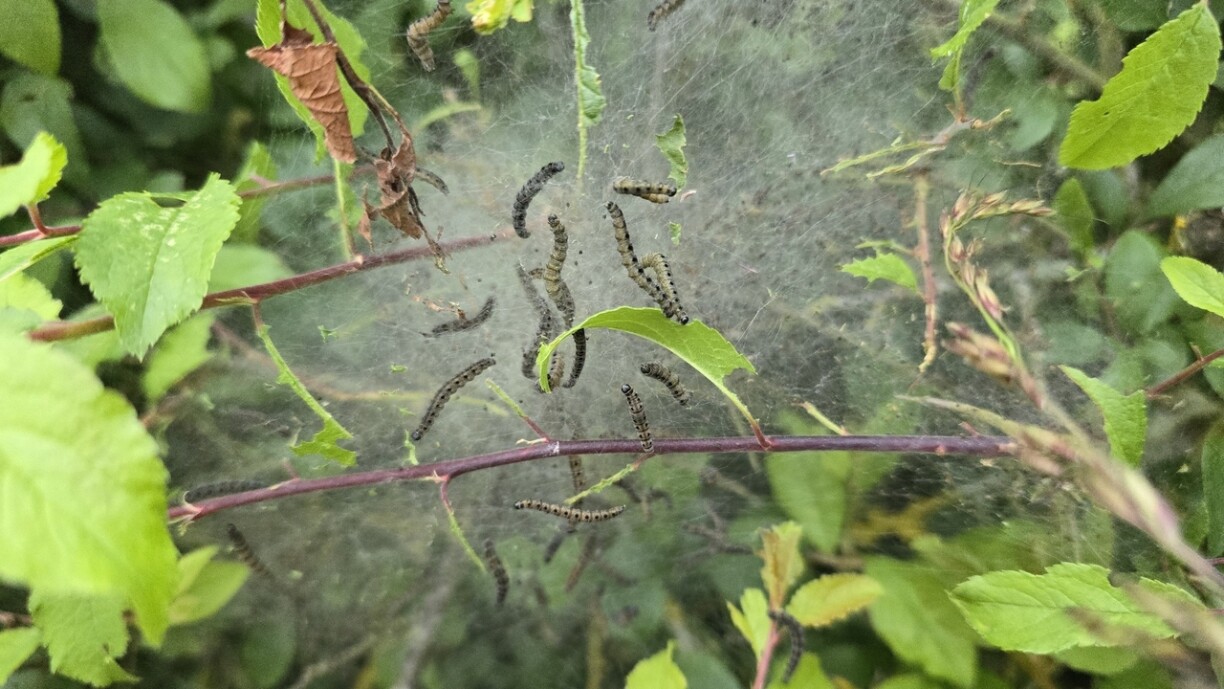
Every year in early summer, these "cobwebs" become ever more apparent across greenery or along fields, as the ermine moth caterpillars weave them to protect themselves from predators, or from rainfall.
The ermine moth belongs to the butterfly family and lays its eggs on branches every spring. The eggs hatch into caterpillars between June and August, with the larvae having yellowish bodes and black heads. These can often be seen in bushes and in trees during this period.
The protective cobwebs, although functional, are plentiful at this time of year, much to the displeasure of some people.
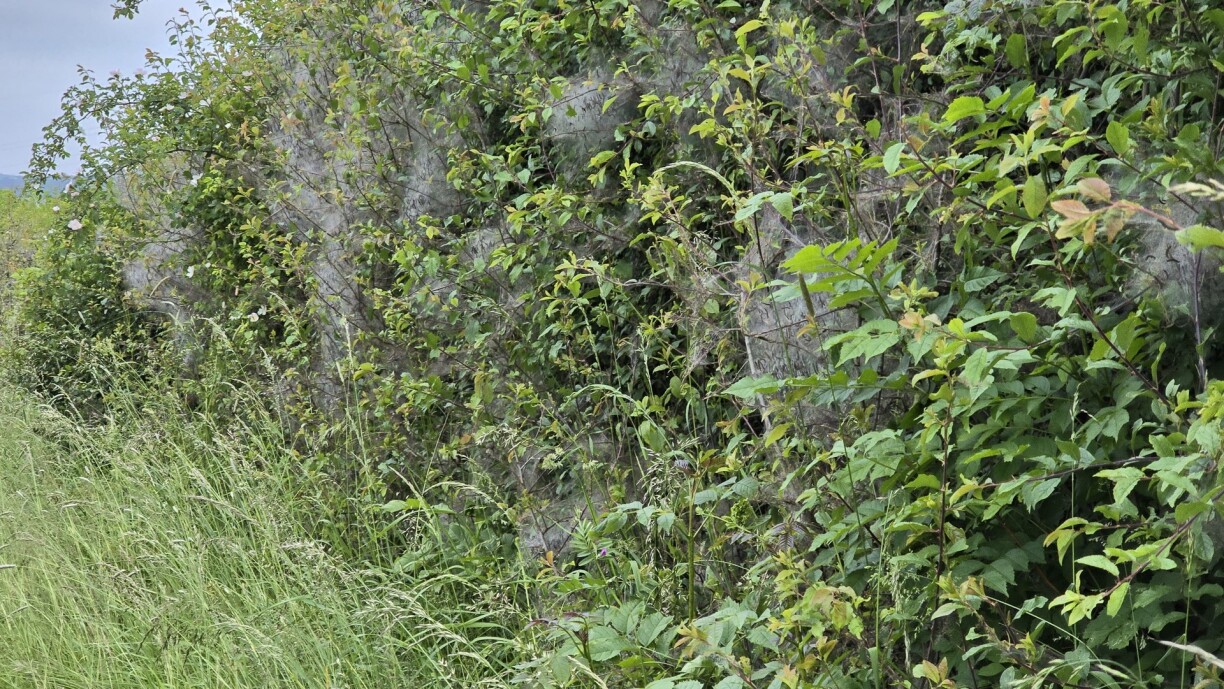
Unlike the oak processionary caterpillar, ermine moth caterpillars pose no risk to humans. Despite this, they can be a plague, as they eat leaves off the trees and leave them looking bare. The plants may have reduced growth in future as a result of the caterpillars' activity.
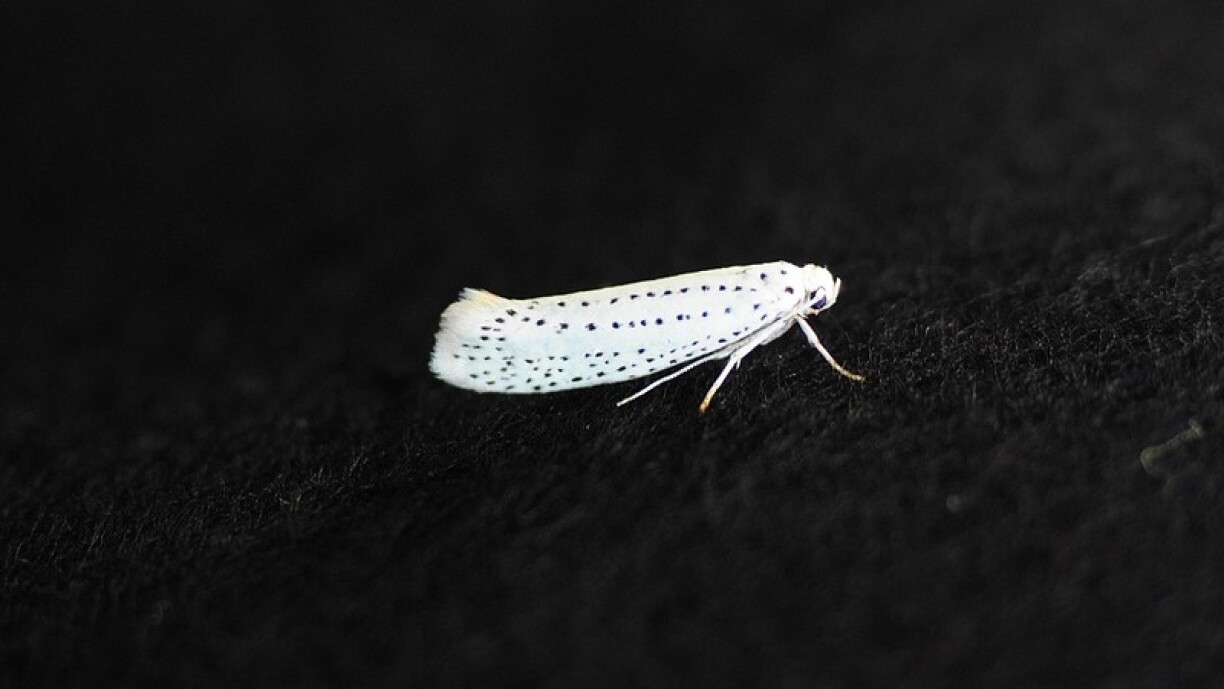
After around a month, at the end of June, the caterpillars are fully fed and move to the pupa stage. They then emerge as ermine moths in early July, white in colour, with small black dots. The moths seek out a partner for their short lives in order to breed and lay eggs, then they die after a few short weeks. The eggs are in stasis over the winter months, developing only once temperatures improve in spring.
The caterpillars are easy enough to collect from gardens if spotted in time. If, however, a tree or hedge is completely covered by the cobwebs, you can either cut off the affected branches, or spray them with a hose.
In many cases, however, the trees and bushes can recover once the moth has emerged. If you are unbothered by the lack of greenery for some weeks, then simply leave the caterpillars be.





