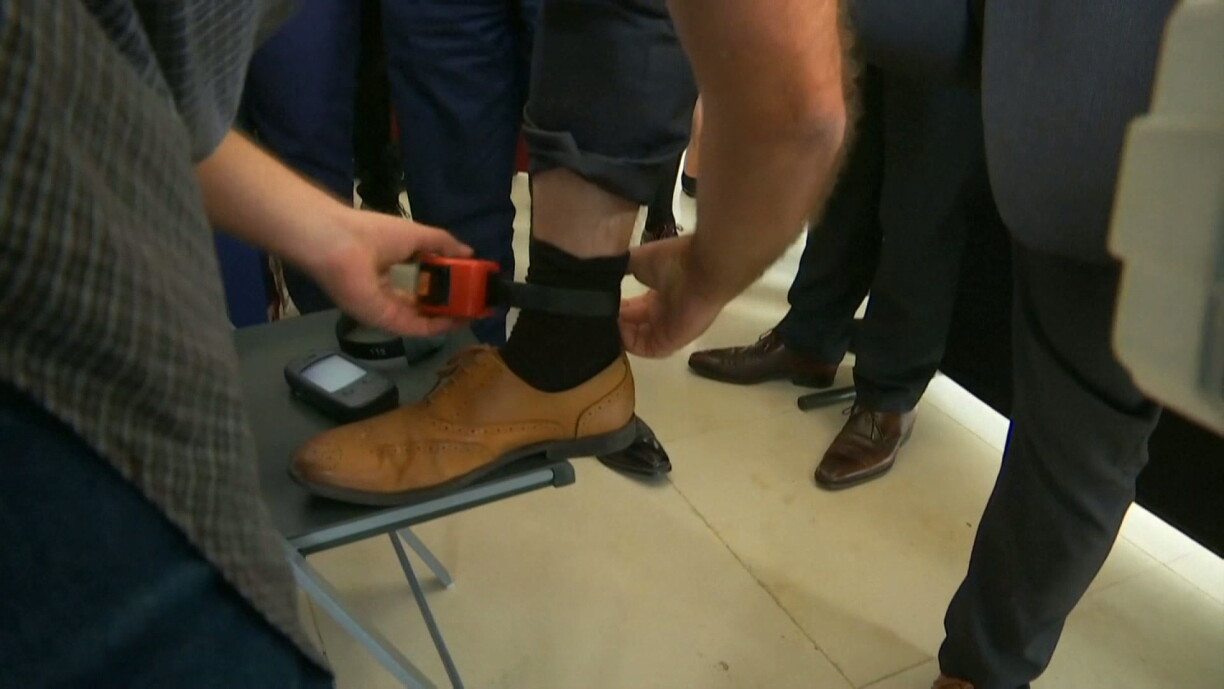
Luxembourg’s Schrassig and Uerschterhaff prisons are currently operating at, or even above, full capacity, a situation that was particularly acute during the summer months.
Claudine Konsbruck, the Ombudsman responsible for overseeing detention centres, confirmed the issue and highlighted the strains facing the prison system in a recent radio interview.
As a result, questions have been raised about whether using electronic monitoring, commonly referred to as electronic tagging, could help to alleviate pressure on the prison system.
Electronic tagging was first introduced in Luxembourg in a pilot project in 2006. According to Justice Minister Élisabeth Margue, a trained lawyer, tagging is considered a privilege for the individual concerned.
She notes that it is less restrictive than prison and is intended to offer a degree of stability and facilitate reintegration. However, the measure is only appropriate if the person’s behaviour and profile permit it.
Margue explained that electronic tagging offers greater flexibility compared to prison sentences, where inmates, unless they are at the Givenich facility, have almost no freedom of movement.
The main objective of electronic monitoring is to help maintain stability in a person’s life and, ultimately, to support their reintegration after serving their sentence.
However, the suitability of this measure depends on the individual’s behaviour and personal profile.
In Luxembourg, electronic tagging is only available for sentences or remaining sentence periods of less than three years. Applicants must be Luxembourg residents and must not be considered a flight risk.
Factors such as employment, training, or urgent medical or family circumstances may also be taken into account, but the measure remains subject to strict eligibility criteria.
The justice minister noted that, while some countries have relaxed the rules on electronic monitoring to reduce prison populations, she does not see an immediate need to change the current requirements in Luxembourg.
Maintaining certain safeguards is considered essential, and each case is assessed individually to determine if electronic tagging is appropriate. The final decision rests with the public prosecutor’s office.
These strict regulations help explain why electronic tagging was applied in only 27 cases last year following judicial decisions.
Of the 21 applications submitted by convicted individuals themselves, just three were approved after both a social and technical assessment.
For context, Margue pointed out that the electronic tags currently used in Luxembourg rely on radio frequency technology: a monitoring device is installed at the person’s home and checks if the individual is present during specified hours.
The system does not use GPS, so it cannot track the person’s movements outside the home. There is currently no GPS-enabled tag in use that would allow for comprehensive movement tracking. This explains why electronic tagging is not used in cases of domestic violence.
To date, electronic tagging has never been used for pre-trial detention.
The requirements for pre-trial detention, such as the risk of flight or tampering with evidence, are fundamentally incompatible with the conditions for granting electronic tagging, Margue further explained.
The justice minister concluded that, overall, electronic monitoring is viewed as a positive tool as it facilitates reintegration and helps maintain family ties.
However, the measure was revoked in four cases last year, resulting in the individuals involved being returned to prison.


