Minister of Labour Marc Spautz has reaffirmed that any changes to the organisation of working time must be determined through collective agreements, a stance that has sparked debate with the Luxembourg Employers' Association (UEL).
Following the minister's comments on Radio 100,7, the UEL issued a statement on Tuesday evening questioning why workforce flexibilisation options should be restricted exclusively to collective bargaining.
When asked by RTL whether he would maintain this position and whether the government coalition remains united on the issue, Spautz pointed to an action plan approved on 15 July 2026. He noted that the plan, which was endorsed by social partners following a period of strained dialogue, explicitly states that working time modifications require a collective agreement. Because this document was also submitted to Brussels, Spautz described this approach as self-evident.
The referenced action plan was drafted to comply with the EU directive on minimum wages, which requires member states to promote collective bargaining. Regarding working time, the document outlines options such as condensing the 40-hour workweek into four days, increasing daily break times, and adapting weekend rest periods. It explicitly mandates: "Any changes to the organisation of working time would be subject to the conclusion of a collective agreement." Both the UEL and trade unions approved this document in July.
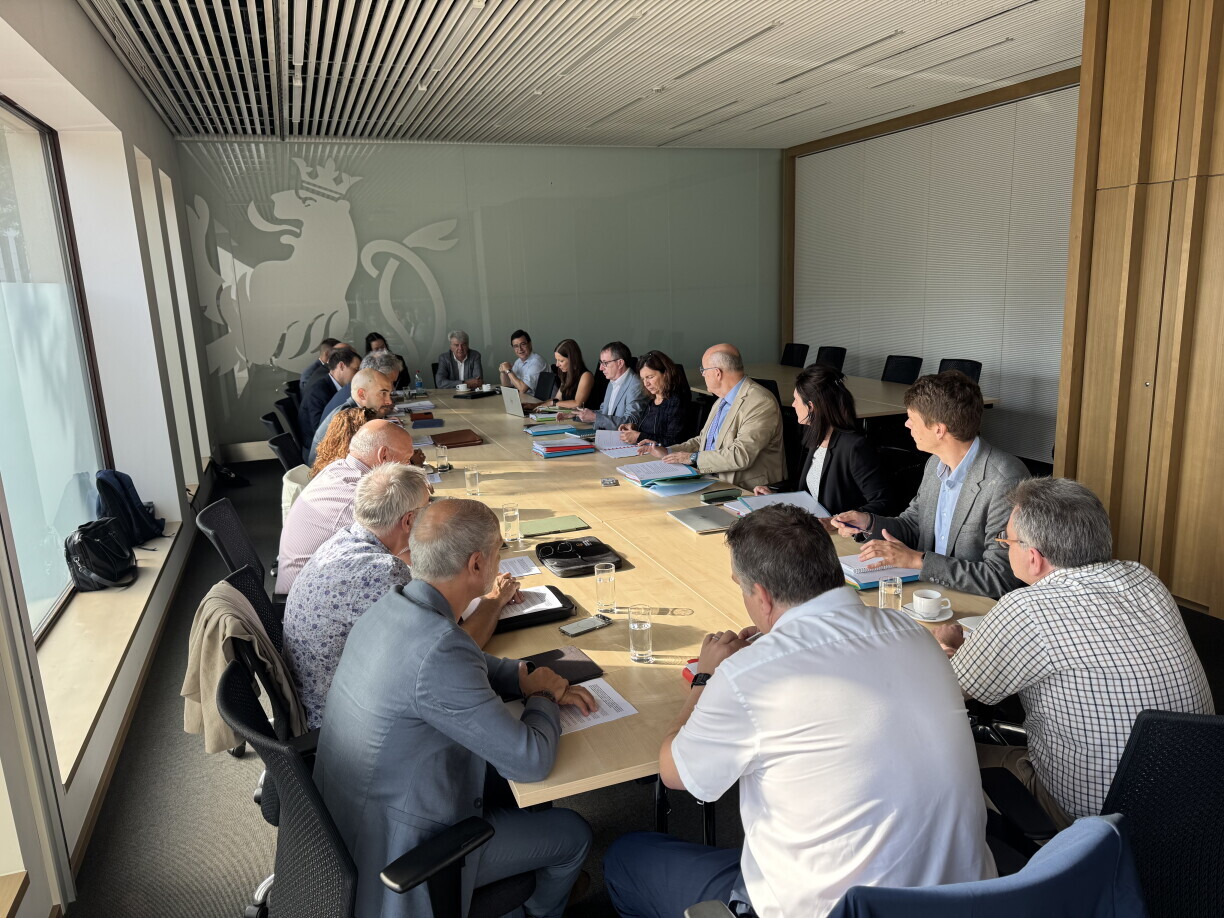
Although Minister Spautz had not initially planned to revisit the organisation of working time at Friday’s meeting of the Standing Committee on Labour and Employment (CPTE), he told RTL he would now raise the topic. He emphasised that his priority is to uphold the 15 July agreement. While he hopes the discussions will yield a consensus, Spautz warned that if an agreement cannot be reached, he would "assume his responsibilities as minister" and implement the measures he deems necessary.
The Friday CPTE meeting was originally scheduled to address another sensitive aspect of the minimum wage directive: determining how to measure whether the minimum wage is adequate and how it tracks with general wage development.
This calculation method sparked significant disputes under Spautz’s predecessor, Georges Mischo. A primary point of contention was whether civil servant salaries and bonus payments should be excluded when calculating if the minimum wage equals 60% of the national median wage. Addressing this, Spautz stated he struggles to see how excluding the civil service from the calculation could be justified.
Regarding bonus payments, the minister noted that the issue hinges on establishing a clear definition, which will be debated on Friday. He declined to elaborate further, stating he had previously been criticised for pre-empting discussions and wished to avoid repeating that mistake.


