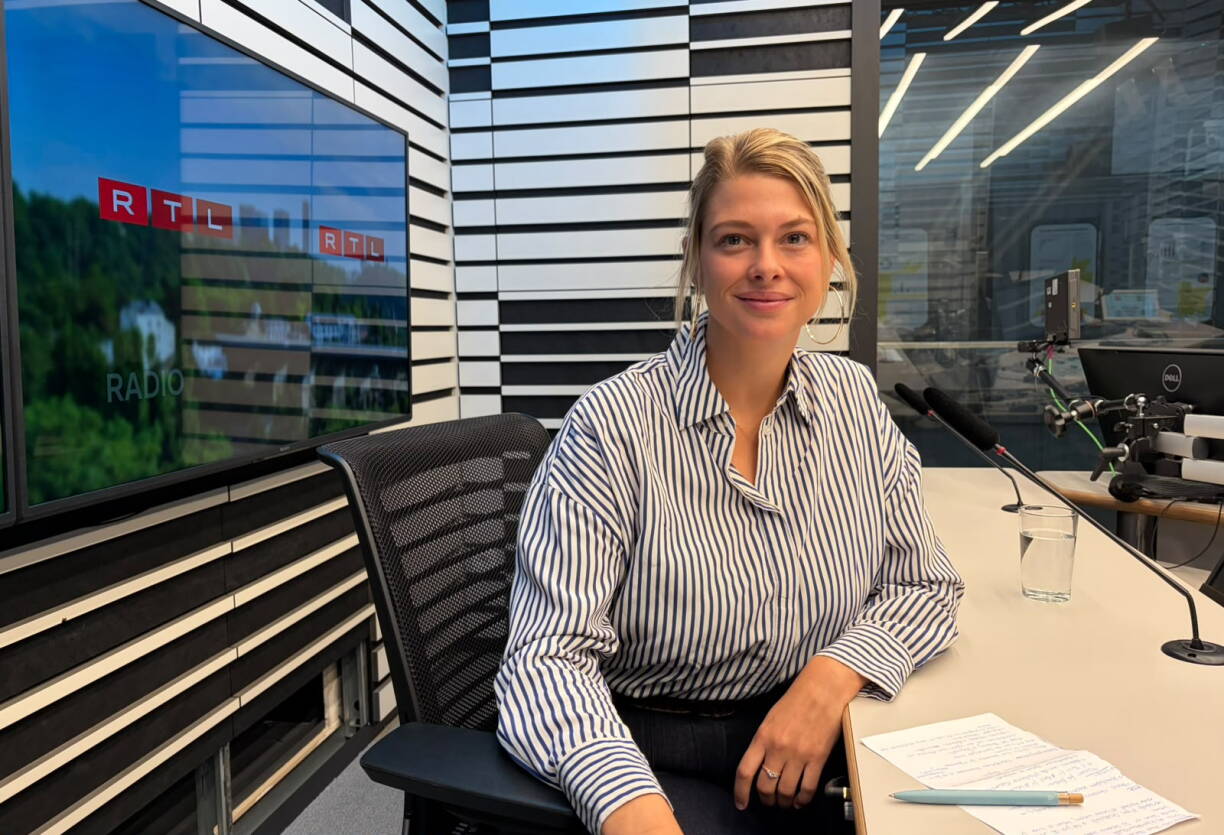
Following the publication of the latest Pisa study, which showed “historically poor” results for Luxembourg, Green Party MP Djuna Bernard argues that the causes are systemic and require a broad policy response.
According to Bernard, while the current education minister, Claude Meisch, must take “a fair share of responsibility” after 12 years in office, these issues are not unique to Luxembourg, but rather affect countries all over Europe.
Bernard emphasises, however, that Luxembourg has its own particular challenges, especially in terms of educational inequality. She highlights that children from less privileged socio-economic backgrounds still face far more obstacles in the school system and argues that this issue has been neglected.
When asked about initiatives to improve fairness in the school system, Bernard acknowledges some progress has been made, such as the introduction of free early childhood provision, early education, and the plurilingual approach.
However, Bernard is convinced that the current measures are not enough. She calls for earlier support and diagnostics, especially in identifying language deficits in children, since the earlier language gaps are identified and support is offered to parents, the better.
Bernard argues that targeted support to address individual learning gaps is still lacking, despite the homework help, which is now offered in after-school care, but only consists of a dedicated space for doing homework, not targeted tutoring where someone actively helps to close gaps.
She also advocates for later streaming in the school system, pointing out that many countries, which have received better results than Luxembourg, only separate pupils into different tracks much later.
One of the main weaknesses highlighted by the Pisa study is reading competence. Bernard agrees that declining reading habits concern children and adults alike, acknowledging that it's a global phenomenon: "we all get our information from TikTok; ChatGPT does our research, and everyone prefers to watch a 30-second video rather than read an article."
Bernard says adults also need to reflect on their own reading habits, as children grow up in an environment where adults model these behaviours.
To improve reading skills among young people, Bernard calls for a focused reading strategy developed in a coordinated way at the national level. She says the Greens demanded such a strategy before the Pisa results were released, and will continue to push for it in parliament.
Bernard wants to focus on improving access to books, emphasising the need to make libraries and books more accessible, and to adapt school curricula to include more up-to-date and relevant books that match young people’s interests, not just the classics.
Reflecting on the importance of reading, Bernard shares a phrase: “Reading is thinking with someone else’s mind.” She believes fostering discussion of current events in class and encouraging young people to form and express their own opinions are essential parts of building reading competence.
Addressing the role of digital devices in classrooms, Bernard supports restrictions on smartphone use in the first three years of secondary school.
However, she criticises the lack of a coherent digital strategy and the “paradox” of banning mobile phones while schools “have been flooded with iPads, which also give access to social media". Instead, Bernard stresses the need for a real pedagogical concept that strikes a better balance between the iPad approach and the phone ban.
Finally, Bernard responds to proposed EU restrictions on social media and online services for children under 13, and limited accounts for those up to 15. She says the Greens support a minimum age for social media use as “a necessary form of protection”, but insists that it is not a silver bullet.
Bernard welcomes the EU’s plan to regulate algorithms and limit dangerous or addictive content on social media platforms, stressing that responsibility cannot rest solely on children when adults fall into the same traps.
Bernard remains curious to see how the EU’s proposed transition phase for limited accounts between 13 and 15 will work in practice but is open to being positively surprised.





