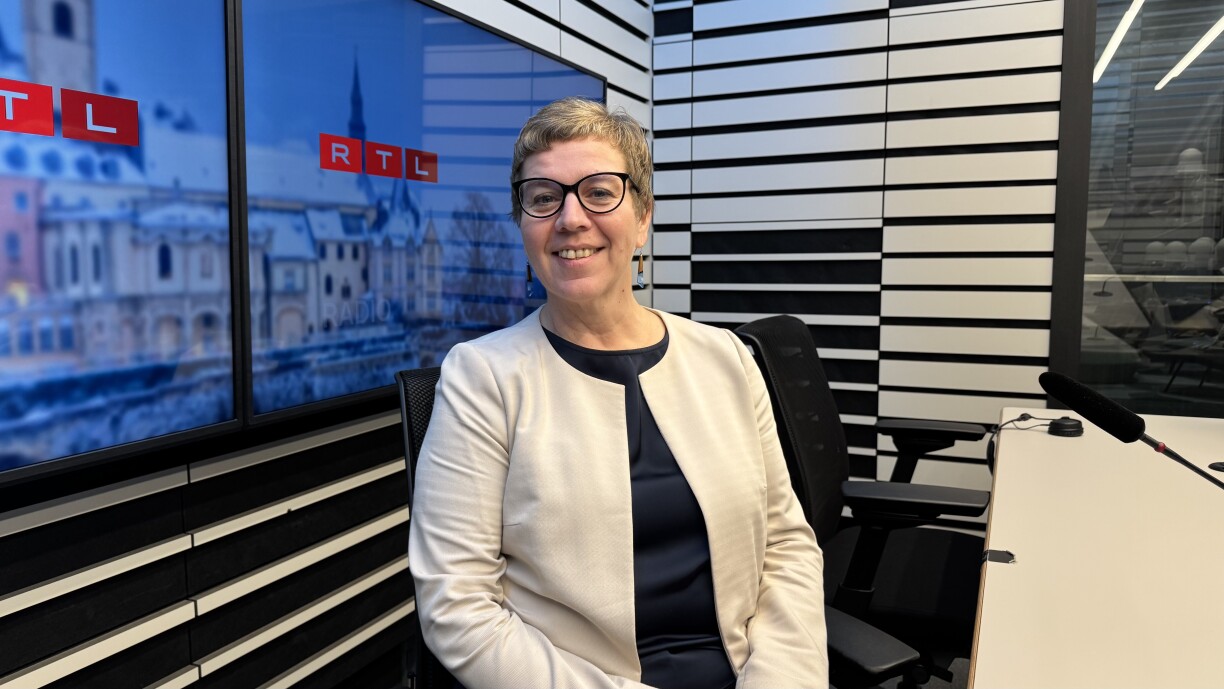
Since taking office as Luxembourg's minister of health, Martine Deprez has stopped consuming alcohol altogether, and her ministry also no longer serves alcoholic beverages at any official events. Instead, alcohol-free alternatives, such as non-alcoholic beer and alcohol-free Crémant, are offered.
Nevertheless, in conversation with RTL, the politician of the Christian Social People's Party (CSV) stresses that she does not wish to spoil anyone's enjoyment by imposing restrictions.
"I never drank much alcohol; I was never a fan of it", Deprez explained. She acknowledged that she used to occasionally have a glass of sparkling wine, but since taking office and being aware of the expectations that come with this role, it has become "normal" for her to no longer drink alcohol.
Deprez noted that the backlash to Luxembourg's first official participation in the Dry January initiative has shown that sobriety is no longer a fringe topic but something that resonates with people – even if some remain opposed to the idea of abstaining from alcohol voluntarily.
"I was a bit taken by surprise", Deprez said. "Nonetheless, I am glad to see the topic now being debated in the very centre of society. We need to be aware that our own actions have a significant impact on our health, particularly our behaviour regarding alcohol and tobacco consumption, physical inactivity, and our dietary choices."
Deprez added that abstaining from alcohol for a month allows people to more clearly assess the impact that alcohol has on our body. "Studies have shown that even one month without alcohol can lead to better sleep, improved skin tone, an overall feeling of better health, and so on", she said, arguing that it should be an instructive and worthwhile challenge to anyone who consumes alcohol on a regular basis.
Asked about criticism that the ministry has received for supporting the initiative – notably from Luxembourg's hospitality agents and winemakers – Deprez explained that it was never her intention to come across as a "spoilsport". She also vowed that cooperation between the different stakeholders will improve next year.
"We agreed to meet in October to discuss how the campaign can be implemented next year. An initiative like this can also represent a business opportunity if establishments choose to expand their menus to cater to people who have decided to reduce their alcohol consumption, not just by offering water or sugary drinks but by proposing attractive alternatives that still encourage people to dine at their restaurant."
According to the minister, winemakers have also started producing more wines with reduced alcohol content or entirely alcohol-free wines, while breweries continue selling non-alcoholic beer – clear signs that there is demand for such products.
As part of the Dry January campaign, an app was made available, allowing users to track their abstinence from alcohol as well as their physical and emotional well-being. The app was downloaded 1,500 times, with 1,100 users registering on the platform, official figures reveal.





