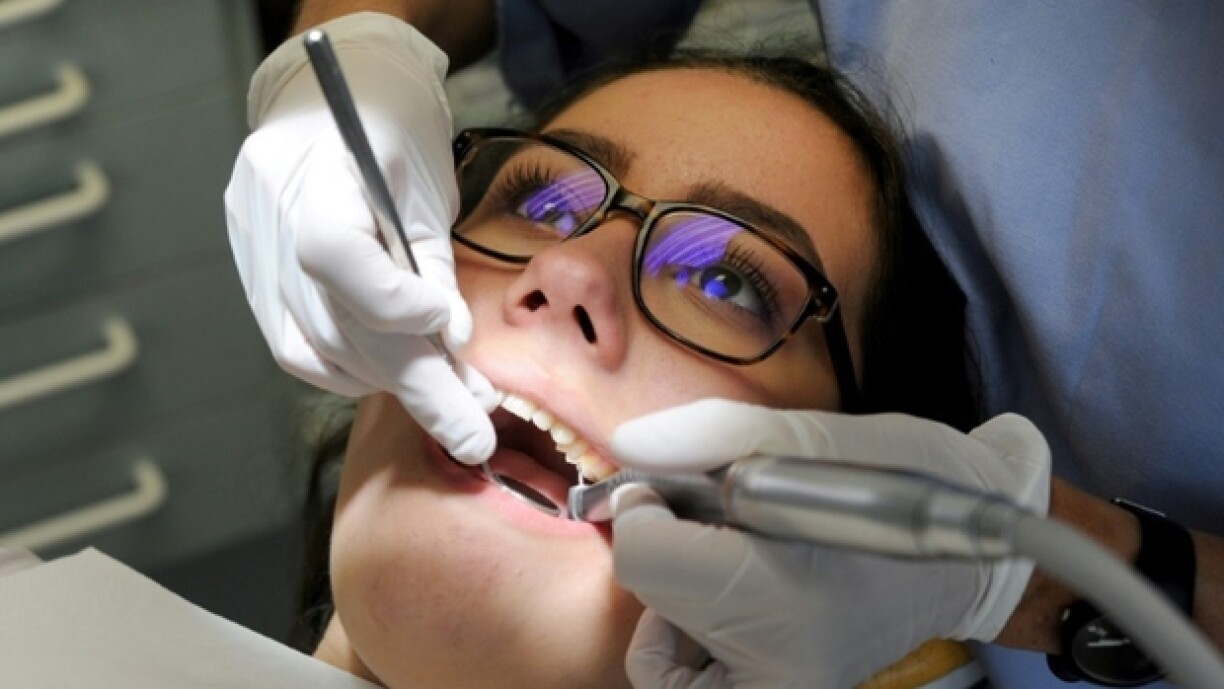
Many people find themselves asking the question: should they take, replace, or leave their dental amalgam? What are the health risks if it remains in their teeth?
The first question to ask is: What is an amalgam dental filling? Amalgam consists of 50% mercury, combined with an alloy of silver, tin, and copper. Although the material used to be highly durable and advantageous in the past, EU regulations now limit the use of amalgam. It should not be used at all for individuals under 15, pregnant women, and breastfeeding mothers. Tom Mailliet, dentist in Luxembourg, explains:
"Amalgam, came about 200 years ago and at the start, was extremely advantageous. It was easy to use, it was efficient, durable, worked very well and contributed to making dental care more affordable for the majority of people. It was like a revolution. But nowadays, it is barely used in Europe and dentistry students don't even learn how to use it anymore."
Despite potential health risks, a stronger and more compelling environmental reason underlies the upcoming ban, which is set to take effect next year. The primary objective is to restrict the quantity of mercury released into the air from crematories. Nevertheless, it is crucial to note that despite numerous studies on amalgams and their impact, the effect on human health is still a subject of debate. Mailliet explains:
"In certain situations, a significant accumulation of amalgam can lead to neurological problems, particularly when it begins to corrode. In such cases, the levels of toxic substances can be higher. However, even in cases where an individual has had numerous amalgam dental fillings, these levels remain well below the thresholds allowed by the EU. For instance, a person who eats a lot of fish will have higher levels of mercury than an individual with amalgam fillings in their teeth."
A second element that is interesting to mention is that the mercury contained in amalgam, when firmly bound in the tooth, is hardly released or not released at all. According to Mailliet: "Amalgam releases mercury vapors the moment it is broken during a removal procedure, meaning that these types of dental fillings should not be removed unless necessary. There are of course various situations during which removing amalgam is indicated. For example, if there is decay underneath, if it's broken and needs to be replaced. For aesthetic or health reasons, there is absolutely no interest and no indication for it. As mentioned, there are more than enough scientific studies conducted over hundreds of years about the harmlessness of amalgam. It only becomes more tricky when removing it."
Mercury has a low boiling point at which it turns into its dangerous gaseous form. Therefore, precautions, such as proper ventilation and thorough aspiration where everything is suctioned up, must be taken when replacing it.





