Here are five things you should know at the end of this week:


A University of Luxembourg study reveals that over a third of renters face mould or damp issues, with many families living in overcrowded and substandard housing conditions.
Alarming findings – The new research, based on 262 tenant correspondence cases and focus groups with 32 participants, exposes alarming conditions in Luxembourg's private rental market. More than 34% of surveyed tenants reported issues with mould or damp, pointing to widespread neglect of basic health and safety standards.
Particularly vulnerable groups, such as families with children, are found living in cramped accommodations, with some forced to share single-room studios.
Security deposits – In addition to damp and overcrowding, nearly a quarter of tenants reported inadequate heating or structural deficiencies in their homes, adding to the stress of already difficult living conditions. A major concern for many is the recovery of their security deposits, which are frequently withheld or delayed, often without clear justification.
The report illustrates how these issues are compounded by Luxembourg's complicated rental laws, which many tenants find difficult to understand or navigate without legal support.
Reforms wanted – To address the systemic problems identified, the researchers are urging the government and housing stakeholders to implement a series of reforms. These include the development of consumer education resources to clarify tenant rights, standardised communication tools to promote transparency between landlords and tenants, and targeted support for at-risk groups, such as families living in overcrowded spaces.
The report was presented in the presence of Housing Minister Claude Meisch and representatives of the Tenant Protection Association, underscoring the urgency of translating these recommendations into concrete policy changes.
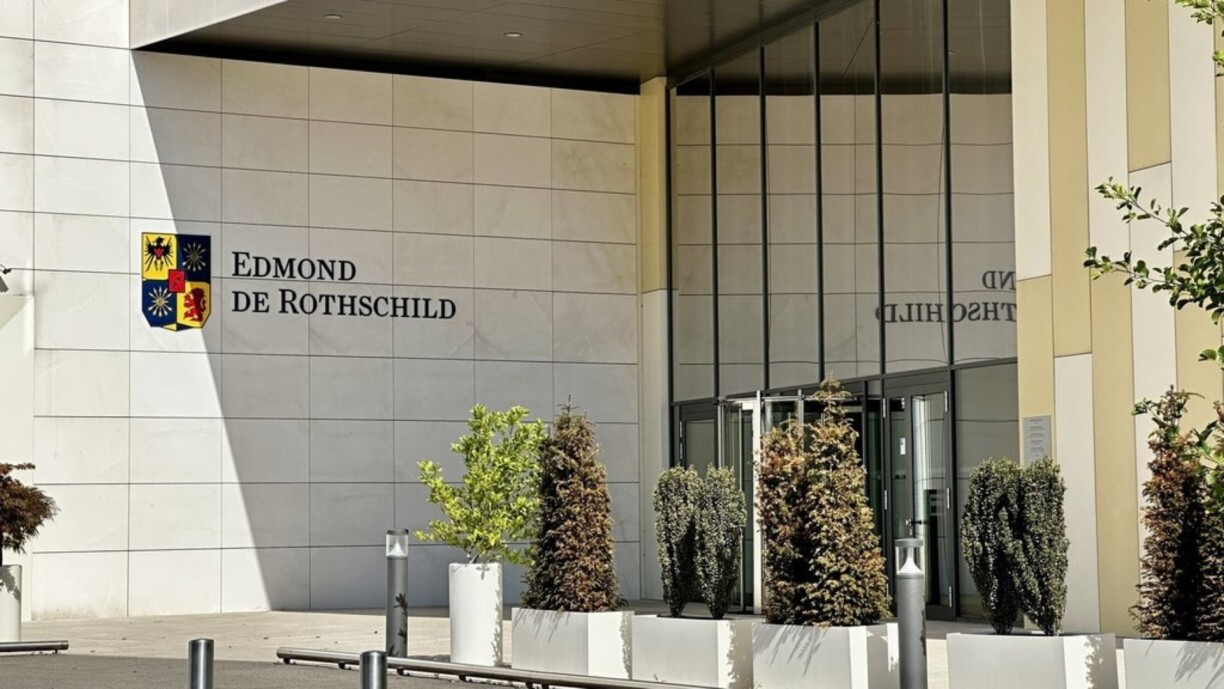
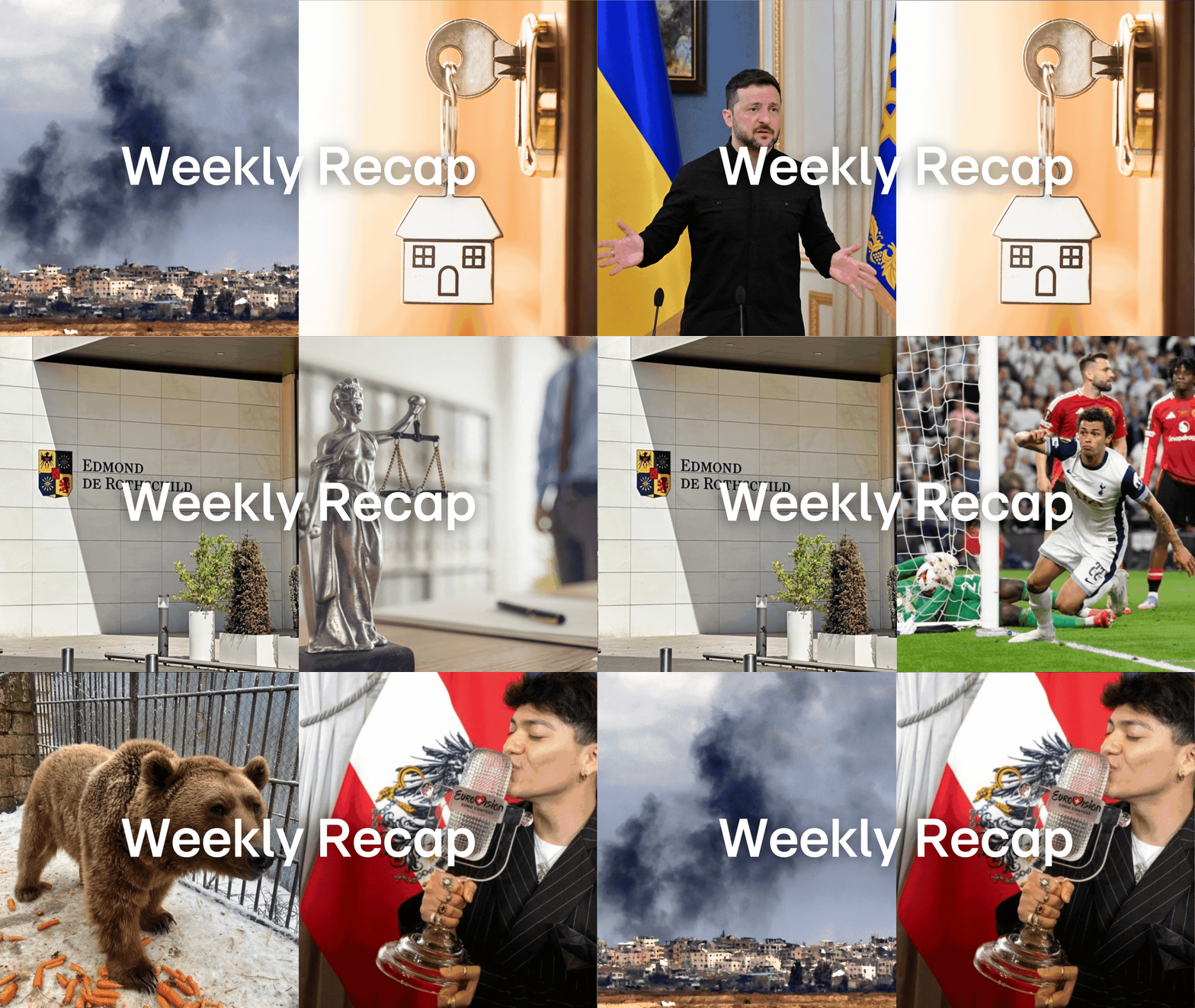
Luxembourg's Edmond de Rothschild bank was fined €25 million after being convicted of money laundering linked to the global 1MDB scandal.
The case involved fraudulent transfers through accounts opened by a UAE national using shell companies in multiple offshore jurisdictions.
While the bank's criminal liability is now closed, investigations continue into its clients, and potential charges may still be brought against its staff and director.
Money laundering – In a landmark decision, a Luxembourg court imposed a €25 million fine on the Edmond de Rothschild bank, marking the first time a banking institution in the country has been criminally convicted of money laundering. The ruling follows years of investigation into the bank's involvement in the infamous 1Malaysia Development Berhad (1MDB) scandal, in which billions of dollars were misappropriated from a Malaysian state fund.
The confiscated amount will go to the Luxembourg government, symbolising the judiciary's firm stance on financial crimes within its borders.
Intricate operation – Central to the case was the activity of a United Arab Emirates national who had set up dozens of bank accounts at Edmond de Rothschild (Europe) SA. These accounts were registered under the names of various companies incorporated in offshore tax havens such as the British Virgin Islands, the Cayman Islands, and the Isle of Man.
Through these accounts, billions of US dollars were channelled using intricate financial manoeuvres designed to obscure the origin and destination of the funds, thus enabling the embezzlement operation.
Charges to be finalised – Although Thursday's sentencing brings an end to the bank's direct criminal proceedings, the wider investigation is far from over. Prosecutors are still examining the roles of the bank's clients in the laundering operation and have yet to finalise charges against its management and employees. A total of 153 police reports, along with extensive wiretap evidence and searches, form the backbone of this complex judicial inquiry.

A former Luxembourg Theatre Federation board member was sentenced to 13 years in prison – five served, eight suspended – after being convicted of producing, possessing, and distributing extensive child sexual abuse material over a ten-year period.
Authorities uncovered over 23,000 illicit files, including images of the man's own daughter and her friends, following a Europol tip in 2019 and a delayed raid in 2020.
The Theatre Federation and Casemates Theatre expressed shock and severed all ties with the individual, criticising systemic failures that allowed him continued access to children despite early warnings.
Conviction made public – A former board member of Luxembourg's Theatre Federation has been sentenced to 13 years in prison – five to be served, eight suspended – after being found guilty of producing, possessing, and distributing child sexual abuse material over the course of a decade. The man, a known figure in the local theatre scene, targeted his own daughter and her young friends, among others.
The conviction, delivered in March 2025 but made public this week, follows a lengthy investigation and legal process that began in 2019.
Stalled investigation – Authorities launched their investigation after a Europol tip in August 2019 revealed the suspect had uploaded dozens of files containing paedophilic content. Despite the serious nature of the alert, police did not raid the man's home until July 2020.
There, they discovered more than 23,000 files depicting child sexual abuse – including hundreds of videos and thousands of images, some involving children as young as one. The material included over 1,500 photos of the defendant's naked daughter, some with himself partially visible.
Evidence showed the abuse dated back to at least 2013, though investigators believe it began earlier.
Institutions shocked – The case has sparked strong reactions from institutions once linked to the man. Both the Luxembourg Theatre Federation and Casemates Theatre issued statements condemning the crimes and distancing themselves from the former board member.
While stressing that the offences occurred in his private life and bore no connection to his professional activities, both organisations criticised systemic delays and called for stronger safeguards – particularly after the missed opportunity to intervene earlier following Europol's warning.
The individual, whose name remains undisclosed to protect victims, has appealed the verdict.
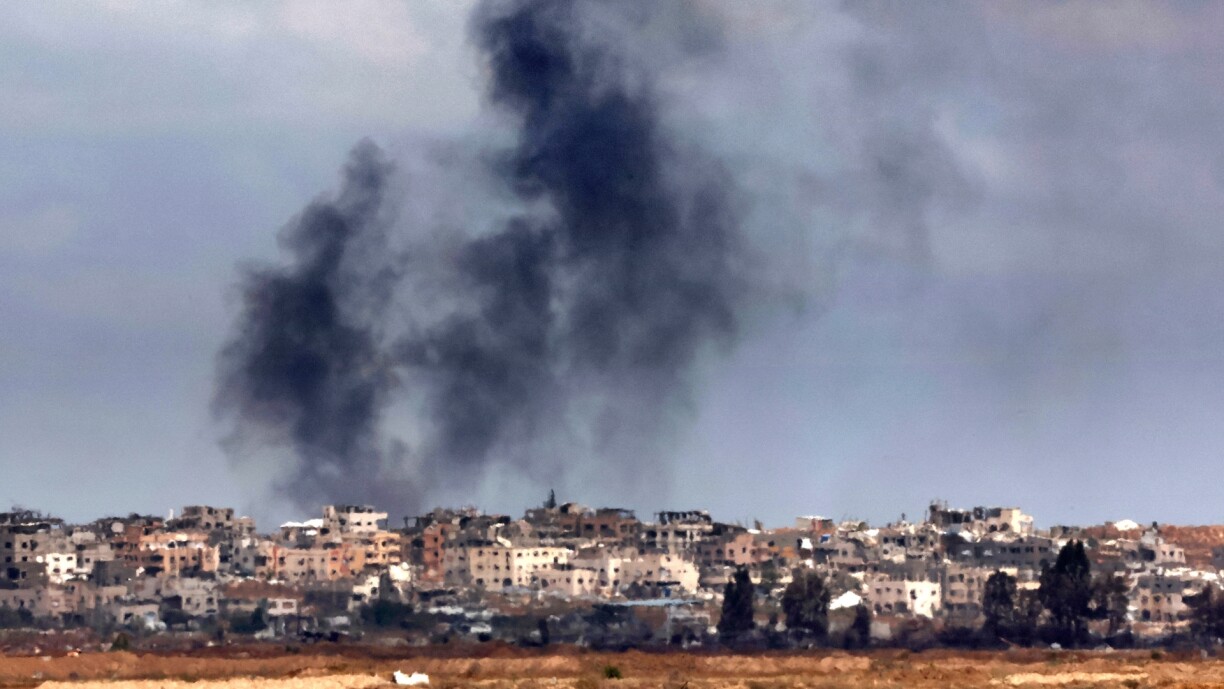
Israeli Prime Minister Benjamin Netanyahu vowed to take full control of Gaza amid an intensifying military campaign that has drawn global condemnation and caused a severe humanitarian crisis, with limited aid only recently permitted into the besieged territory.
Britain, France, Canada, and the European Union have intensified diplomatic pressure on Israel, suspending trade talks, summoning envoys, and reviewing cooperation agreements over what they call "egregious" actions and violations of international law.
Tensions surged further after a fatal shooting outside a Jewish museum in Washington DC, where a gunman killed two Israeli embassy staffers; the attack is being investigated as an anti-Semitic hate crime and has amplified concerns over rising global antisemitism tied to the Gaza conflict.
Gaza offensive ongoing – Israeli Prime Minister Benjamin Netanyahu declared that Israel intends to take full control of the Gaza Strip, framing the move as a necessary step toward military victory over Hamas. This announcement came as Israel ramped up its air and ground assaults across the territory, prompting evacuations, widespread destruction, and alarming reports of famine from the United Nations and humanitarian organisations.
Despite a partial easing of the total blockade imposed since 2 March, only limited aid deliveries have been permitted – far below the scale required – resulting in acute shortages of food, water, fuel, and medical supplies for Gaza's 2.1 million residents.
The World Health Organization and other agencies have warned of catastrophic consequences, with some officials predicting the imminent death of thousands if aid access does not improve dramatically.
Global condemnation – In response to Israel's escalating military actions and its restriction of humanitarian aid, major Western allies – including Britain, France, and Canada – have issued sharp condemnations and threatened concrete diplomatic consequences. Britain paused its free trade negotiations with Israel and imposed sanctions on West Bank settlers, while the EU announced a formal review of its cooperation agreement with the country.
These moves were triggered by what governments describe as potential breaches of international humanitarian law, including the use of rhetoric that appears to support forced displacement of Palestinians. Netanyahu rejected the criticism, accusing Western leaders of rewarding terrorism and undermining Israel's right to self-defence, while Israeli officials insisted external pressure would not sway their course of action.
DC killing – The already strained atmosphere surrounding the Gaza conflict worsened after a gunman killed two Israeli embassy employees outside the Capital Jewish Museum in Washington DC in what authorities are treating as an anti-Semitic hate crime and act of terrorism. The suspect, Elias Rodriguez, reportedly shouted "Free Palestine" and "I did it for Gaza" as he was arrested and has since been charged with murder of foreign officials – a crime that could carry the death penalty.
The victims, a young couple working for the Israeli embassy, were mourned internationally, and the incident has reignited debate about rising global antisemitism in the wake of the Gaza war. Israeli leaders blamed inflammatory rhetoric from foreign governments and international organisations for fostering a climate that incited violence, a claim dismissed by European officials as unfounded and inflammatory in itself.
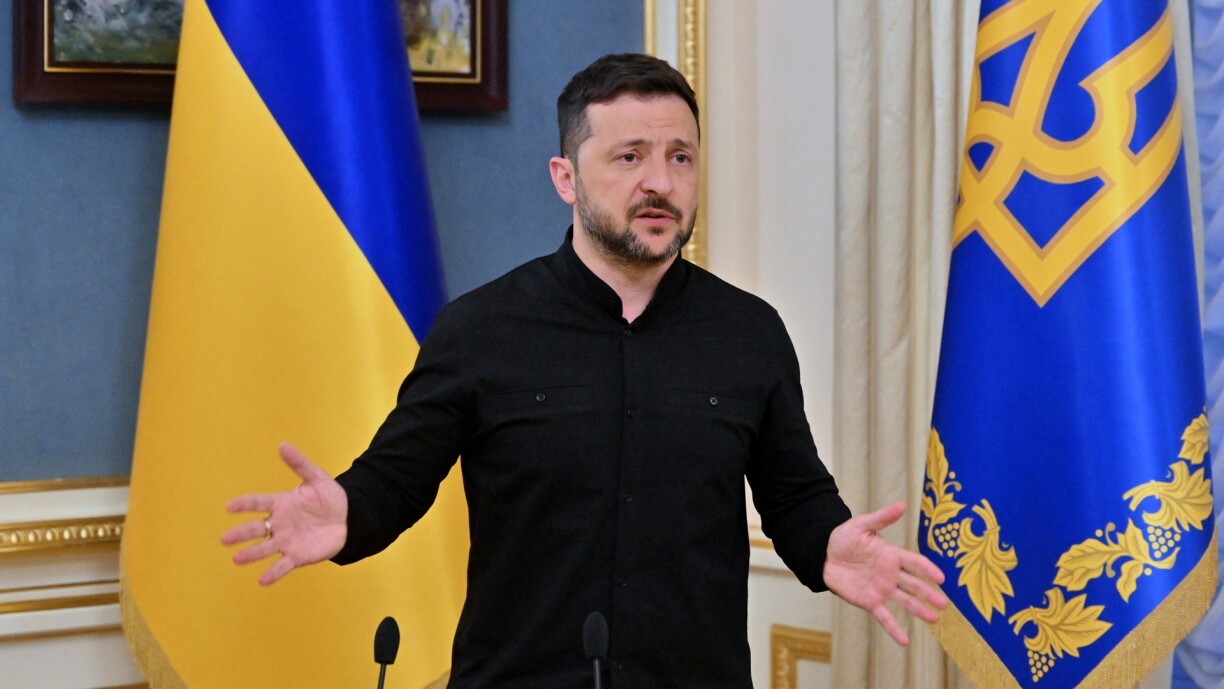
After a call with Vladimir Putin, Donald Trump announced that Russia and Ukraine would begin ceasefire talks, though the Kremlin has not agreed to an unconditional truce and Kyiv accuses Moscow of stalling to continue its offensive.
The EU adopted its 17th sanctions package targeting Russia's shadow oil fleet, while U.S. Secretary of State Marco Rubio said Moscow may soon present broad ceasefire terms, which Kyiv fears are meant to delay rather than end the war.
On the ground, fighting has intensified with major drone attacks from both sides, and skepticism remains high in Kyiv and abroad about the sincerity and impact of Trump's diplomacy with Putin.
Hope vs scepticism – US President Donald Trump declared that Russia and Ukraine would immediately begin negotiations for a ceasefire following a two-hour phone call with Russian President Vladimir Putin. Trump portrayed the conversation as highly positive and expressed hope for a swift resolution to the conflict, one of his central campaign promises.
However, while Ukrainian President Volodymyr Zelensky accepted a proposed 30-day unconditional truce, Putin refrained from endorsing it and instead suggested working toward a memorandum of peace that would require further compromises. Kyiv and European officials remain deeply skeptical, accusing Moscow of using diplomacy as a smokescreen to buy time and consolidate territorial gains amid continued military offensives.
New EU sanctions – In response to Russia's ongoing aggression and reluctance to accept an unconditional ceasefire, the European Union formally approved its 17th sanctions package, targeting nearly 200 tankers in Russia's shadow oil fleet and expanding restrictions on Russian officials and entities. These measures aim to tighten the economic pressure on Moscow, which the EU accuses of prolonging the war for strategic advantage.
Meanwhile, US Secretary of State Marco Rubio said that Russia is expected to present a broad framework for a ceasefire in the coming days. He emphasised that the forthcoming proposal will reveal whether Moscow is serious about ending the war or merely attempting to appear cooperative while continuing its offensive.
Clashes ongoing – Despite diplomatic activity, fighting has escalated in Ukraine, with both sides engaging in intense drone warfare and territorial clashes. Russia has claimed gains in Sumy and Donetsk, while Ukraine has launched drone strikes deep into Russian territory, including attacks on industrial targets supporting the Kremlin's war effort.
The continuation of hostilities, even as talks are discussed, has led to widespread skepticism, especially in Ukraine, where citizens and analysts doubt the sincerity of Trump's and Putin's diplomatic overtures. Observers warn that these negotiations may only serve to mask Russia's intent to prolong and intensify the conflict, while domestic support for Trump's efforts appears fragile in the face of ongoing violence.
Business & Tech – The legendary designer behind Apple's iPhone, Jony Ive, has joined OpenAI to create devices tailored for using generative artificial intelligence, according to a video posted Wednesday by the ChatGPT maker.
Science & Environment – A 6.1-magnitude earthquake rattled the Greek island of Crete on Thursday, the US Geological Survey said, with no major damage immediately reported.
Entertainment – This year's Eurovision Song Contest winner Austrian singer JJ called for Israel to be excluded from next year's competition in an interview published Thursday.
PSA – The oak processionary moth is spreading across Luxembourg, posing health risks due to its toxic caterpillar hairs, with renewed warnings and calls for caution from the authorities.
Healthcare – Luxembourg's national radiotherapy has introduced a highly targeted cancer treatment, called brachytherapy, for advanced cervical and uterine cancers, enabling patients to receive precise, organ-preserving care locally without needing to go abroad.
Royal podcast – In a special anniversary podcast, the Grand Duke and Grand Duchess joined final-year students of the European School Luxembourg II in a candid discussion spanning global affairs, personal values, and the meaning of change.

Your Weekly Recap is published every Friday at noon. Read earlier versions.





