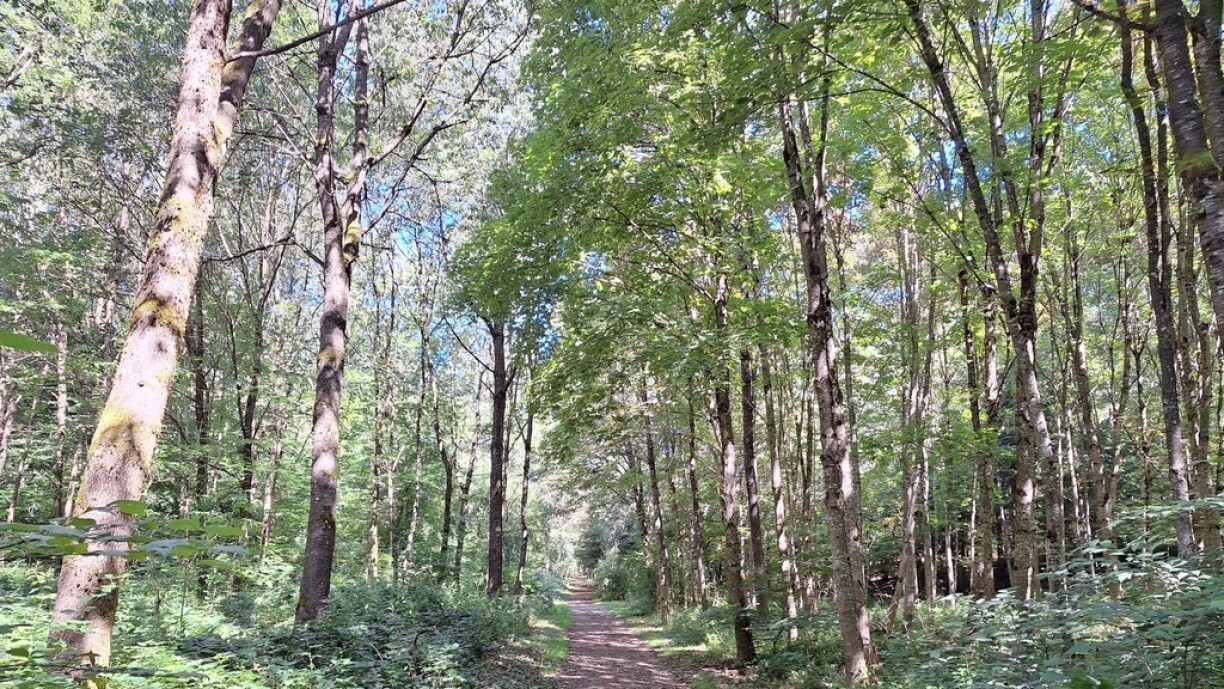
An essential role of any forest is to serve as a habitat for diverse animal and plant species. The presence of these life forms is closely tied to the presence of deadwood within the forest. As Schley explains, "this deadwood serves as a habitat for fungi, insects, birds, and various other species, which can derive significant benefits from it. The function of deadwood is therefore of utmost importance." Wood production stands as another critical function. Schley points out, "wood functions as a renewable natural resource." Through sustainable management – avoiding excessive extraction beyond replenishment – the forest can maintain its other functions while providing this raw material. Wood finds its way into numerous aspects of daily life, from household structures to furniture. "It's more environmentally friendly to use local sources than importing wood from rainforests in South America," the deputy director of the Nature and Forest Agency notes.
Schley highlights the growing adoption of the concept known as "cascade use." He clarifies, "cascade use involves re-purposing wood after its initial role, such as in construction, for subsequent applications."
Of course, forests also offer recreational value. People go for walks, runs or ride bikes in the forest.
However, it is a forest's ability to store carbon that is perhaps its most pivotal function. Schley elaborates, "plants absorb CO2, generating oxygen. In addition, by storing carbon, the forest becomes a crucial ecosystem in the fight against climate change."
Schley also stressed that humans benefit from the "services" provided by forests.


Deel 4: Wéi ass déi aktuell Situatioun an eise Bëscher?
Deel 3: Wat bedeit et, wann ee Bëschbesëtzer ass?
Deel 2: Och net-heemesch Beem mussen ugeplanzt ginn
Deel 1: Kee rechtsfräie Raum: Am Bësch gëlle kloer Reegelen





