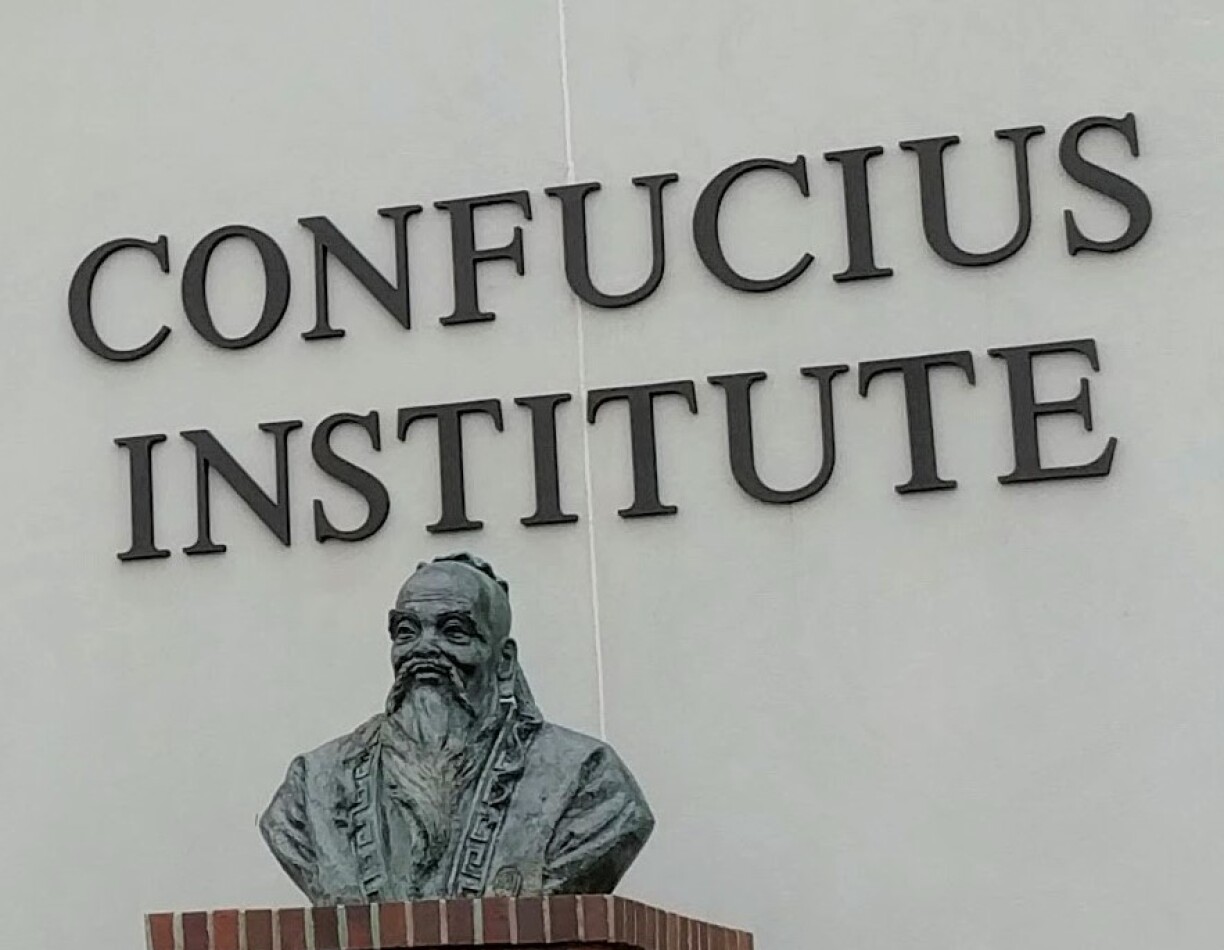
The Confucius Institutes, Chinese state educational institutions under the authority of the Chinese Ministry of Education, officially aim to promote Chinese languages and cultural exchange worldwide.
The institutes are located at partner universities in various countries around the world. Established in cooperation with Fudan University in China and co-financed by both universities, the Confucius Institute at the University of Luxembourg has been in operation since 2018.
In recent years, Confucius Institutes have faced accusations of spreading Chinese propaganda and being engaged in scientific and economic espionage, particularly in Germany. German politicians and state security agencies have expressed concerns about Chinese influence and threats to academic freedom. The last annual report of the German Office for the Protection of the Constitution described Confucius Institutes as "instruments of Chinese influence." In general, the report labelled Chinese activities in the field of education and research "a threat to academic freedom."
In this context, the German Ministry of the Interior also warned against the influence of Confucius Institutes at German universities and the German Minister of Research, Bettina Stark-Watzinger, called on German universities a fortnight ago in the newspaper Handelsblatt to critically question their cooperation with the institutes.
Several German universities have since terminated their cooperation with Confucius Institutes or announced their intention not to renew collaboration agreements.
In this context, our colleagues from RTL.lu reached out to the University of Luxembourg for comments on the criticism of the institutes and whether this would have an impact on the Confucius Institute at Uni.lu. In response, the university highlighted that they are aware of the criticism of the institutes but assured that they are vigilant in managing partnerships.
The rectorate of the university acknowledges the potential risks associated with collaborations with Chinese universities but stresses their commitment to minimising those risks.
The university says that it ensures that ongoing research projects with Chinese institutions focus on specific, non-military topics.
The Confucius Institute is governed by a Board of Directors comprising the University of Luxembourg, Fudan University, the Chinalux Association, and Luxembourg for Finance, with the Rector of the University of Luxembourg serving as president.
As far as the educational aspect is concerned, the Institute focuses solely on Chinese language and culture courses. It is also the only place in Luxembourg that offers the "Chinese Proficiency Test."
Regarding research activities, the Confucius Institute organises conferences, forums, and publishes papers to foster academic exchange across various fields. All projects undertaken by the Institute are discussed and approved by the University of Luxembourg.
The University of Luxembourg's rectorate further stated that the cooperation with the Confucius Institute would be reassessed when the current agreement expires in 2026.
The Ministry of Higher Education stated in an e-mail reply that it is aware of the discussions surrounding Confucius Institutes in Germany and is closely monitoring the situation. This also applies to the institute at the University of Luxembourg and the Ministry maintains a continuous exchange with the university on this matter.
For the time being, the Ministry has no additional comments to make in response to the university's statements.





