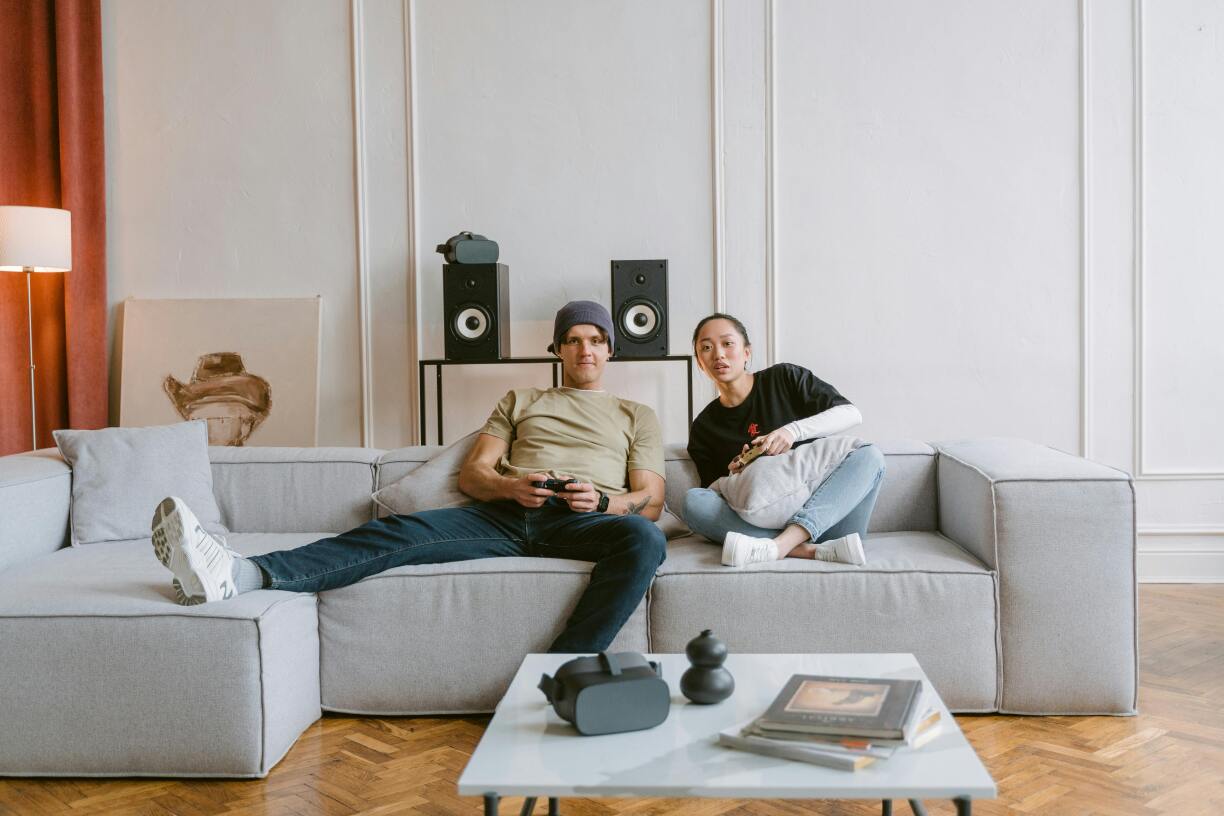
Co-living remains relatively unfamiliar in Luxembourg, but the model is well established in major cities such as London, Paris and New York. It is primarily aimed at people entering the labour market, often referred to in the Grand Duchy as expats, many of whom arrive from countries such as Spain or Italy. The appeal lies in the relative simplicity of the arrangement, with accommodation, community activities and practical support often bundled together, provided tenants are willing to share common spaces.
Co-living is an evolution of flat-sharing, designed to offer greater flexibility and better reflect the needs of young professionals. Unlike the traditional rental market, a permanent employment contract is not always required. Terms vary by operator, with stays ranging from a few weeks to several months, though shorter stays come at a higher cost. Jérôme Ensch, founder and managing director of one of Luxembourg’s early co-living providers, says prices for short stays are closer to those found in the hotel sector.
Ensch says he has deliberately avoided a hotel-style co-living model, which he argues requires a fundamentally different form of management. At Vauban&Fort, contracts typically run for a minimum of five to six months, an arrangement that often suits expats who are unsure how long they will remain in the Grand Duchy. ‘Some are initially contracted for six months, then see their contracts extended and end up staying for 16 months,’ Jérôme Ensch explains. He adds that tenants are not limited to office workers, but "we also house technicians, bus drivers and employees in the hospitality sector."
Ensch argues that this is why co-living plays a useful role in Luxembourg’s housing landscape. In an exceptionally tight market, he says the model allows people who might otherwise struggle to secure accommodation to move to and work in the country. He also claims it helps some major employers retain staff, noting that Vauban&Fort rents rooms to employees of large firms including the Big Four, Amazon and the European institutions.
The company currently manages more than 500 rooms across Luxembourg City, a significant expansion from its beginnings a decade ago with a single apartment in Kirchberg. Ensch says the model has also attracted interest from property owners, as Vauban&Fort acts as the sole tenant and handles maintenance, cleaning and tenant turnover. For residents, this means dealing with a single point of contact for day-to-day issues.
The co-living, model often presented as hassle-free, has nevertheless attracted criticism. In Paris, activist groups have mobilised against co-living, arguing that it contributes to rising rents. Ensch rejects that accusation, saying like-for-like comparisons are being misapplied. He argues that comparing rent per square metre makes little sense when lengths of stay vary significantly. "For a co-living room, people currently pay between €900 and €1,100 per month, utilities included, whereas a studio apartment in the city costs at least €1,400, without utilities," he says.
For Ensch, who has previously lived in co-living arrangements in London and New York, price is not the decisive factor. Instead, he points to the sense of community as the model’s main appeal. Operators in the sector have increasingly focused on this aspect, organising activities such as yoga sessions, wine tastings and group outings. He adds that networking is not necessarily the aim, arguing that residents who feel settled are more likely to remain in Luxembourg.
Internationally, large-scale co-living developments are becoming more common, placing as much emphasis on shared facilities as on community life. In Luxembourg, some projects, including Gravity, have begun to move in this direction by offering private rooms alongside shared leisure and coworking spaces.
Luxury-style co-living remains rare in Luxembourg, where most arrangements are still based in houses or apartment buildings.
Listen to the full podcast and interview with Gaël Arellano: only available in French





