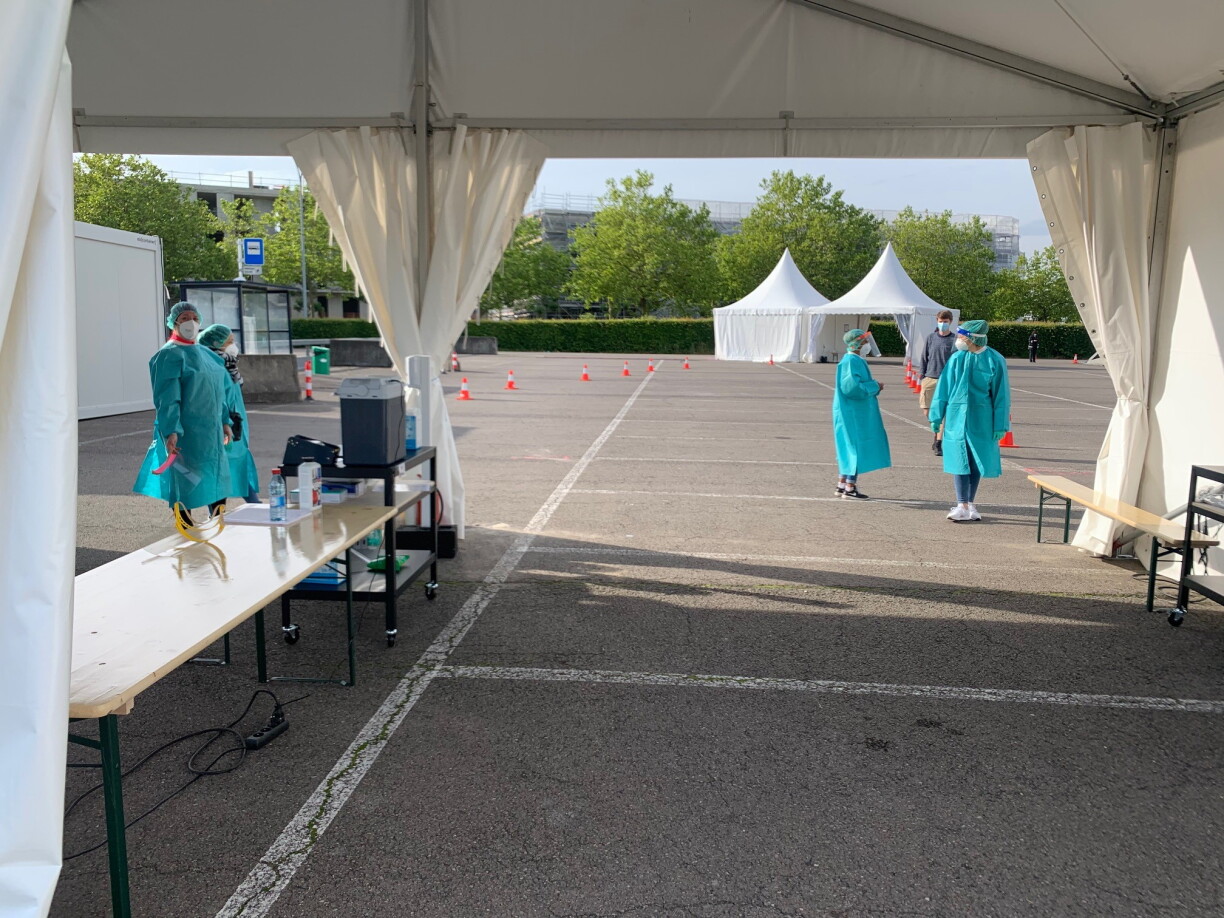
What lessons can be learned from large-scale testing during the pandemic? This is the question that preoccupied déi Gréng (The Greens) MP Sam Tanson and Christian Social People's Party (CSV) MP Stéphanie Weydert for their report for the Chamber's Budget Committee. The two deputies drafted the report, which was adopted unanimously on Monday.
The report draws heavily on the special report of the Court of Auditors, with the two co-rapporteurs flagging, among other things, shortcomings in the public procurement procedure.
One conclusion they reach, also echoed by other files debated within the committee, is that the state would benefit from taking on more centralised competence in the area of public procurement. That, the rapporteurs argued, applies particularly in times of crisis, since not every ministry has the necessary expertise in such a specialised field. Better support, they suggested, would help head off the kind of debates seen on this dossier.
Another point picked up in the report is that the Chamber did not always receive the information it needed. The bill financing Phase 2 came with no financial annex, the argument being to keep figures out of the public domain.
The Committee, however, had asked for more, including provisional figures for both Phase 1 and Phase 2, which never came. The rapporteurs took the view that this was a deliberate choice and that the Chamber missed out on important information as a result, and they were keen to underline once again the importance of transparency in such major cases.
The co-rapporteurs acknowledged that it was a crisis situation in which decisions had to be taken quickly, but argued that time should have been carved out to consult all the relevant actors, rather than focusing on a single person held up as having the necessary skills, in the words of CSV MP Stéphanie Weydert, who looked closely at the performance indicators.
That, Weydert said, is particularly visible in the KPIs (Key Performance Indicators) that score zero, in other words those that fail the test of being realistic. As a negotiator sitting at the table, she added, one would have to flag that such indicators do not belong there if there is no way to assess them objectively.
She argued that more time should have been taken to put something proper in place, with procedures that could verify afterwards how the costs had been incurred, rather than racing to act for the sake of acting.
The report by Sam Tanson and Stéphanie Weydert was ultimately adopted unanimously in committee and will now be passed on to the government for its position. An orientation debate is then due to take place in the Chamber in the autumn.





